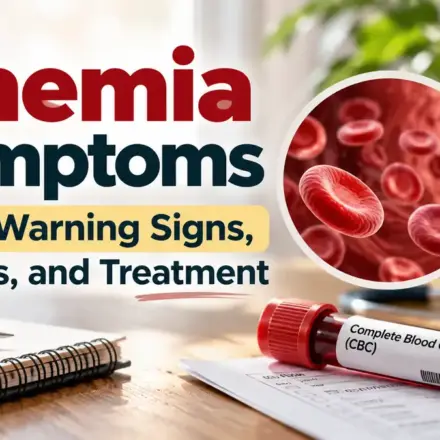
Anemia Symptoms: Early Warning Signs, Causes, and Treatment
Anemia occurs when your body does not have enough healthy red blood cells or hemoglobin to carry adequate oxygen to your tissues. Because oxygen fuels nearly every function in the body, a lack of it can cause noticeable physical changes. Symptoms depend entirely on the severity of the condition and its underlying cause, and many people have no noticeable signs in the early stages.
Anemia is a condition where your body lacks enough healthy red blood cells to deliver oxygen effectively. Early signs include unexplained fatigue, pale skin, shortness of breath, and dizziness. Because anemia has many different causes—ranging from simple vitamin deficiencies to chronic diseases or internal bleeding—you should never try to treat it with iron supplements without a doctor’s diagnosis.
What Is Anemia?
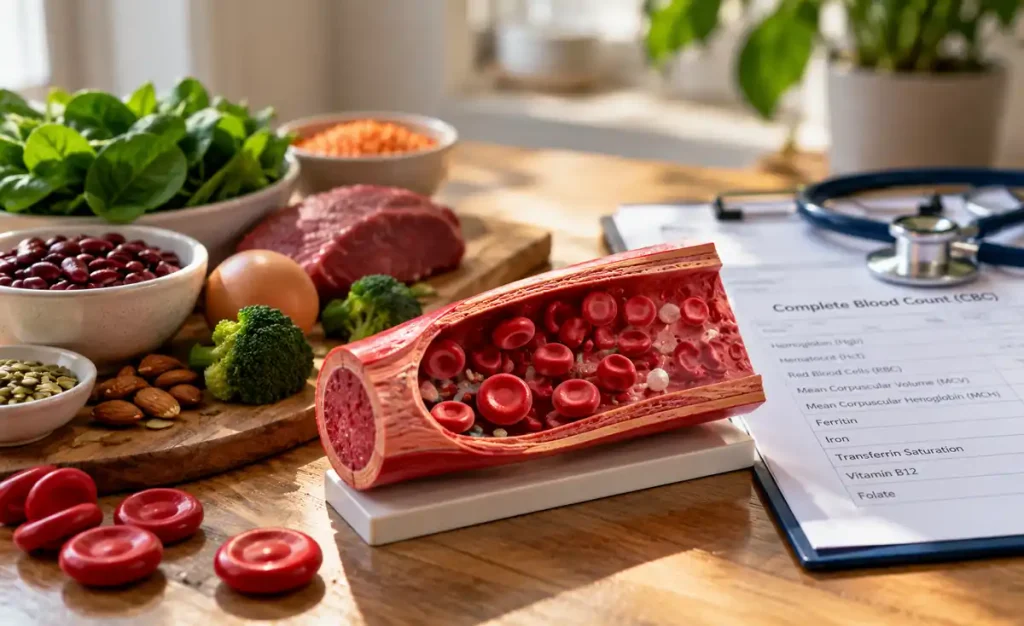
To understand anemia, it helps to look at how blood works. Your red blood cells contain a protein called hemoglobin. Hemoglobin binds to the oxygen in your lungs and carries it through your bloodstream to your organs and tissues.
When you have anemia, this delivery system is compromised. Either you have too few red blood cells overall, or the cells you do have lack sufficient hemoglobin. Without enough oxygen, your body cannot generate the energy it needs to function normally.
General Anemia vs. Iron-Deficiency Anemia
People often use the terms “anemia” and “low iron” interchangeably, but they are not the same thing. Iron deficiency is a specific condition where the body lacks the mineral iron, which it needs to make hemoglobin. While iron deficiency is the most common cause of anemia, it is just one of many possible causes. You can have anemia even if your iron levels are completely normal.
What Are the Early Symptoms of Anemia?
In its early stages, anemia can be mild enough to go unnoticed. As the condition progresses and oxygen levels in your tissues drop, symptoms become more apparent.
These symptoms can occur with several conditions, so experiencing them does not automatically mean you have anemia.
Persistent fatigue and weakness
Feeling unusually tired is the most common symptom of anemia. This is not the standard fatigue from a poor night’s sleep; it is a profound, lingering exhaustion that does not resolve with rest, caused by your muscles and organs not receiving enough oxygen.
Pale or unusually yellowish skin
Hemoglobin gives blood its red color, which in turn contributes to the rosy tint of your skin. A lack of red blood cells can make the skin, the inside of the lower eyelids, and the nail beds look paler than usual. In some types of anemia, the skin may take on a yellowish tint (jaundice).
Shortness of breath during everyday activity
If your blood cannot deliver enough oxygen, your lungs have to work harder to compensate. You might find yourself out of breath doing simple tasks like walking up a short flight of stairs or carrying groceries.
Dizziness, lightheadedness, or headaches
A drop in oxygen delivery to the brain can cause headaches, a feeling of lightheadedness, or dizziness, particularly when you stand up quickly.
Cold hands and feet
Poor circulation of oxygen-rich blood can leave your extremities feeling persistently cold, even in warm environments.
Rapid heartbeat or palpitations
Your heart may beat faster or irregularly as it tries to pump more blood to compensate for the lack of oxygen.
Difficulty concentrating
Brain fog, trouble focusing, or a general feeling of mental sluggishness can occur when the brain is deprived of optimal oxygen levels.
Symptom and Possible Cause Comparison
Note: This table is strictly educational. Symptoms overlap heavily, and a blood test is required for an accurate diagnosis.
| Symptom | Possible Explanation | Shared Across Most Anemia Types? |
| General fatigue & weakness | Muscles/organs lack adequate oxygen | Yes |
| Pale inner eyelids | Less hemoglobin to provide red coloring | Yes |
| Yellowish skin/eyes (Jaundice) | Rapid breakdown of red blood cells | No (Suggests hemolytic anemia) |
| Tingling in hands/feet | Nerve damage from specific vitamin lack | No (Suggests B12 deficiency) |
| Craving ice or dirt | Specific mineral deficiency response | No (Suggests iron deficiency) |
Less Common Signs of Anemia
Depending on the specific deficiency or underlying cause, some people develop less common, more distinct physical signs.
Brittle or spoon-shaped nails
Fingernails that crack easily or develop a concave, spoon-like depression in the center (koilonychia) can be a physical marker of severe, long-term iron deficiency.
Sore tongue or cracks at the corners of the mouth
A swollen, unusually smooth, or inflamed tongue (glossitis), along with painful cracks at the corners of the mouth (angular cheilitis), can indicate deficiencies in iron, folate, or vitamin B12.
Craving ice or non-food substances (pica)
Some people with anemia develop unusual cravings to chew on ice, or to eat non-food items like clay, dirt, or paper. This condition, known as pica, is most strongly associated with iron deficiency.
Tingling or numbness
A sensation of pins and needles, numbness, or a burning feeling in the hands and feet can occur. This is a specific neurological symptom often tied to vitamin B12 deficiency anemia.
What Causes Anemia?
While there are hundreds of specific causes of anemia, they all fall into three major medical categories:
- The body does not make enough red blood cells. This can happen if you lack necessary nutrients (iron, B12, folate), if you have a chronic disease that affects cell production, or if your bone marrow is failing.
- Blood loss reduces the number of red blood cells. This is often due to heavy menstrual bleeding, gastrointestinal bleeding (from ulcers, polyps, or cancer), trauma, or frequent blood donation.
- Red blood cells are destroyed faster than the body replaces them. Known as hemolysis, this can be caused by inherited blood disorders, autoimmune conditions, or certain infections that cause the cells to rupture prematurely.
What Are the Main Types of Anemia?
- Iron-deficiency anemia: The most common type worldwide, caused by a shortage of iron in the body. (For a deep dive, read our dedicated guide to Iron-Deficiency Anemia).
- Vitamin B12 deficiency anemia: Occurs when the body cannot absorb enough B12 from the diet, often due to an autoimmune condition called pernicious anemia or dietary restrictions.
- Folate-deficiency anemia: Caused by a lack of vitamin B9 (folate), which is necessary for red blood cell formation.
- Anemia of chronic disease: Conditions that cause prolonged inflammation—such as kidney disease, rheumatoid arthritis, or cancer—can interfere with the body’s ability to produce red blood cells.
- Hemolytic anemia: A group of disorders where red blood cells are destroyed faster than bone marrow can replace them.
- Aplastic anemia: A rare, life-threatening condition where the bone marrow stops producing enough new blood cells of all types.
- Sickle cell anemia and thalassemia: Inherited genetic disorders that affect the shape and function of hemoglobin, leading to rapid cell destruction and poor oxygen delivery.
Who Is at Higher Risk of Anemia?
Your risk of developing anemia depends heavily on the underlying cause. Higher risk groups include:
- People with heavy menstrual periods: Monthly blood loss depletes iron stores.
- Pregnant people: The body requires significantly more iron and folate to support fetal development and increased blood volume.
- Individuals with restricted diets: Vegans and vegetarians may be at higher risk for B12 and iron deficiencies if they do not carefully manage their nutrient intake.
- Frequent blood donors: Donating blood regularly can temporarily deplete iron stores.
- Older adults: Aging increases the risk of chronic diseases, dietary shortfalls, and gastrointestinal bleeding.
- People with chronic or inherited conditions: Those with a family history of genetic blood disorders, or those living with chronic kidney disease, autoimmune disorders, or intestinal conditions like Crohn’s disease.
How Is Anemia Diagnosed?
Doctors cannot diagnose anemia based on symptoms alone. Diagnosis requires blood tests to evaluate the quantity, size, and shape of your blood cells, as well as the nutrients required to make them.
A Simple Guide to Anemia Blood Tests
- Complete Blood Count (CBC): The foundational test. It measures your hemoglobin levels and the actual number of red blood cells. (Note: There is no single universal “normal” hemoglobin cutoff; healthy ranges vary based on your age, sex, and whether you are pregnant).
- Reticulocyte Count: Measures the number of young, immature red blood cells in your blood. This tells your doctor if your bone marrow is actively producing new cells at the correct rate.
- Iron Studies and Ferritin: These tests look at the amount of iron circulating in your blood and the amount of iron stored in your body (ferritin).
- Vitamin B12 and Folate Tests: Used to check for specific nutritional deficiencies if your red blood cells appear unusually large on the CBC.
If these initial tests suggest blood loss, your doctor may recommend additional investigations, such as a colonoscopy or endoscopy, to locate the source of bleeding.
How Is Anemia Treated?
Treatment is entirely dependent on the specific cause.
- Nutritional anemias are treated with dietary changes and prescription-strength oral or intravenous supplements (iron, B12, or folate).
- Anemia related to blood loss is treated by finding and stopping the bleeding (e.g., treating an ulcer or managing heavy periods).
- Anemia of chronic disease often improves when the underlying condition is medically managed.
- Severe cases, regardless of the cause, may require urgent blood transfusions.
Warning: Do not start taking over-the-counter iron supplements simply because you feel tired. Taking iron when you do not actually have an iron deficiency can cause severe digestive distress, mask the real cause of your fatigue, and lead to dangerous iron overload in your organs. A healthcare professional must establish the diagnosis first.
Can Anemia Be Prevented?
Some types of anemia are preventable, while others are not. Nutritional anemias (iron, B12, folate) can largely be prevented by eating a balanced diet rich in leafy greens, lean meats, beans, and fortified grains, and by taking prenatal vitamins during pregnancy.
However, inherited anemias (like sickle cell) and anemias caused by chronic diseases or autoimmune disorders cannot be prevented through diet or lifestyle changes.
When Should You Seek Medical Care?
You should schedule a medical assessment if you experience persistent or worsening fatigue, unexplained breathlessness, persistent dizziness, or if you suspect you are losing blood (such as noticing blood in your stool).
What to Ask Your Doctor
If your bloodwork shows anemia, you can advocate for your health by asking:
- What specific type of anemia do the tests indicate?
- Are further tests needed to find the root cause?
- What is the exact cause in my case (e.g., diet, bleeding, disease)?
- What specific treatment or dosage do you recommend?
- When should we run follow-up bloodwork to see if the treatment is working?
Emergency Warning Signs
Some symptoms indicate a critical lack of oxygen to the heart or brain. Seek emergency medical care or call 911 immediately if you experience:
- Chest pain or pressure
- Severe difficulty breathing at rest
- Fainting or losing consciousness
- Substantial, active, or uncontrollable bleeding
Frequently Asked Questions About Anemia
1. What are the first signs of anemia?
The earliest signs are often subtle and include unexplained fatigue, mild weakness, and a general lack of energy. As the body’s oxygen levels drop further, you may notice pale skin, shortness of breath during exertion, and dizziness.
2. Can you have anemia without knowing it?
Yes. Mild anemia often causes no symptoms at all, or the symptoms develop so slowly that your body temporarily adapts to them. Many people only discover they have mild anemia during routine blood tests for an unrelated issue.
3. Can anemia cause dizziness, headaches, and shortness of breath?
Yes. When your blood cannot carry enough oxygen to your brain, it can trigger headaches and dizziness. Shortness of breath occurs because your lungs are trying to pull in more oxygen to compensate for the lack of healthy red blood cells.
4. What does anemia-related pale skin look like?
Anemia paleness is a loss of the normal pinkish or rosy undertones in the skin. It is often most noticeable in areas where blood vessels are close to the surface, such as the inside of the lower eyelids, the gums, and the nail beds, which may look white or unusually pale rather than pink.
5. Is anemia the same as iron deficiency?
No. Iron deficiency is a lack of the mineral iron in your body, which can eventually lead to iron-deficiency anemia. Anemia is the broader medical term for lacking healthy red blood cells, which can be caused by iron deficiency, but also by chronic disease, genetic disorders, or other vitamin shortages.
6. What blood test checks for anemia?
The primary test is a Complete Blood Count (CBC), which measures your hemoglobin levels and red blood cell count. Depending on those results, doctors will order follow-up tests, like a ferritin test or a reticulocyte count, to determine the exact cause.
7. Can anemia be treated with diet alone?
Usually not. While a nutrient-rich diet helps prevent nutritional anemias, clinically diagnosed anemia usually requires targeted medical treatment, such as prescription-strength supplements, to restore levels safely. Anemias caused by bleeding, disease, or genetics cannot be fixed with food.
8. Is anemia always caused by low iron?
No. While low iron is the most common cause globally, anemia can also be caused by internal bleeding, bone marrow failure, kidney disease, autoimmune disorders, and deficiencies in vitamin B12 or folate.
9. What types of anemia are inherited?
The most common inherited anemias are sickle cell anemia and thalassemia. These are genetic conditions passed down from parents that affect how the body makes hemoglobin or red blood cells.
10. When does anemia require emergency medical care?
Anemia becomes a medical emergency if it causes chest pain, severe shortness of breath at rest, fainting, or a rapid, pounding heart rate. You should also seek immediate emergency care for any heavy, uncontrollable, or visible internal bleeding.