Superficial Thrombophlebitis: Symptoms & Causes
Superficial thrombophlebitis is an inflammation of a vein just beneath the surface of the skin, usually caused by a small blood clot. Common signs include a firm, tender vein accompanied by localized redness, warmth, and swelling. While generally less dangerous than deep vein thrombosis (DVT), a medical evaluation is necessary to confirm the diagnosis, rule out deeper clots, and determine the appropriate treatment.

Introduction: What Is Superficial Thrombophlebitis?
Superficial thrombophlebitis occurs when a blood clot forms in a vein close to the surface of the skin, triggering an inflammatory response. In medical settings, you may also hear this referred to as superficial vein thrombosis (SVT) or simply phlebitis.
It helps to understand how the body’s vein network is structured. You have superficial veins, which sit just beneath the skin, and deep veins, which run through the center of your muscles. A clot in a superficial vein is quite different from deep vein thrombosis (DVT). A DVT occurs in a deep vein and carries a higher risk of breaking loose and traveling to the lungs. A superficial clot is trapped in a smaller vein near the surface, meaning the immediate risk is generally lower, but the inflammation can be highly uncomfortable.
Symptoms of a Superficial Blood Clot
The signs of a superficial blood clot are usually highly localized to the specific vein where the clot has formed. Because these symptoms can occur with several conditions—including skin infections like cellulitis—symptoms alone cannot establish the cause.
Redness or discoloration along a vein
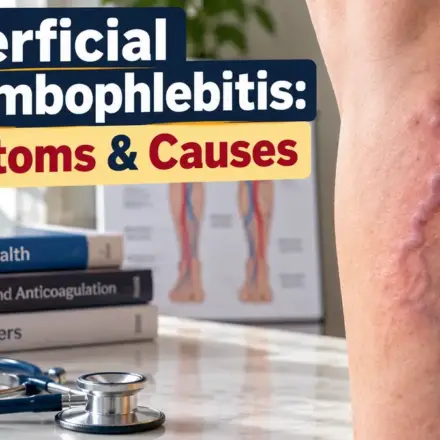
The skin directly over the affected vein often changes color. On lighter skin tones, this usually appears as a distinct red streak tracking along the path of the vein. On darker skin tones, the discoloration may appear purple, dark brown, or simply slightly darker than the surrounding skin.
Pain and tenderness
The affected area is typically highly sensitive to the touch. Even the light pressure of clothing rubbing against the skin may cause a sharp, aching, or burning pain.
Warmth around the affected area
Because superficial thrombophlebitis involves active inflammation, the skin over the clotted vein often feels noticeably warmer to the touch than the surrounding skin.
Local swelling
You may notice mild swelling in the tissue immediately surrounding the vein. Unlike a DVT, which can cause an entire limb to swell significantly, the swelling from a superficial clot is typically restricted to the area directly over and adjacent to the inflamed vein.
A firm, cord-like vein under the skin
A healthy vein compresses easily. When a superficial vein contains a clot, it often feels like a hard, firm cord beneath the skin. According to information from MedlinePlus, this hard “cord” can sometimes be felt even after the initial redness and swelling subside.
Superficial Blood Clot in the Arm or Hand
Superficial thrombophlebitis frequently occurs in the arms or hands, usually as a direct result of localized irritation. This is incredibly common after medical procedures involving an intravenous (IV) line, a blood draw, or a targeted injection.
The symptoms usually follow the path of a visible vein on the back of the hand or the inner arm. If you develop new redness, pain, swelling, or a firm vein a few days after having an IV removed, it deserves a medical evaluation. While it is often a standard superficial clot, a healthcare provider needs to rule out an infection at the IV site.
Superficial Blood Clot in the Leg
When superficial thrombophlebitis develops in the legs, it is frequently associated with varicose veins. Varicose veins are enlarged, twisted veins where blood can pool, creating an environment where a clot is more likely to form.
A superficial clot in the leg usually presents with tenderness, warmth, and redness over an existing varicose vein, turning it into a firm, painful lump. Because the leg contains large deep veins that connect to the superficial system, a clinician must carefully evaluate the leg to ensure the clot has not extended into the deeper vein network.
What Causes Superficial Thrombophlebitis?
A blood clot forms when the normal flow of blood is disrupted, the blood becomes thicker than normal, or the vein wall is damaged. Recognized risk factors and causes include:
- Varicose veins and vein disease: Blood pooling in damaged veins is a primary catalyst.
- Injury or irritation: Trauma to the area can trigger clotting and inflammation.
- IV catheters or injections: Medical needles can irritate the vein lining.
- Recent surgery or immobility: Long periods without movement slow down blood flow.
- Pregnancy or the postpartum period: The body naturally increases blood clotting factors during this time to prevent excessive bleeding during childbirth.
- Hormonal medicines: Estrogen-containing birth control pills and hormone replacement therapy can increase clotting risk.
- Underlying health conditions: Active cancer, inherited blood clotting disorders, or autoimmune diseases can make blood more prone to clotting.
Having one or more of these risk factors does not mean you will definitely develop a clot; they simply outline who might be at a higher risk. As the Cleveland Clinic notes, some people develop superficial clots without any obvious underlying cause.
Is Superficial Thrombophlebitis Dangerous?
In many cases, superficial thrombophlebitis is an uncomplicated condition that improves over a few days to weeks. However, it should not be entirely dismissed.
The primary concern is that a superficial clot can grow and extend into the deep vein system, or a separate DVT may occur simultaneously. The level of concern depends heavily on the clot’s location—specifically how close it is to a junction where a superficial vein meets a deep vein—as well as its length and the patient’s individual health history.
Superficial Thrombophlebitis Treatment Guidelines
Treatment focuses on reducing pain, resolving the inflammation, and preventing the clot from extending. Depending on the severity and location of the clot, clinicians may recommend:
- Warm compresses: Applying a warm, damp cloth to the area for 15 to 20 minutes several times a day to ease discomfort.
- Elevation: Propping the affected arm or leg above heart level when resting to reduce swelling.
- Anti-inflammatory medicines: Over-the-counter nonsteroidal anti-inflammatory drugs (NSAIDs) like ibuprofen may help reduce pain and inflammation.
- Compression stockings: For certain leg clots, prescription compression wear helps improve blood flow and reduce swelling.
- Anticoagulants (blood thinners): These are not required for everyone. However, if the clot is extensive, near a deep vein, or if the patient has a high risk of DVT, a doctor may prescribe blood thinners.
- Follow-up ultrasound: A repeat imaging test is sometimes ordered to ensure the clot is resolving and has not grown.
Do not attempt to treat a suspected clot entirely at home without a professional assessment. A doctor must determine if the clot requires prescription intervention.
How Is a Superficial Blood Clot Diagnosed?
Diagnosis typically begins with a physical examination. A healthcare provider will inspect the skin, check for warmth, and feel for a firm cord in the vein.
To confirm the diagnosis and verify the clot’s exact location, a duplex ultrasound is the standard tool. According to the Mayo Clinic, this painless imaging test allows the doctor to see the blood flowing through the veins, measure the clot, and critically, check the deep veins for DVT. While blood tests like a D-dimer may be ordered to measure clotting activity in the body, a D-dimer result alone cannot diagnose or rule out a clot.
Early-Stage Superficial Blood Clot: What to Look For
If you are developing a superficial clot, the early signs are usually localized and distinct. Watch for:
- New, sharp tenderness tracking along the line of a vein.
- Redness and warmth spreading over the skin in a specific area.
- A vein that suddenly feels firm, ropey, or painful to touch.
- Mild, localized swelling right around the sore spot.
It is important to remember that outward symptoms do not reliably show how far a clot extends internally. A small patch of redness could mask a longer clot, which is why suspected clots require medical evaluation.
Superficial Thrombophlebitis: When to Worry
While many superficial clots are highly manageable, you must monitor your symptoms carefully.
Seek prompt medical assessment for any new painful, red, warm, or swollen vein. Early evaluation ensures the right treatment path and rules out a deeper issue.
Get emergency medical help immediately if you experience any of the following symptoms, as they may indicate that a clot has broken free and traveled to the lungs, a life-threatening condition known as a pulmonary embolism (PE):
- Sudden, unexplained shortness of breath
- Chest pain that worsens when you take a deep breath or cough
- Coughing up blood
- Sudden lightheadedness, dizziness, or fainting
- A rapid heartbeat
The Centers for Disease Control and Prevention (CDC) emphasizes that these symptoms require a 911 call or an immediate trip to the emergency room.
How Long Does Superficial Thrombophlebitis Last?
With appropriate care, uncomplicated cases of superficial thrombophlebitis generally improve within one to three weeks. The initial pain, redness, and warmth typically fade first.
However, the physical firmness of the vein—the “cord” feeling—can persist for several weeks or even months as the body slowly breaks down the clot and the vein heals. Total recovery time depends heavily on the initial cause, the size of the clot, and whether any complications developed.
Frequently Asked Questions
1. What is superficial thrombophlebitis?
It is an inflammation of a vein located just beneath the skin, typically caused by a small blood clot.
2. What does a superficial blood clot look like?
It often looks like a red or discolored streak over a vein. The surrounding skin may be slightly swollen, and the vein itself may appear raised.
3. Can you get a superficial blood clot in your arm or hand?
Yes, this is very common, particularly after having blood drawn, receiving an IV, or experiencing localized trauma to the arm.
4. What are the signs of a superficial blood clot in the leg?
Signs include a firm, tender, and warm lump or cord, often forming over an existing varicose vein, accompanied by localized redness and swelling.
5. Is superficial thrombophlebitis dangerous?
On its own, it is usually a localized and manageable issue. However, it requires evaluation because it can occasionally extend into deep veins or occur alongside a more dangerous deep vein thrombosis (DVT).
6. How is superficial vein thrombosis treated?
Common treatments include warm compresses, elevating the limb, and NSAIDs for pain. In more severe or high-risk cases, a doctor may recommend compression stockings or prescribe blood thinners.
7. Can superficial thrombophlebitis turn into DVT?
Yes. If the clot grows toward the junction where the superficial vein connects to a deep vein, it can extend into the deep vein system and become a DVT.
8. How long does a superficial blood clot take to heal?
The pain and inflammation typically resolve in one to three weeks, though the hard lump of the clotted vein may take weeks or months to completely soften and disappear.
9. Can a superficial blood clot go away on its own?
Many small superficial clots resolve with conservative at-home measures like warm compresses and time. However, a doctor should confirm the diagnosis to ensure it is safe to manage conservatively.
10. When should you see a doctor for a superficial blood clot?
You should see a doctor promptly if you develop a new red, painful, and swollen vein. Go to an emergency room immediately if you experience chest pain, sudden shortness of breath, or fainting.