How to Build Healthy Eating Habits
If you’ve ever stared into your fridge at 7:30 PM, exhausted after a long day, you know that willpower is completely useless when you’re hungry and tired.
Most of us already know what we are supposed to eat. We know vegetables are better than vending machine snacks, and water is better than soda. The disconnect isn’t a lack of knowledge; it’s a lack of a realistic system. We try to overhaul our entire diet on a Monday, expect perfection, and inevitably burn out by Thursday.
Building healthy eating habits isn’t about becoming a person who suddenly loves kale and hates pizza. It’s about structuring your life so that making a decent choice is easier than making a poor one.

Table of Contents
Environment Beats Willpower
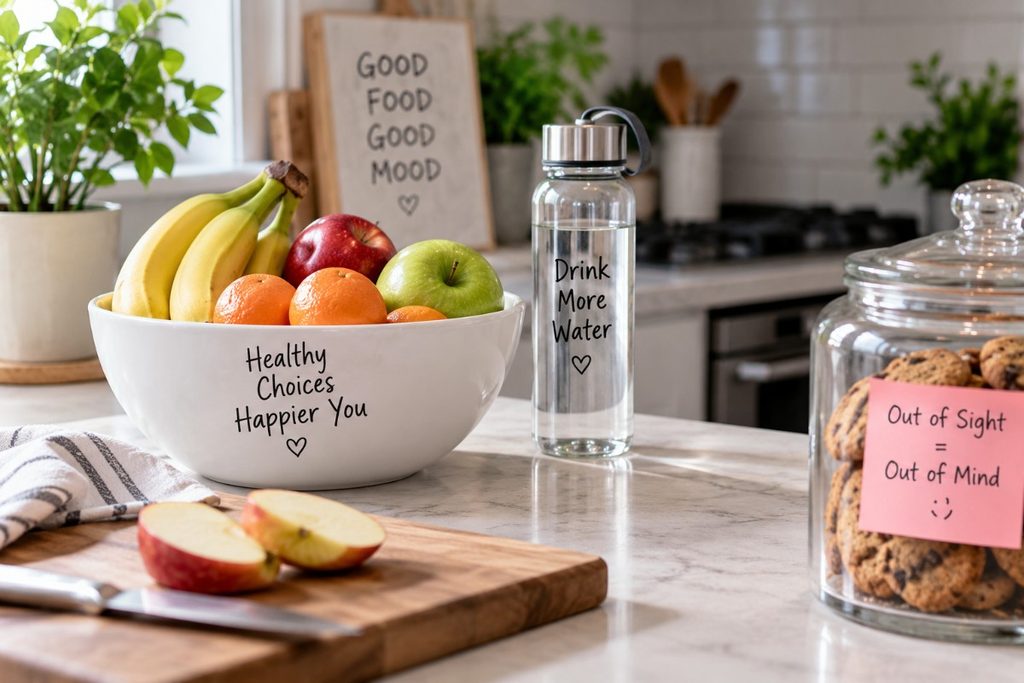
If there are cookies on your kitchen counter, you will eventually eat them. If there are washed grapes at eye level in your fridge, you will eat those instead.
We drastically overestimate our ability to resist temptation and underestimate how lazy we are. Use that laziness to your advantage. Make the healthy choice the path of least resistance.
- Do not keep foods in the house that you know you have no off-switch for. If you want ice cream, make it a deliberate trip to a local shop rather than a permanent fixture in your freezer.
- Put a bowl of fruit on the counter where you can see it.
- Keep a water bottle at your desk. If it’s right next to your hand, you’ll drink it out of sheer habit.
Practice “Ingredient Prep,” Not Meal Prep
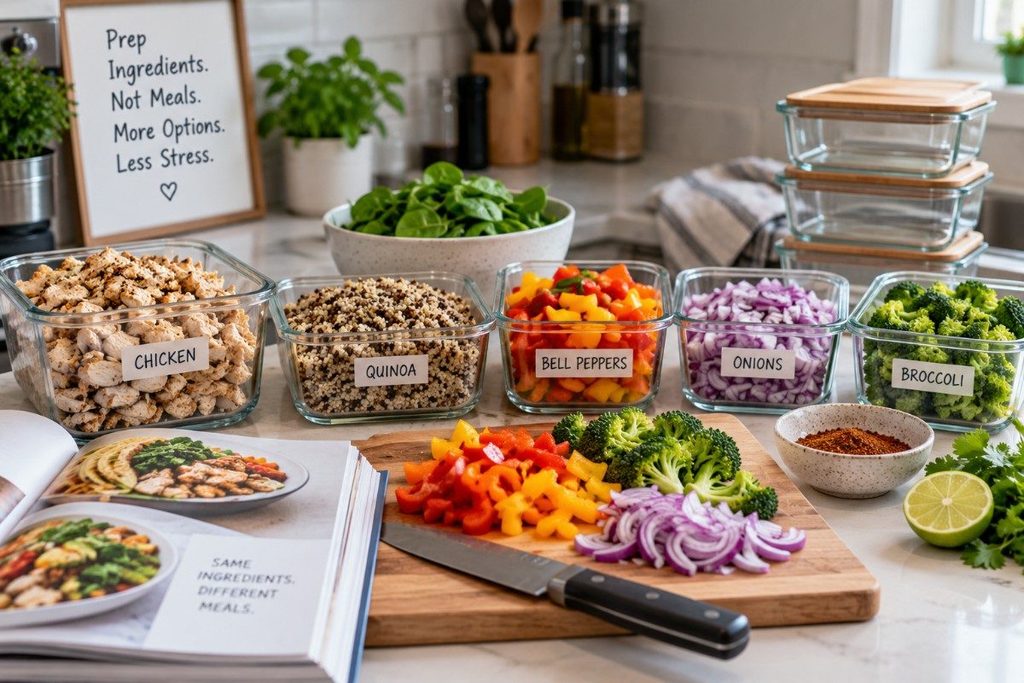
The internet loves to show off “Meal Prep Sundays”—fifteen matching containers of identical chicken, rice, and broccoli. If you enjoy eating the exact same lukewarm meal for five days, great. But most people get bored by Wednesday and order takeout anyway.
Instead, try ingredient prep. Wash and chop some bell peppers and onions. Cook a large batch of a versatile protein, like shredded chicken, tofu, or ground turkey. Make a pot of quinoa or rice.
When Wednesday night rolls around and you have zero energy, you don’t have to cook from scratch. You just toss the pre-cooked chicken and chopped veggies into a pan with some taco seasoning, or throw them over a bed of greens with dressing. You’ve cut the cooking time from 40 minutes to 5 minutes.
The “Crowding Out” Method
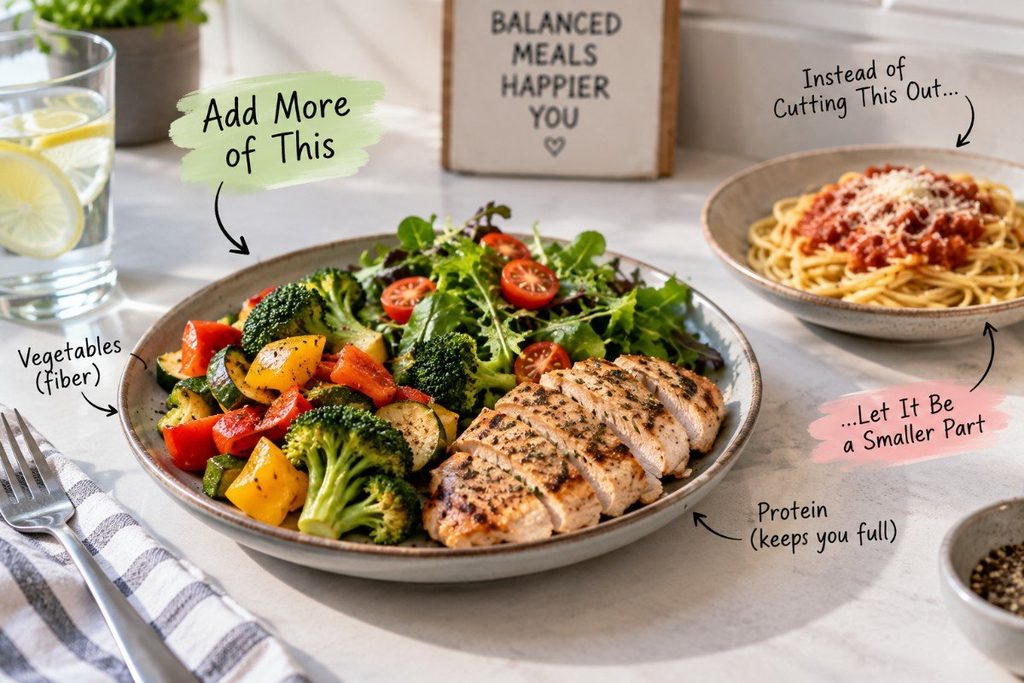
Diets fail because human brains hate deprivation. When you tell yourself, “I can’t eat carbs,” carbs are suddenly the only thing you can think about.
Instead of focusing on what you need to remove, focus strictly on what you need to add. Before you worry about cutting out the pasta or the sweets, make a deal with yourself: I need to eat 30 grams of protein and a serving of vegetables at dinner.
By the time you’ve eaten the protein and the fiber, you are physically fuller and your blood sugar is stable. If you still want the pasta afterward, eat it. You will naturally eat a smaller portion without feeling restricted, simply because you “crowded it out” with the nutrients your body actually needed.
Conquer One Meal at a Time
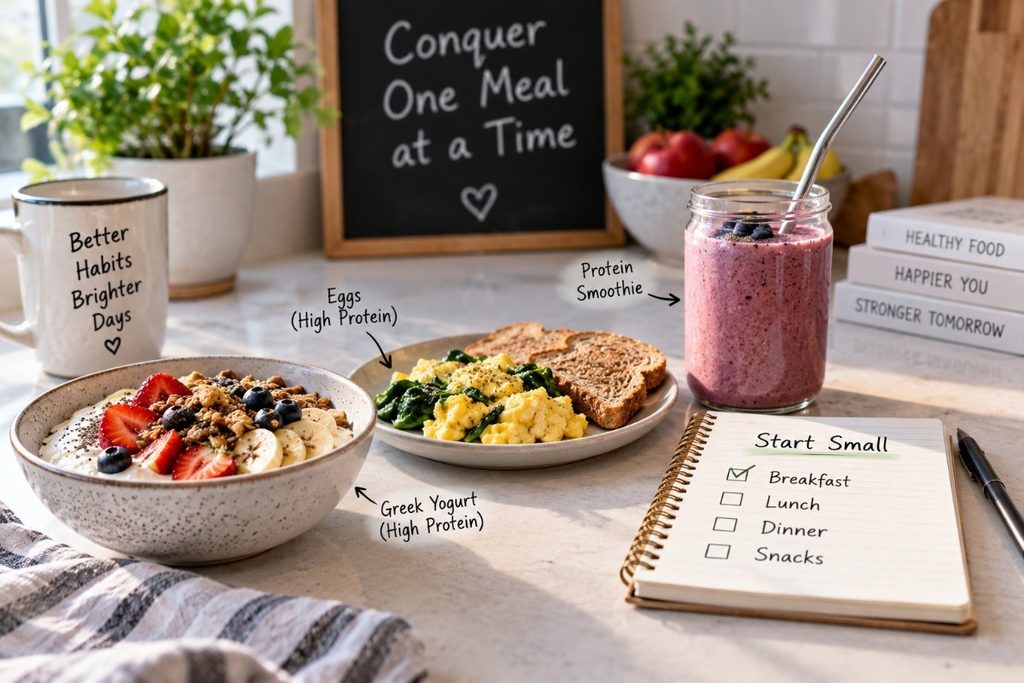
Do not try to change your breakfast, lunch, dinner, and snacks all on the same day. That is a recipe for decision fatigue.
Pick one meal to master first. For most people, breakfast is the easiest target because we are usually in a routine and eat the same things repeatedly. Spend two weeks upgrading your breakfast to something high in protein (like Greek yogurt, eggs, or a protein smoothie). A high-protein breakfast stabilizes your appetite for the entire day, making it much easier to avoid the mid-afternoon sugar crash.
Once your new breakfast feels completely automatic, move on to upgrading your lunch. Look at your kitchen environment right now and pick one item sitting on your counter that you snack on mindlessly. Change the environment, and the habit will follow.
What is the one meal in your daily routine that currently feels the most chaotic or rushed?