
Sleep Apnea Symptoms: 7 Warning Signs You Should Know
Waking up exhausted after eight hours in bed is often blamed on work stress, aging, or screen time before sleep. For an estimated 30 million adults in the United States, however, the real culprit is sleep apnea—a respiratory sleep disorder that repeatedly halts breathing throughout the night.
The primary challenge with sleep apnea is that its most severe events occur while you are unconscious. Many individuals live with the condition for years without realizing it, dismissing chronic daytime fatigue or morning headaches as minor annoyances. Left untreated, sleep apnea is far from harmless; it places repeated stress on the cardiovascular system and metabolic health. Recognizing its warning signs is the first step toward getting evaluated and restoring restorative sleep.
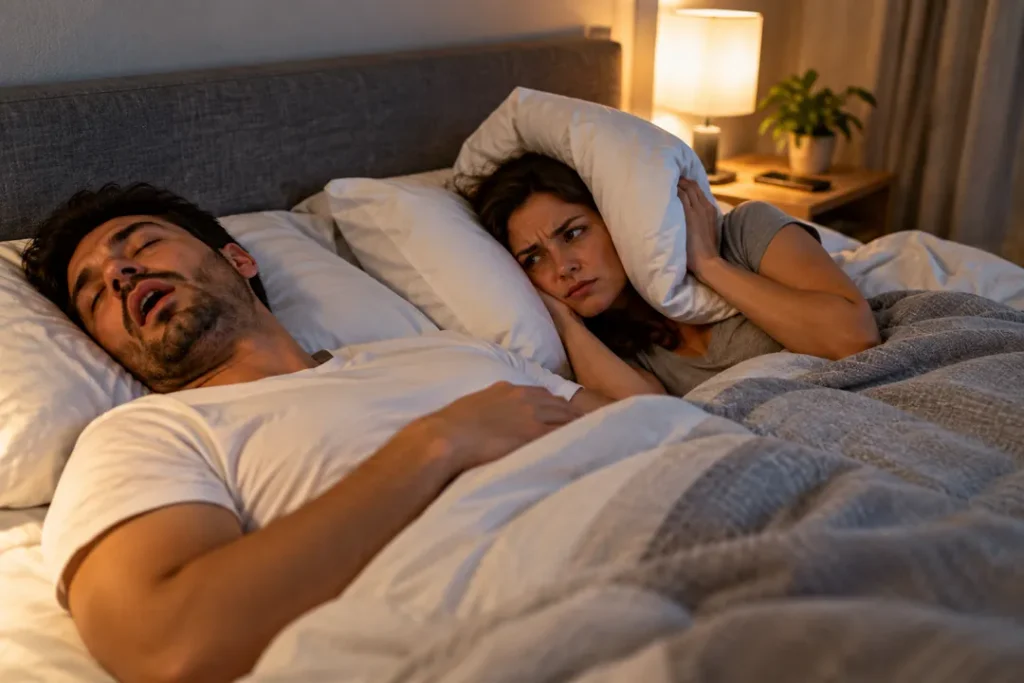
Table of Contents
What Actually Happens During Sleep Apnea?
Sleep apnea occurs when normal breathing is disrupted during sleep. These pauses—called apneas—last from ten seconds to over a minute and can occur dozens or even hundreds of times each night. Each pause drops blood oxygen levels and causes the brain to briefly jolt the body awake to reopen the airway, fragmenting sleep architecture even if the sleeper has no memory of waking up.
Clinicians distinguish between two primary forms of the condition:
- Obstructive Sleep Apnea (OSA): Accounting for the vast majority of cases, OSA happens when the muscles supporting the soft tissues in the back of the throat—including the soft palate, tonsils, and tongue—relax excessively, physically blocking airflow into the lungs.
- Central Sleep Apnea (CSA): Far less common, CSA is not a mechanical blockage. Instead, the brain’s respiratory control centers temporarily fail to send the appropriate signals to the diaphragm and chest muscles that govern breathing.
7 Warning Signs of Sleep Apnea You Shouldn’t Ignore
While symptoms can differ between men and women, and vary across age groups, these seven indicators represent the most common patterns seen in clinical sleep medicine.
1. Loud, Chronic Snoring with Sudden Choking or Gasping
Snoring is the most widely recognized sign of airway narrowing, but sleep apnea snoring has a distinct rhythm. Rather than steady, quiet rumbling, it typically involves loud snoring broken by sudden silences (the apnea), followed by an explosive snort, choke, or gasp as the brain forces the airway open. Because you cannot hear yourself sleep, this sign is most often reported by a bed partner or family member.
2. Excessive Daytime Sleepiness (Hypersomnia)
Unrefreshing sleep is a direct consequence of sleep fragmentation. People with sleep apnea often experience profound drowsiness during waking hours, regardless of how long they stayed in bed. This goes beyond standard sluggishness: individuals may struggle to stay awake during passive activities, such as reading, watching television, sitting in meetings, or driving.
3. Waking Up with a Dry Mouth or Sore Throat
Repeatedly waking up with parched oral tissues is a hallmark of heavy mouth breathing. When the pharyngeal airway collapses during sleep, the body naturally opens the mouth to compensate for restricted nasal airflow. Hours of continuous mouth breathing evaporate saliva, leaving the throat and oral mucosa dry and irritated by morning.
4. Frequent Morning Headaches
Waking up with a dull, throbbing ache across the forehead or behind the eyes is common in untreated obstructive sleep apnea. During repeated breathing pauses, carbon dioxide builds up in the bloodstream while oxygen saturation drops. Elevated carbon dioxide levels cause cerebral blood vessels to dilate, triggering morning vascular headaches that typically fade within a few hours of waking and breathing normally.
5. Nocturia (Waking Frequently to Urinate)
Waking up two or more times a night to use the bathroom is frequently assumed to be a bladder or prostate issue. However, in sleep apnea, the mechanism is cardiac: when the airway collapses and the chest struggles against a closed throat, the pressure inside the chest cavity drops sharply. The heart interprets this pressure shift as an overload of fluid and releases atrial natriuretic peptide (ANP), a hormone that signals the kidneys to produce excess urine overnight.
6. Mood Changes, Irritability, and Brain Fog
Chronic oxygen deprivation and a lack of deep slow-wave and REM sleep impair prefrontal cortex function. Over time, this leads to daytime cognitive difficulties:
- Poor concentration and reduced attention span
- Memory lapses and slower mental processing
- Heightened irritability, mood swings, or feelings of anxiety
- Depressive symptoms that fail to respond adequately to standard antidepressant therapy
7. Insomnia or Frequent Nighttime Awakenings
While sleep apnea is typically associated with heavy snoring and sleepiness, some individuals—particularly women—primarily experience sleep maintenance insomnia. They may wake up repeatedly throughout the night with a racing heart, a feeling of panic, or an inability to fall back asleep, completely unaware that a breathing pause triggered the arousal.
Comparing Simple Snoring and Sleep Apnea
Because simple snoring and obstructive sleep apnea share overlapping airway mechanisms, telling them apart requires looking at systemic daytime indicators:
| Feature | Primary (Simple) Snoring | Obstructive Sleep Apnea (OSA) |
| Breathing Pattern | Continuous, steady airflow | Repeated pauses, silent gaps, and gasps |
| Blood Oxygen | Remains normal throughout the night | Drops periodically (hypoxemia) |
| Daytime Energy | Normal or mild tiredness | Severe sleepiness, fatigue, brain fog |
| Morning Symptoms | None or mild throat dryness | Severe dry mouth, morning headaches |
| Cardiovascular Impact | Generally minimal | Elevated risk of hypertension and arrhythmias |
Who Is at Greater Risk?
Sleep apnea can affect anyone, including children, but specific biological and lifestyle risk factors significantly elevate the likelihood of airway collapse:
- Anatomical characteristics: A narrow throat, enlarged tonsils, a thick neck circumference (typically greater than 17 inches in men and 16 inches in women), or a recessed lower jaw (retrognathia).
- Body weight: Excess body mass, particularly fat deposits around the upper airway, increases mechanical compression on the pharynx during sleep.
- Age and sex: Men are roughly two to three times more likely to have sleep apnea than premenopausal women; however, a woman’s risk rises significantly after menopause.
- Substance use: Alcohol, sedatives, and muscle relaxants loosen throat musculature, worsening obstruction severity.
- Underlying medical conditions: Type 2 diabetes, congestive heart failure, treatment-resistant hypertension, and polycystic ovary syndrome (PCOS) all exhibit strong clinical associations with OSA.
How Sleep Apnea Is Diagnosed and Treated
Sleep apnea cannot be confirmed through symptoms alone; an objective sleep study is required to measure the Apnea-Hypopnea Index (AHI)—the number of breathing pauses that occur per hour of sleep.
- Home Sleep Apnea Testing (HSAT): For adults with a high pre-test probability of uncomplicated moderate-to-severe OSA, clinicians often order an HSAT. Worn at home, this portable device records breathing effort, airflow, and blood oxygen levels.
- In-Lab Polysomnography (PSG): Conducted overnight in a specialized sleep center, in-lab testing tracks brain waves, eye movements, heart rhythms, muscle activity, and airflow. It is the gold standard for evaluating central sleep apnea, complex sleep disorders, or patients with underlying cardiopulmonary disease.
Established Medical Treatments
Treatment focuses on keeping the airway stable and restoring blood oxygen levels:
- Positive Airway Pressure (CPAP/BiPAP): The primary and most effective frontline treatment for moderate-to-severe OSA. A CPAP machine delivers gentle, pressurized air through a mask to act as a pneumatic splint, keeping the airway open continuously.
- Custom Oral Appliances: Fitted by a dentist trained in dental sleep medicine, mandibular advancement devices hold the lower jaw forward to maintain space in the back of the throat. These are typically recommended for mild-to-moderate OSA or individuals unable to tolerate CPAP.
- Positional Therapy: For positional sleep apnea (where breathing pauses happen almost exclusively while sleeping on the back), specialized wedges or wearable sensors prevent supine sleep.
- Lifestyle Modifications: Structured weight management, avoiding evening alcohol, and treating underlying nasal congestion can meaningfully reduce AHI.
When to Seek Medical Evaluation
If you or a partner notice loud snoring interrupted by choking or breathing pauses, or if you struggle with unrelenting daytime sleepiness, schedule a consultation with a primary care clinician or sleep specialist.
Seek prompt medical attention if you experience:
- Episodes of nodding off while driving or operating machinery
- Sudden nighttime shortness of breath accompanied by chest pain
- Severe morning headaches accompanied by significantly elevated blood pressure
- Difficulty managing blood pressure despite taking multiple medications
Sleep apnea is a chronic medical condition, but modern diagnostic tools and targeted therapies can eliminate nocturnal arousals, protect cardiovascular health, and restore daytime clarity.
Sources
- American Academy of Sleep Medicine (AASM). “Obstructive Sleep Apnea: Clinical Guidelines and Facts.” Updated 2023.
- Centers for Disease Control and Prevention (CDC). “Sleep and Sleep Disorders: Overview.” Updated 2024.
- National Heart, Lung, and Blood Institute (NHLBI). “What Is Sleep Apnea?” National Institutes of Health, 2022.
- Patil, S. P., et al. “Treatment of Adult Obstructive Sleep Apnea with Positive Airway Pressure: An American Academy of Sleep Medicine Clinical Practice Guideline.” Journal of Clinical Sleep Medicine, 2019; 15(2): 335–343.
- Gottlieb, D. J., & Punjabi, N. M. “Diagnosis and Management of Obstructive Sleep Apnea: A Review.” JAMA, 2020; 323(14): 1389–1400.