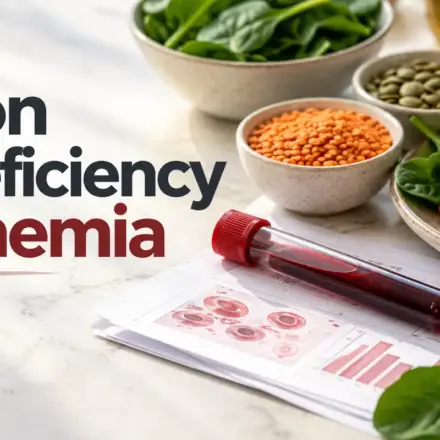
Iron Deficiency Anemia: Symptoms, Causes & Treatment
Iron is an essential mineral that the body uses to build hemoglobin, a protein in red blood cells that transports oxygen from the lungs to tissues and organs throughout the body. When iron levels decline, your body produces fewer healthy red blood cells, reducing oxygen delivery and leading to noticeable physical signs.
Women are especially prone to low iron due to factors like menstrual blood loss and the increased nutritional demands of pregnancy. Symptoms can begin quietly as stored iron depletes and often become more disruptive if that depletion progresses into clinical iron deficiency anemia. Because many of these symptoms overlap with stress, thyroid conditions, or basic lack of sleep, a formal blood test is essential to confirm low iron before starting treatment.
When red blood cells lack sufficient hemoglobin to deliver oxygen efficiently, tissues throughout the body experience reduced oxygenation. The following ten signs are among the most common and recognizable indicators of low iron stores:
1. Persistent Fatigue and Low Energy
Extreme exhaustion that does not resolve after a full night of rest is often the earliest and most widespread complaint. Without adequate hemoglobin, your muscles and organs receive less oxygen, forcing your heart to work harder to compensate. This drains your energy reserves, leaving you feeling perpetually run-down.
2. General Physical Weakness
Alongside systemic fatigue, you may notice straightforward muscle weakness. Simple physical tasks—such as carrying groceries, climbing stairs, or completing a routine workout—can feel unusually strenuous because working muscles are deprived of optimal oxygen flow.
3. Pale Skin
Hemoglobin gives red blood cells their color, which in turn gives skin its healthy, rosy undertone. When levels drop, the skin can lose its color. Paleness may appear across the entire face, or it may be localized in specific areas such as the inside of the lower eyelids, gums, lips, and nail beds.
4. Shortness of Breath During Activity
If your oxygen-carrying capacity drops, your lungs must work overtime to take in more oxygen. If you find yourself breathing heavily or feeling winded during everyday activities that used to be easy—like walking briskly across a parking lot or taking a flight of stairs—depleted iron may be a contributing factor.
5. Dizziness or Lightheadedness
Reduced oxygen flow reaching the brain can cause sudden waves of lightheadedness, a floating sensation, or feeling faint, particularly when standing up quickly.
6. Frequent Headaches
Low hemoglobin levels mean less oxygen reaches brain tissues, which can trigger swelling in cerebral blood vessels and generate localized pressure. Women with low iron frequently report recurring, dull tension headaches that resist common remedies.
7. Cold Hands and Feet
When the body senses reduced oxygenation, it naturally redirects blood flow away from the extremities to prioritize core vital organs like the brain, heart, and kidneys. As a result, your fingers and toes may feel persistently freezing to the touch, even in comfortable room temperatures.
8. Brittle or Spoon-Shaped Nails
In early iron deficiency, fingernails often become thin, soft, and prone to chipping or cracking. In cases of severe, long-standing deficiency, nails can develop central depressions with raised edges—a physical condition known as koilonychia, or “spoon nails.”
9. Hair Shedding or Hair Loss
Hair follicles require substantial oxygen and nutrient delivery to sustain active growth phases. When iron stores fall, the body shifts available resources away from non-essential functions like hair production toward critical organs. This can lead to increased shedding in the shower or diffuse thinning along the scalp.
10. Unusual Cravings (Pica)
One of the most peculiar signs of depleted iron is pica—an intense, compulsive craving to chew on non-food items or non-nutritive substances. The most common manifestation is pagophagia (a strong urge to crunch on ice cubes), though some individuals develop cravings for clay, chalk, dirt, or cornstarch.
Other Physical Indicators
In addition to these primary signs, low iron can cause localized inflammation in the mouth, leading to a smooth, swollen, or unusually sore tongue (atrophic glossitis) and cracks at the corners of the mouth (angular cheilitis). Some women experience restless legs syndrome—an uncomfortable creeping sensation in the legs that worsens at night—or heart palpitations, where the heart beats rapidly or erratically to circulate oxygen-depleted blood.
What Causes Low Iron in Women?
Iron deficiency occurs when the body’s iron losses or daily demands exceed what it absorbs from food. In women, the most common causes include:
- Heavy Menstrual Bleeding (Menorrhagia): Women who lose significant amounts of blood during their monthly cycle lose iron faster than diet can replenish it. This is the single most common cause of iron-deficiency anemia in women of reproductive age.
- Pregnancy and Breastfeeding: During pregnancy, blood volume expands significantly to support fetal growth and the placenta. Without increased intake, iron stores rapidly deplete.
- Low Dietary Iron Intake: Diets low in meat, poultry, or iron-dense plant foods—including unsupplemented vegetarian or vegan diets—can lead to gradual depletion over time.
- Impaired Intestinal Absorption: Iron is absorbed primarily in the upper small intestine. Digestive disorders like celiac disease, Crohn’s disease, ulcerative colitis, or previous bariatric surgeries can disrupt mucosal absorption.
- Gastrointestinal Blood Loss: Bleeding ulcers, colon polyps, hemorrhoids, or regular use of nonsteroidal anti-inflammatory drugs (NSAIDs like ibuprofen or naproxen) can cause subtle, chronic blood loss in the digestive tract.
- Frequent Blood Donation: Donating blood regularly can deplete stored ferritin if adequate recovery time and dietary replacement are not maintained.
Iron Deficiency vs. Iron-Deficiency Anemia
It is common to hear “low iron” and “anemia” used interchangeably, but they represent different stages of mineral depletion:
- Iron Deficiency (Depleted Stores): Your body’s total iron reserve, measured as ferritin, drops below normal levels. However, you still have enough iron circulating to produce a normal volume of hemoglobin. You may feel tired, weak, or run-down during this stage, even though red blood cell counts remain technically normal.
- Iron-Deficiency Anemia: Iron reserves become so exhausted that your bone marrow can no longer produce enough hemoglobin to build normal red blood cells. The red cells produced are fewer in number, smaller (microcytic), and paler (hypochromic).
A person can experience genuine iron deficiency and related symptoms well before clinical anemia appears on a routine laboratory report.
How Is Low Iron Diagnosed?
Symptoms alone cannot confirm an iron deficit because fatigue, headaches, and hair shedding occur across multiple medical conditions. A physician relies on specific blood tests:
- Complete Blood Count (CBC): Measures hemoglobin concentration and hematocrit (the proportion of blood made up of red cells), along with mean corpuscular volume (MCV), which indicates whether cells are abnormally small.
- Serum Ferritin: Measures the primary storage protein for iron in the body. A low ferritin level is the most specific indicator of depleted iron reserves, even if hemoglobin is still within normal range.
- Serum Iron and Total Iron-Binding Capacity (TIBC): Evaluates how much iron is bound to transferrin (the transport protein) and measures the blood’s capacity to attach to iron.
- Transferrin Saturation: Calculates the percentage of transferrin iron-binding sites that are occupied by iron.
A normal hemoglobin level does not automatically guarantee adequate iron stores. If symptoms persist, checking a ferritin level provides a more complete assessment.
Best Iron-Rich Foods for Women
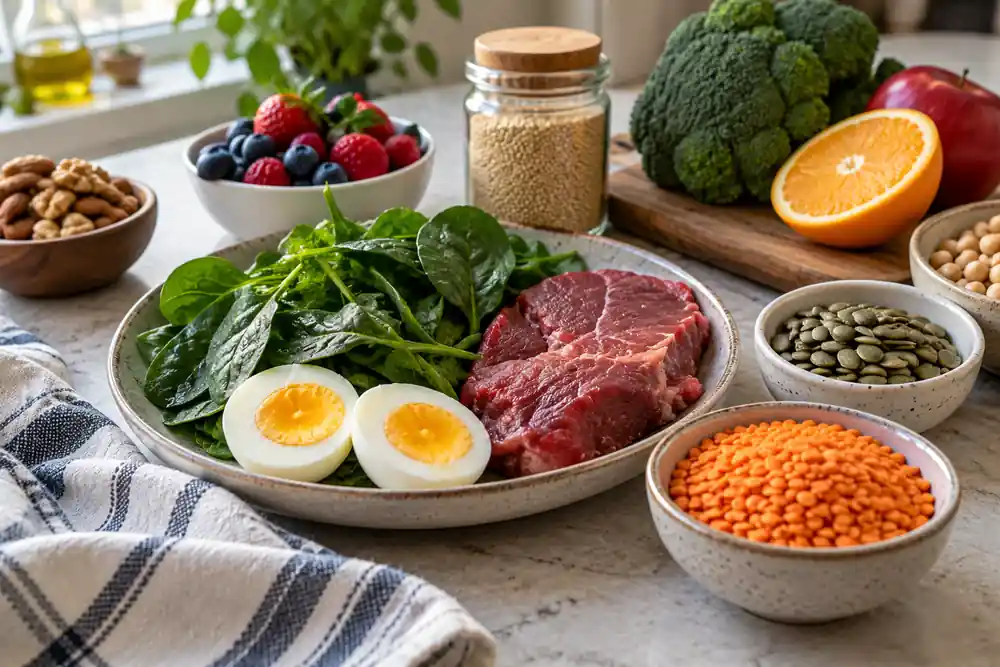
Dietary iron comes in two distinct forms: heme iron (found in animal products, which the body absorbs easily) and non-heme iron (found in plant sources and fortified foods, which is absorbed less efficiently).
| Iron Category | Food Source | Practical Tips |
| Heme Iron (Higher Absorption) | Lean red meat, poultry, salmon, canned sardines, oysters, tuna | Absorbed at 2 to 3 times the rate of plant iron; not affected by dietary inhibitors. |
| Non-Heme Iron (Plant-Based) | Lentils, chickpeas, white beans, edamame, tofu | Soak beans and cook thoroughly to improve bioavailability. |
| Greens & Seeds | Spinach, Swiss chard, pumpkin seeds, hemp hearts, sesame seeds | Dense in micronutrients; pair with healthy fats for overall nutrient uptake. |
| Fortified Foods | Whole-grain breakfast cereals, enriched oats, fortified bread | Check nutrition labels for percent daily value of elemental iron. |
Boosting Absorption
To maximize non-heme iron absorption, pair plant foods with vitamin C-rich foods (such as bell peppers, citrus fruits, strawberries, or tomatoes). Ascorbic acid chemically transforms non-heme iron into a form the intestines absorb much more easily.
Conversely, avoid drinking coffee, black tea, or milk directly alongside iron-rich meals, as tannins, polyphenols, and calcium can inhibit iron uptake.
Iron Deficiency Treatment
Treating low iron requires restoring your body’s depleted iron reserves while simultaneously finding and managing the underlying cause of the blood loss or malabsorption.
Clinician-Guided Oral Supplements
Over-the-counter and prescription oral iron (such as ferrous sulfate, ferrous gluconate, or ferrous fumarate) is the standard frontline treatment.
- Supplements are best absorbed on an empty stomach with water or orange juice.
- If gastrointestinal side effects like nausea, constipation, or dark stools occur, taking iron with a light meal or using alternate-day dosing under medical guidance can improve tolerance.
- Never start self-prescribing iron supplements without a confirmed blood test. The body cannot easily excrete excess iron, and taking unnecessary supplements risks iron overload (hemochromatosis), which damages the liver and heart.
Intravenous (IV) Iron Infusions
If oral supplements cause severe digestive distress, if malabsorption prevents the gut from taking up oral iron, or if blood loss is rapid, an intravenous iron infusion delivers iron directly into the bloodstream to replenish stores rapidly.
Addressing the Underlying Cause
Taking iron while ignoring heavy menstrual bleeding or a gastrointestinal bleed only provides a temporary fix. A healthcare provider will evaluate whether hormonal birth control, surgical evaluation for uterine fibroids, or a gastroenterology workup (such as an endoscopy or colonoscopy) is needed to stop ongoing blood loss.
When Should You See a Doctor?
You should arrange an evaluation with a healthcare provider if you experience unexplained, ongoing fatigue, declining exercise stamina, heavy periods, or unexpected hair thinning.
Urgent Warning Signs
Seek prompt emergency medical care if low iron symptoms escalate to include:
- Chest pain or pressure
- Severe, sudden shortness of breath at rest
- Fainting spells (syncope) or severe confusion
- A dangerously rapid, pounding, or irregular heartbeat accompanied by dizziness
Frequently Asked Questions
What are the first signs of low iron in women?
The earliest signs are typically subtle and easy to dismiss, including uncharacteristic afternoon fatigue, mild muscle sluggishness during routine movement, and brief dizzy spells upon standing.
What are five unusual signs of iron deficiency?
Five unexpected physical signs include:
- Pica (compulsive cravings to chew ice, chalk, or clay)
- Brittle, concave “spoon nails” (koilonychia)
- Cracks at the outer corners of the mouth (angular cheilitis)
- A smooth, swollen, or tender tongue (atrophic glossitis)
- Restless legs syndrome, causing an uncontrollable urge to move the legs at night
Can low iron cause hair loss?
Yes. Hair follicle matrix cells divide rapidly and require a consistent supply of oxygen and ferritin to sustain growth. When iron stores plummet, the body diverts iron to critical organs, shifting hair follicles into a resting or shedding phase.
Can iron deficiency cause muscle aches and joint pain?
While low iron primarily causes muscle weakness and exercise intolerance, reduced tissue oxygenation can lead to general muscle soreness, fatigue-related cramping, and localized pain after minimal physical exertion.
What are the symptoms of severe iron deficiency?
Severe deficiency impairs cardiovascular function, causing resting shortness of breath, a pounding heart (tachycardia), profound pale or gray skin tone, fainting spells, and chest discomfort. Any chest pain or severe breathing difficulty requires urgent medical attention.
What foods help increase iron levels?
Heme sources like lean beef, turkey, chicken, and sardines provide readily absorbed iron. Plant sources include lentils, chickpeas, pumpkin seeds, spinach, and fortified cereals, especially when eaten alongside vitamin C-rich foods.
How long does it take to recover from iron deficiency?
Most people notice their energy levels improving within 2 to 4 weeks of starting targeted iron supplementation. However, fully replenishing bone marrow and tissue ferritin stores typically requires 3 to 6 months of consistent therapy followed by maintenance monitoring.
Can you have low iron without anemia?
Yes. You can have non-anemic iron deficiency, meaning your ferritin levels are depleted while your hemoglobin remains within the normal range. This stage still causes genuine symptoms like fatigue, brain fog, and exercise intolerance.
Related Healthfity reading suggestions:
- Understanding Your Complete Blood Count (CBC) Lab Results
- How to Pair Vitamins and Minerals for Maximum Nutrient Absorption
- Heavy Menstrual Cycles: When Bleeding Becomes a Medical Concern