Impetigo Symptoms: Causes, Types, and Treatment
Impetigo is a highly contagious bacterial infection that affects the superficial layers of the skin. It frequently causes red sores that can burst, ooze fluid, and eventually form distinct yellowish or honey-colored crusts. While it is most commonly seen on the face, hands, and arms, the infection can spread to any part of the body.
Impetigo is a contagious bacterial skin infection common in children but possible at any age. It typically starts as red, itchy sores that rupture and develop honey-colored crusts. Because it spreads easily through physical contact, it requires professional medical diagnosis and is usually treated with prescription antibiotics to clear the infection and stop the spread.
What Is Impetigo?
Impetigo occurs when specific bacteria break through the skin’s outer defense system. Once inside, the bacteria multiply, leading to inflammation, sores, and blisters. Because children’s immune systems are still developing and they frequently interact in close quarters, impetigo is often viewed as a childhood illness. However, adolescents and adults can absolutely catch it, particularly after skin injuries or when living in close contact with an infected person. Early assessment matters because prompt treatment reduces physical discomfort and stops the infection from passing to others.
What Does Impetigo Look Like? Symptoms and Early Signs
The presentation of impetigo can vary depending on the specific bacteria involved and the individual’s skin tone. While the signs below strongly point toward impetigo, only a healthcare professional can provide an accurate diagnosis.
Early symptoms of impetigo
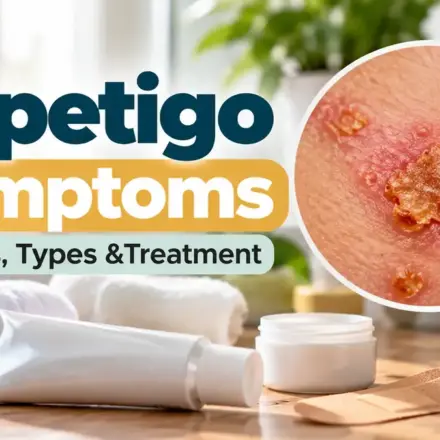
The infection usually begins as a cluster of small, red, itchy spots or pimple-like sores. At this stage, it can easily be mistaken for a bug bite or a minor rash.
Red sores, blisters, and honey-colored crusts
As the infection progresses, the small sores rapidly enlarge into blisters that fill with fluid or pus. These blisters break open easily, leaving a raw, oozing area. Within a few days, the fluid dries and forms a signature golden or honey-colored crust over the sore.
Itching, soreness, and oozing
The sores are usually quite itchy and can be mildly painful or tender to the touch. The continuous oozing of fluid before the crust forms is a hallmark of the active infection phase.
Common locations on the face, hands, arms, and legs
While impetigo can appear anywhere, it typically targets exposed skin. It is most frequently found around the nose and mouth, as well as on the forearms, hands, and lower legs.
How the sores can spread to nearby skin
Because the fluid inside the blisters is full of bacteria, scratching a sore and then touching another part of the body can easily seed new areas of infection.
What Are the Different Types of Impetigo?
Doctors classify impetigo into three main types based on the severity of the infection and how it physically affects the skin. Ecthyma is often discussed alongside impetigo, but it is actually a deeper, more severe progression of the infection.
Comparison of Impetigo Types
| Type | Appearance | Typical Severity | Affected Skin Layer |
| Non-bullous impetigo | Small sores that burst, ooze, and form a honey-colored crust. | Mild to moderate; accounts for roughly 70% of cases. | Superficial epidermis |
| Bullous impetigo | Larger, fluid-filled blisters that can stay intact longer before bursting. | Moderate; blisters can leave a shiny, raw surface when they pop. | Superficial epidermis |
| Ecthyma | Deep, pus-filled sores that form thick, dark crusts and open ulcers. | Severe; can cause permanent scarring. | Deep epidermis and dermis |
What Causes Impetigo?
Impetigo is caused by two specific types of bacteria:
- Staphylococcus aureus (Staph)
- Group A Streptococcus (Strep)
These bacteria naturally live in the environment and sometimes even on human skin without causing harm. However, they can cause an infection when they enter the body through a break in the skin. This break can be microscopic or obvious, such as a cut, scrape, burn, or scratching from insect bites. Skin conditions that compromise the skin barrier, such as eczema, also provide an easy entry point. In some cases, impetigo can develop on skin that has no visible damage at all.
Is Impetigo Contagious? How Does It Spread?
Impetigo is highly contagious. It spreads primarily through direct, skin-to-skin contact with the fluid from an infected person’s sores.
It can also spread indirectly. If an infected person touches their sores and then handles a towel, piece of clothing, toy, or doorknob, the bacteria can survive on that surface and infect the next person who touches it. This easy transmission is why managing the infection quickly is vital for entire households.
Who Is at Higher Risk of Impetigo?
Anyone can contract impetigo, but certain factors increase the likelihood of infection:
- Age: Children between the ages of 2 and 5 are most susceptible.
- Close-contact environments: Daycares, schools, and crowded living situations accelerate the spread. Children in these settings are also exposed to respiratory viruses like RSV and colds, which can cause a runny nose that irritates the skin above the lip, paving the way for bacteria.
- Skin conditions: Having eczema, dermatitis, or other skin infections compromises the skin’s protective barrier.
- Climate: Infections peak during warm, humid summer months.
- Contact sports: Wrestling, football, and martial arts increase the risk of skin-to-skin transmission.
- Compromised immunity: People with weakened immune systems, or those managing certain chronic diseases, may have a harder time fighting off the initial bacterial exposure. Taking steps to support your immune system, like eating a balanced diet, is helpful for overall health, but cannot prevent impetigo on its own.
How Is Impetigo Diagnosed?
A healthcare clinician can usually diagnose impetigo simply by examining the appearance of the skin sores. Routine blood tests are not necessary. However, if the infection is widespread, does not respond to standard antibiotics, or keeps coming back, the doctor may gently run a cotton swab over a sore. This swab is sent to a lab for a bacterial culture to identify the exact bacteria causing the problem and determine which antibiotic will be most effective.
How Is Impetigo Treated?
Because impetigo is bacterial, it requires antibiotics. The goal of treatment is to kill the bacteria, speed up healing, and stop the patient from being contagious.
Topical prescription antibiotics
For mild, non-bullous impetigo that is confined to a small area of the body, doctors typically prescribe a topical antibiotic ointment or cream (such as mupirocin or retapamulin). These are applied directly to the sores.
Oral antibiotics
If the infection has spread to multiple areas, if it involves bullous impetigo, or if it has progressed to ecthyma, oral antibiotics (pills or liquid) are usually necessary to fight the infection systemically.
What to do if the infection is not improving
If the sores continue to spread, or if they have not begun to heal after three days of prescribed treatment, contact your doctor. They may need to change the antibiotic.
Why you should not use leftover antibiotics or self-prescribe
Never use leftover antibiotic creams from a previous illness. Using the wrong medication, or using an antibiotic incorrectly, can lead to antibiotic-resistant bacteria, making future infections much harder to treat.
Impetigo Treatment Overview
| Treatment Type | How It Is Used | Best For |
| Topical Antibiotics | Cream/ointment applied directly to sores. | Mild, localized infections (small patches). |
| Oral Antibiotics | Liquid or pills taken by mouth. | Widespread infection, bullous impetigo, or ecthyma. |
| Supportive Skin Care | Gentle washing with soap and water. | Used alongside antibiotics; helps remove loose crusts safely. |
Home Care and How to Prevent Impetigo From Spreading
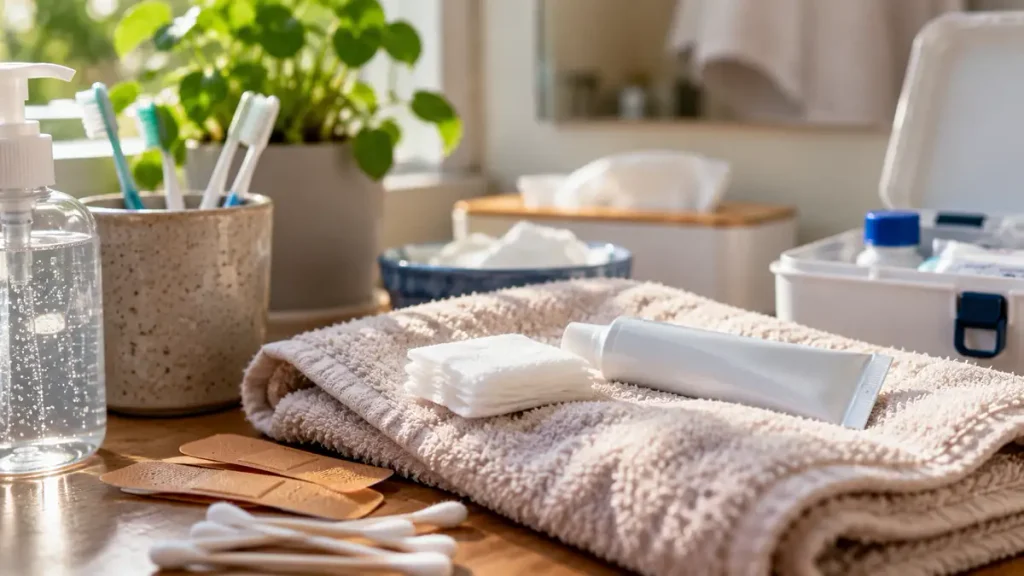
Medical treatment is required, but home care is equally important to contain the spread. Here is a practical prevention checklist:
- Keep sores clean: Gently wash the affected areas with mild soap and water once or twice a day.
- Cover the lesions: If possible, loosely cover the sores with a clean bandage or gauze to prevent scratching and block the fluid from transferring to surfaces.
- Do not share personal items: Provide the infected person with their own towels, washcloths, and clothing.
- Wash fabrics in hot water: Launder bedding, towels, and clothes used by the infected person daily in hot water.
- Prioritize hand hygiene: Frequently washing hands with soap and water is the single most effective way to stop transmission.
- Clip fingernails: Keep the infected person’s nails short to minimize skin damage and bacterial spread from scratching.
How Long Does Impetigo Last?
With appropriate antibiotic treatment, impetigo sores typically stop spreading within 48 hours and begin to heal completely within 7 to 10 days. If left untreated, the infection can linger for several weeks, gradually clear on its own, or worsen into a deeper infection.
When Can a Child Return to School or Daycare?
School and daycare policies vary, so you must check your local guidelines. However, the CDC advises that people with Group A strep impetigo can generally return to school or work at least 12 hours after starting appropriate antibiotic treatment, provided the sores can be reliably covered.
If the sores cannot be covered (for instance, if they are weeping heavily on the face), the child usually must stay home until the sores are completely dried and crusted over to prevent infecting classmates.
What Are the Possible Complications of Impetigo?
Most cases of impetigo heal cleanly without any lasting issues. However, complications can occasionally arise:
- Cellulitis: If the bacteria push past the superficial layers of the skin, they can cause cellulitis, a serious infection of the deeper skin tissues that requires immediate medical attention.
- Kidney problems: In rare instances, the specific strep bacteria that cause impetigo can trigger a post-infection immune response that leads to kidney inflammation (post-streptococcal glomerulonephritis).
- Scarring: Standard impetigo rarely scars, but the deeper ecthyma ulcers can leave permanent marks after healing.
When Should You See a Doctor?
You should always seek medical assessment if you suspect impetigo to get the correct antibiotic. However, seek prompt or urgent medical care if:
- The sores are rapidly spreading or worsening despite treatment.
- The infected person develops a fever or appears generally unwell.
- The skin around the sores becomes increasingly red, warm, swollen, or painful.
- The sores are located very close to the eyes.
- The patient is a young infant.
Frequently Asked Questions About Impetigo
1. What are the first symptoms of impetigo?
The infection usually starts as tiny, itchy red spots or small blisters that can easily be mistaken for a minor rash or bug bite.
2. What does impetigo look like in its early stages?
Early impetigo features fragile blisters filled with clear or cloudy fluid. Once these burst, they leave raw, reddish skin that soon develops a characteristic golden or honey-colored crust.
3. Is impetigo contagious to adults?
Yes. While it is more common in children, adults can catch impetigo through direct contact with an infected person or by sharing contaminated items like towels or bedding.
4. How long is impetigo contagious after starting antibiotics?
When taking appropriate antibiotics, a person is generally no longer contagious after 24 to 48 hours. However, if the sores are still oozing and cannot be covered, transmission is still possible.
5. Can impetigo go away on its own?
Mild cases can eventually clear up on their own after a few weeks, but medical professionals strongly recommend antibiotic treatment to speed healing, prevent complications, and stop the infection from spreading to others.
6. How is impetigo treated?
Treatment involves topical antibiotic creams for mild, localized cases, and oral antibiotics for widespread or more severe infections.
7. Can impetigo spread to other parts of the body?
Yes. Scratching an itchy sore and then touching unbroken skin elsewhere on the body transfers the bacteria, creating new areas of infection.
8. Can you get impetigo without a cut or wound?
Yes. While the bacteria usually enter through broken skin, cuts, or irritated eczema patches, impetigo can occasionally develop on skin that appears completely healthy and intact.
9. Does impetigo leave scars?
Standard non-bullous and bullous impetigo affect only the top layer of skin and rarely leave scars. The skin may look slightly red for a while after the crusts fall off, but this fades. The deeper form, ecthyma, can leave permanent scars.
10. Is impetigo the same as eczema or a cold sore?
No. Impetigo is a bacterial infection. Eczema is an inflammatory skin condition (though having eczema increases your risk of getting impetigo). Cold sores are caused by a virus (herpes simplex) and typically stay confined to the lip area.
11. Can impetigo come back after treatment?
Yes. Having impetigo does not make you immune to it. If you are re-exposed to the bacteria, you can develop the infection again.
12. When can a child return to school after having impetigo?
Most clinical guidelines state a child can return 12 to 24 hours after beginning antibiotic treatment, provided any weeping sores can be fully covered with bandages. Always confirm with your specific school’s or daycare’s health policy.