Is Strep Throat Contagious? How Long and How It Spreads
Strep throat is highly contagious. It is a bacterial infection caused by Streptococcus pyogenes (Group A Streptococcus) that easily passes from person to person through respiratory droplets and direct contact.
Understanding how the infection spreads, how long contagiousness lasts, and when you can safely return to daily activities is essential for stopping transmission at home, school, and work.
How Strep Throat Spreads
Group A strep bacteria live in the nose and throat. When an infected person coughs, sneezes, or talks, tiny droplets containing the bacteria are released into the air.
Transmission typically occurs through:
- Respiratory Droplets: Inhaling droplets when someone with strep coughs or sneezes nearby.
- Direct Contact: Touching secretions from an infected person’s nose or throat and then touching your own mouth, nose, or eyes.
- Shared Items: Touching contaminated objects—such as eating utensils, drinking glasses, doorknobs, or toys—that have been handled by an infected individual, then transferring the bacteria to your face.
- Saliva Exchange: Close contact, such as kissing or sharing drinks, significantly raises the risk of exposure.
According to the Centers for Disease Control and Prevention (CDC), anyone can contract strep throat, though it is most commonly diagnosed in school-aged children between the ages of 5 and 15. While adults can catch it, parents of school-age children and people who work in crowded environments face a higher risk of exposure.
Incubation Period and Transmission Before Symptoms
The incubation period for strep throat—the time between catching the bacteria and developing symptoms—typically ranges from 2 to 5 days.
Importantly, an infected person can transmit the bacteria to others before they realize they are sick. Individuals often become contagious during this late incubation stage, just a day or two before sore throats, fever, or other physical signs appear.
Common Symptoms and Symptoms in Children
Recognizing the signs of strep throat helps differentiate it from viral infections and prompts timely medical care. Typical symptoms include:
- Sudden, severe sore throat
- Pain or difficulty swallowing
- Fever
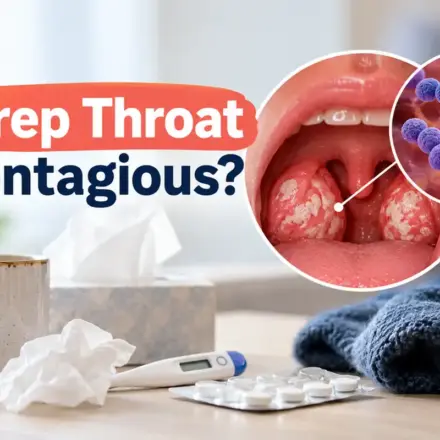
- Red and swollen tonsils, sometimes with white patches or streaks of pus
- Tiny red spots (petechiae) on the roof of the mouth
- Swollen, tender lymph nodes in the neck
Children may experience additional symptoms, including stomach pain, nausea, vomiting, or headache. A fine, sandpaper-like red rash that spreads across the body may also accompany strep throat, which indicates a condition known as scarlet fever.
Strep Throat Versus Viral Sore Throat
Not every sore throat is strep throat. In fact, the vast majority of sore throats are caused by common viruses, such as the cold virus, flu, or COVID-19, which do not respond to antibiotics.
| Feature | Strep Throat (Bacterial) | Viral Sore Throat |
| Primary Cause | Group A Streptococcus bacteria | Viruses (rhinovirus, influenza, etc.) |
| Fever | Common and often sudden | Mild or absent |
| Cough / Runny Nose | Usually absent | Very common |
| Tonsil Appearance | Swollen, red, often with pus patches | Red and inflamed, usually without pus |
| Treatment | Requires prescription antibiotics | Resolves with supportive care |
Because symptoms overlap significantly, clinical evaluation is necessary to determine the underlying cause.
Diagnosis: Rapid Strep Tests and Throat Cultures
Physical symptoms alone cannot confirm strep throat. Healthcare providers use specific diagnostic tools to identify the bacteria:
- Rapid Strep Test: A clinician swabs the back of the throat. This test provides results in minutes. While a positive result confirms strep throat, a negative rapid test in children is often followed up with a throat culture because the rapid test can occasionally miss mild infections.
- Throat Culture: The swab is sent to a laboratory to check for bacterial growth over 24 to 48 hours. This remains the gold standard for accuracy.
How Antibiotics Affect Contagiousness
When left untreated, a person with strep throat can remain contagious for weeks, even if their acute symptoms begin to subside.
Starting appropriate prescription antibiotics drastically cuts down this window. According to clinical guidance from the Cleveland Clinic, a person is generally no longer contagious after taking antibiotics for 12 to 24 hours, provided their fever has resolved.
Antibiotics shorten the duration of illness, relieve symptoms more quickly, and prevent potential medical complications.
A Simple Contagiousness Timeline
- Days 1–3 (Incubation): Bacteria multiply in the throat; no symptoms yet, but mild transmission is possible.
- Days 4–7 (Acute Illness): Severe sore throat and fever develop. Contagiousness peaks without treatment.
- Within 24 Hours of Antibiotics: Contagiousness drops sharply. Fever breaks, and the risk of spreading the bacteria to others declines significantly.
- Without Antibiotics: Contagiousness can persist for 2 to 3 weeks, prolonging recovery and the risk of household transmission.
When It Is Safe to Return to School, Work, or Daycare
To prevent outbreaks in schools and workplaces, standard public health recommendations require meeting specific criteria before ending isolation:
- At least 12 to 24 hours of completed antibiotic therapy.
- Resolution of fever without the use of fever-reducing medications like ibuprofen or acetaminophen.
- Significant improvement in overall symptoms, allowing the individual to comfortably participate in normal daily routines.
Recovery Time and Whether Strep Throat Resolves Without Treatment
While most people begin feeling noticeably better within 3 to 5 days of starting antibiotics, full recovery of throat tissue can take slightly longer.
Can strep throat go away on its own? Mild cases of strep throat can sometimes resolve without antibiotics. However, waiting it out is strongly discouraged. Treating strep throat with antibiotics is critical because skipping medication leaves individuals contagious longer and increases the risk of serious health complications.
Preventing Spread Within a Household
Because Group A strep spreads easily among family members living in close quarters, targeted hygiene measures help protect the rest of the household:
- Complete the Full Antibiotic Course: Always finish every prescribed pill, even if symptoms disappear completely within a couple of days. Stopping early can cause the infection to rebound.
- Discard Toothbrushes: Replace toothbrushes or soak them in antibacterial mouthwash after 24 to 48 hours of antibiotic treatment to prevent reinfection.
- Practice Hand Hygiene: Wash hands frequently with soap and water for at least 20 seconds, or use an alcohol-based hand sanitizer.
- Avoid Sharing Personal Items: Keep drinking glasses, eating utensils, towels, and pillows separate until treatment is complete.
- Cover Coughs and Sneezes: Cough or sneeze into a tissue or the inside of your elbow rather than your bare hands.
Asymptomatic Carriers and Reinfection
Some individuals—particularly school-aged children—can carry Group A strep bacteria in their throats without showing any signs of illness. These asymptomatic carriers generally do not require treatment because they are at very low risk of spreading the bacteria or developing complications, according to UC Davis Health.
Reinfection can occur if a household member was not treated, if a toothbrush was not replaced, or if a new strain of bacteria is introduced into the home.
Potential Complications of Untreated Infection
Failing to treat strep throat with appropriate antibiotics can occasionally lead to more severe medical issues as the bacteria spread to surrounding tissues or trigger abnormal immune responses:
- Peritonsillar Abscess: A painful collection of pus around the tonsils.
- Sinus and Ear Infections: Bacteria migrating to the sinuses or middle ear.
- Rheumatic Fever: An inflammatory condition that can permanently damage the heart valves and joints (though rare in developed nations today).
- Post-Streptococcal Glomerulonephritis: A type of kidney inflammation caused by the body’s immune reaction to the bacteria.
When to Seek Medical Care
Schedule an appointment with a healthcare provider if you or your child experience a sore throat accompanied by:
- A fever over 101°F (38.3°C)
- Swollen, tender glands in the neck
- Difficulty swallowing or excessive drooling
- A rash accompanying the sore throat
Emergency Warning Signs
Seek immediate medical attention if strep symptoms escalate to include:
- Severe difficulty breathing or shortness of breath
- Inability to swallow liquids or severe drooling in young children
- A stiff neck, severe headache, or confusion
- Extreme lethargy or difficulty waking up
Frequently Asked Questions
Can you get strep throat twice in a short period?
Yes. Contracting strep throat does not grant long-term immunity because multiple strains of Group A strep exist. Catching one strain does not protect you from another.
Can adults get strep throat?
While less common than in children, adults—especially parents, teachers, and healthcare workers—frequently contract strep throat through close contact with children.
Is strep throat contagious through food?
Direct contact with respiratory secretions is the primary transmission route. However, if an infected food handler contaminates food with respiratory droplets or saliva, transmission can theoretically occur, though this is less common.
Do I need to throw away my toothbrush?
Yes. Replacing your toothbrush or soaking it in antibacterial mouthwash after 24 to 48 hours of starting antibiotics prevents the bacteria lingering on the bristles from reinfecting you.
Can allergies or post-nasal drip cause strep throat?
No. Allergies, post-nasal drip, and dry air can irritate the throat, but strep throat is strictly caused by a bacterial infection (Streptococcus pyogenes).
What should I eat if my throat hurts too much to swallow?
Focus on soothing, cool, or lukewarm soft foods like yogurt, applesauce, scrambled eggs, smoothies, broths, and ice pops. Avoid acidic or spicy foods that can irritate inflamed throat tissues.
Related Healthfity reading suggestions:
- Understanding Viral vs. Bacterial Sore Throats
- How to Build Healthy Handwashing Habits for the Whole Family
- Managing Fever Safely at Home