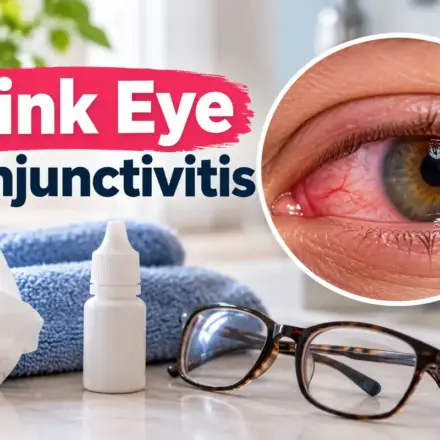
Pink Eye Conjunctivitis: What It Is, Types & Treatment
Pink eye (the common term for conjunctivitis) is an inflammation of the clear membrane lining the eyelid and white part of the eyeball. Viral and bacterial forms of pink eye pass readily from person to person. Allergic pink eye and irritation caused by chemicals or smoke, however, are completely non-contagious.
Knowing the underlying cause is the fastest way to understand whether you can spread the condition, how long to stay isolated, and what treatment will actually help.

What Causes Pink Eye?
The word “conjunctivitis” simply describes tissue inflammation; it does not name a single organism. The primary causes fall into four distinct categories:
- Viral Infections: Viruses are the most common cause of pink eye across all age groups. They often stem from adenoviruses, the same family of viruses responsible for the common cold and upper respiratory infections.
- Bacterial Infections: Caused by bacteria such as Staphylococcus aureus, Streptococcus pneumoniae, or Haemophilus influenzae. Bacterial pink eye occurs frequently in school-age children and daycares.
- Allergens: Seasonal pollens, animal dander, dust mites, and mold can trigger allergic conjunctivitis. This form affects both eyes simultaneously and cannot be transmitted to anyone else.
- Environmental Irritants: Chlorine from swimming pools, smog, makeup ingredients, cleaning fumes, or a foreign object lodged in the eye can cause intense redness and watering without an infectious agent present.
How Does Pink Eye Spread?
Infectious pink eye spreads primarily through close physical contact and contaminated surfaces:
- Hand-to-Eye Contact: Touching an infected eye, collecting viral or bacterial discharge on the fingers, and transferring that fluid to another surface or directly to someone else.
- Shared Personal Items: Linens, bath towels, washcloths, pillowcases, eye makeup brushes, sunglasses, and eye drop dispensers readily harbor microorganisms.
- Contaminated Surfaces: High-touch items like door handles, faucets, desk surfaces, and communal toys can carry bacteria or viruses until properly sanitized.
- Large Respiratory Droplets: When someone with an active upper respiratory infection coughs or sneezes directly toward someone nearby, droplets carrying the virus can land in the eyes.
Is Pink Eye Contagious Through the Air?
Pink eye does not routinely spread as a true airborne infection like measles or tuberculosis, which linger as microscopic particles floating in the air across long distances.
Instead, airborne transmission is limited to close-range respiratory droplets. If someone has viral conjunctivitis linked to an active cold or cough, their sneezes or heavy coughing can propel wet droplets containing the virus onto surfaces or into the eyes of individuals standing nearby. However, hand-to-eye contact and touching contaminated everyday items remain by far the most common ways people catch pink eye.
How Long Is Pink Eye Contagious?
Because there is no single timeline for pink eye, the contagious window depends entirely on whether a virus or bacterium caused the inflammation:
- Viral Pink Eye: Typically contagious for as long as active symptoms remain—frequently between 7 to 14 days, and sometimes longer if discharge and redness persist. It often peaks in severity around days 3 through 5 before gradually subsiding.
- Bacterial Pink Eye: Without treatment, bacterial conjunctivitis can remain contagious for 10 to 14 days. With proper prescription antibiotic therapy, contagiousness drops substantially within 24 hours of consistent application.
- Allergic or Irritant Pink Eye:0 days. These varieties are never contagious at any stage.
How Long Is Pink Eye Contagious After Starting Drops?
A common assumption is that starting prescription eye drops automatically clears contagiousness overnight. That is only partly true:
- Antibiotic drops only work against bacteria. If your pink eye is viral (which represents the majority of adult cases), antibiotic drops will have zero effect on the illness or how contagious you are.
- For confirmed bacterial infections, prescription antibacterial drops usually make a person significantly less contagious after 24 hours of consistent use, provided discharge is noticeably drying up.
- Follow specific return policies. Daycares, schools, and workplaces often require an individual to be on antibiotics for at least 24 hours or show a medical release before returning. Always confirm that heavy mucus discharge has ceased before returning to group settings.
Viral vs. Bacterial Pink Eye
Telling viral and bacterial conjunctivitis apart based on appearance alone is notoriously difficult, even for clinicians. However, certain patterns are common:
| Feature | Viral Conjunctivitis | Bacterial Conjunctivitis | Allergic Conjunctivitis |
| Typical Discharge | Watery, thin, clear | Thick, crusty, yellow or green | Watery, stringy, white mucus |
| Eye Involvement | Often starts in one eye; spreads to the other in days | Often begins in one eye; may spread to both | Almost always affects both eyes simultaneously |
| Associated Signs | Cold symptoms, swollen lymph node in front of the ear | Eyelids glued shut upon waking | Intense itching, sneezing, nasal congestion |
| Contagious? | Highly contagious | Highly contagious | Not contagious |
| Primary Treatment | Supportive care; cool compresses | Antibiotic drops or ointments | Antihistamine eye drops; avoiding allergens |
Clinical note: Thick morning crusting can sometimes occur in viral infections as well. Discharge consistency alone cannot provide a 100% certain diagnosis; professional evaluation is often needed if symptoms are severe.
Pink Eye Symptoms in Adults
Adults experiencing conjunctivitis typically report a distinct set of uncomfortable, disruptive sensations:
- A persistent gritty or sandy sensation, feeling as though an eyelash or pebble is stuck beneath the lid
- Conspicuous pink or dark red discoloration of the sclera (the white of the eye)
- Excessive tearing or involuntary watering
- Swollen, puffy eyelids that feel heavy
- Crusting along the eyelashes, making it difficult to open the eyes upon waking
- Mild burning, irritation, or light sensitivity
The Contact Lens Factor
For contact lens wearers, a red, irritated eye is a distinct clinical scenario. Wearing contact lenses increases the risk of serious corneal infections (such as infectious keratitis), which can closely mimic pink eye in its earliest stages but carries a risk of permanent vision damage if untreated.
If you wear contacts and develop an inflamed red eye, remove the lenses immediately and switch to glasses until an eye care provider evaluates the eye.
Pink Eye Treatment and Recovery Time
Treatment strategies depend on addressing the root cause rather than simply masking the redness:
Viral Pink Eye Care
Because antibiotics do not kill viruses, viral conjunctivitis must run its natural course.
- Use cool, clean, damp compresses over closed eyelids several times daily to soothe inflammation.
- Apply preservative-free artificial tears to ease dryness and grittiness.
- Recovery: Most cases clear up on their own within 1 to 2 weeks without long-term consequences.
Bacterial Pink Eye Care
- Mild bacterial cases often resolve without intervention within 1 to 2 weeks, but topical antibiotic drops or ointments are frequently prescribed to shorten the recovery window, minimize spread, and reduce complication risks.
- Recovery: Symptoms generally begin noticeably improving within 24 to 48 hours of starting appropriate antibiotic drops. Always finish the prescribed duration to prevent recurrence.
Allergic Pink Eye Care
- Over-the-counter or prescription allergy eye drops containing antihistamines or mast-cell stabilizers offer relief.
- Cold compresses reduce localized histamine swelling.
- Avoid known triggers and refrain from rubbing the eyes, which releases additional histamine into the conjunctival tissues.
How to Prevent Pink Eye From Spreading
Halting the spread of infectious pink eye requires strict personal hygiene habits:
- Wash Hands Frequently: Use soap and running water for at least 20 seconds, especially after touching your face, administering eye drops, or cleaning discharge.
- Stop Rubbing Your Eyes: Touching the affected eye transfers the infectious agent directly onto your fingers, increasing the chance of spreading it to your other eye or other people.
- Ditch the Linens Daily: Wash pillowcases, sheets, and towels in hot water daily while you are actively sick. Never share washcloths or towels with family members.
- Discard Contaminated Cosmetics: Throw away mascara, liquid eyeliner, eye creams, and makeup sponges used immediately before or during the infection. Bacteria and viruses thrive in cosmetic containers.
- Practice Strict Lens Hygiene: Never wear contact lenses while experiencing active pink eye. Discard the lenses you were wearing when symptoms began, and thoroughly disinfect or replace your contact lens storage case.
When Should You See a Doctor?
While many cases of conjunctivitis are mild and resolve without complications, certain signs indicate a deeper, potentially sight-threatening issue that requires immediate professional evaluation:
- Moderate to severe eye pain (mild discomfort or grittiness is normal; deep, throbbing pain is not)
- Changes in vision, such as significant blurriness, double vision, or decreased sharpness that does not clear when blinking away discharge
- Extreme sensitivity to light (photophobia)
- Severe, deep redness that worsens instead of improving after 2 to 3 days
- Copious amounts of thick green discharge that rapidly re-accumulates after wiping
- Symptoms in a newborn infant, which requires immediate medical assessment to rule out severe neonatal bacterial infections
- Pre-existing eye conditions or a weakened immune system
Frequently Asked Questions
Can you get pink eye from sharing a pillow or towel?
Yes. Both viral and bacterial conjunctivitis survive on porous fabrics. If someone with an active infection leaves eye secretions on a pillowcase or bath towel and you use it shortly afterward, the bacteria or virus can transfer directly to your eyes.
Can you get pink eye from someone who has no symptoms?
It is uncommon, but possible during the incubation phase of viral conjunctivitis. Someone in the early stages of an upper respiratory virus may shed viral particles through respiratory droplets or trace contact a day or two before noticeable eye redness develops.
Can you have pink eye in one eye and then spread it to the other?
Yes, this happens frequently. In viral conjunctivitis, it is typical for symptoms to begin in one eye and migrate to the second eye within a few days. You can reduce this risk by washing your hands immediately after touching the infected eye and avoiding the use of the same tissue, cloth, or dropper tip on both eyes.
Can adults spread pink eye to children?
Yes. The viruses and bacteria that cause infectious conjunctivitis do not distinguish between adults and children. Close household contact, sharing linens, or caring for children while infected easily facilitates transmission across age groups.
Can you go to work or school with pink eye?
If you have viral or bacterial pink eye with active, heavy discharge, staying home until discharge has cleared or until you have completed 24 hours of antibiotic drops is recommended. If your symptoms are mild, you have no fever, and you can practice meticulous hand hygiene without touching your eyes, some workplaces allow attendance, but local school and daycare exclusion rules must be followed.
How long does viral pink eye last?
Viral conjunctivitis generally lasts between 7 and 14 days, though some cases take up to 3 weeks to clear completely. Symptoms are usually most intense during the first 3 to 5 days before beginning a gradual decline.
Does bacterial pink eye always require antibiotic drops?
Not always. Mild bacterial pink eye can resolve on its own within one to two weeks. However, doctors frequently prescribe antibiotic eye drops to speed up recovery, reduce the window of contagiousness, and minimize the risk of rare complications.
Can allergies cause pink eye without an infection?
Yes. Allergic conjunctivitis is an immune response to airborne allergens such as pollen, pet dander, or dust mites. It produces classic pink eye symptoms—redness, watering, and swelling—without any viral or bacterial infection, meaning it cannot spread to anyone else.
Related Healthfity reading suggestions:
- Understanding Seasonal Eye Allergies and Natural Relief Options
- Proper Contact Lens Hygiene: How to Avoid Serious Eye Infections
- Effective Home Measures for Soothing Strained, Dry Eyes