
Scarlet Fever: Symptoms, Causes & Treatment
Medical Disclaimer: This article is for informational and educational purposes only and does not constitute formal medical advice, diagnosis, or treatment. If you or your child have symptoms concerning for scarlet fever, such as a sore throat accompanied by a sandpaper-like rash and fever, consult a qualified healthcare provider promptly.
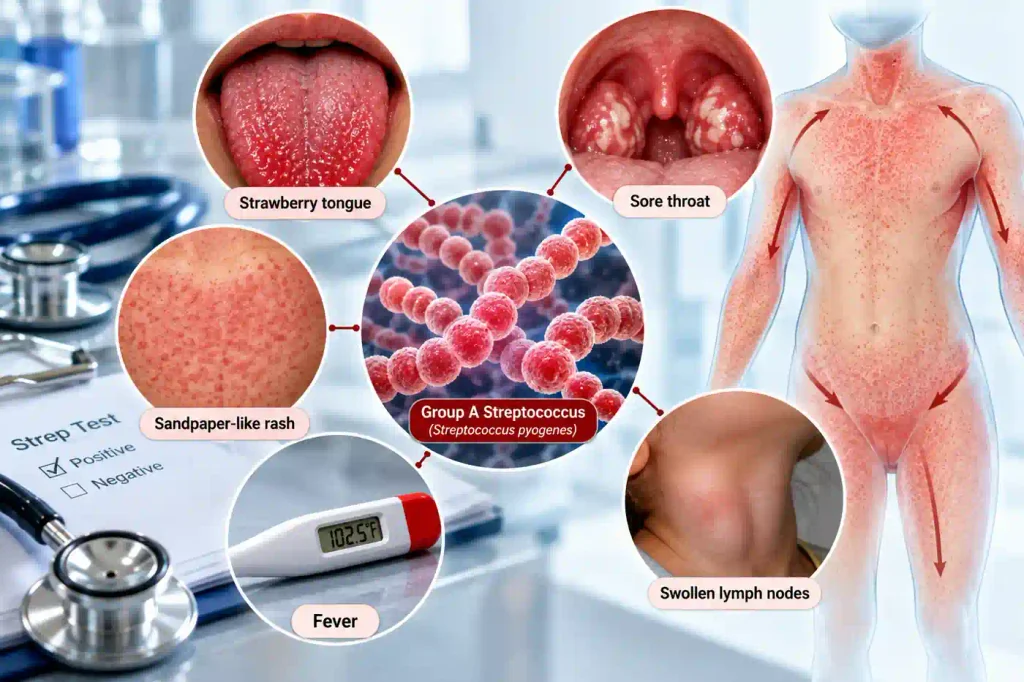
Scarlet fever (scarlatina) is a bacterial illness caused by toxin-producing strains of group A Streptococcus—the same bacteria responsible for strep throat. Its hallmark features include a sore throat, fever, a red sandpaper-textured rash, and a “strawberry tongue.” Scarlet fever requires diagnostic testing and, once confirmed, is treated with prescription antibiotics such as penicillin or amoxicillin. Timely antibiotic therapy relieves symptoms, lowers transmission within 12 to 24 hours, and protects against potential complications such as rheumatic fever and kidney inflammation.
1. What Is Scarlet Fever?
Scarlet fever, historically called scarlatina, is a manifestation of group A strep infection characterized by a distinctive rash and other symptoms such as sore throat and fever.
Scarlet fever is caused by strains of group A Streptococcus that produce pyrogenic exotoxins. These toxins are associated with the characteristic rash of the illness.
Scarlet fever is most common among children between 5 and 15 years of age, a group frequently gathered in classrooms, daycares, and group activities. Adults can also develop scarlet fever, although it is less common than in children. With access to diagnostic testing and standard antibiotic regimens, the condition is manageable and treatable.
2. What Are the Symptoms of Scarlet Fever?
Symptoms typically develop abruptly within 2 to 5 days after exposure to group A strep bacteria:
- Fever and chills: Often reaching 101°F (38.3°C) or higher.
- Sore throat: The throat and tonsils often appear red, swollen, and sometimes covered with white or yellow patches of exudate.
- Pain when swallowing: Swallowing liquids or solid foods can feel painful.
- Swollen, tender lymph nodes: Particularly along the front of the neck (cervical lymphadenitis).
- Strawberry tongue: Early in the illness, the tongue often develops a whitish coating with swollen, red papillae poking through (“white strawberry tongue”). Over several days, the white coating typically sheds, revealing a bright red, bumpy surface (“red strawberry tongue”).
- Flushed face with perioral pallor: The cheeks may look noticeably flushed, while the area immediately surrounding the mouth remains pale.
- Systemic symptoms: Headache, body aches, nausea, vomiting, or abdominal pain (frequently reported in younger children).
What Does the Scarlet Fever Rash Look Like?
The rash typically begins 1 to 2 days after the fever and sore throat start, though it may occasionally appear at the same time:
- Texture: The rough, sandpaper-like texture is a characteristic feature, although testing is needed to confirm group A strep infection.
- Distribution: The rash usually starts on the neck, groin, and underarms before spreading across the chest, back, arms, and legs. It rarely affects the palms of the hands or the soles of the feet.
- Pastia’s lines: In skin creases—such as the underarms, elbows, and groin—the rash often concentrates into deep red streaks known as Pastia’s lines.
- Blanching: Pressing on the red rash generally causes it to turn pale temporarily.
3. What Causes Scarlet Fever?
Scarlet fever is caused by an infection with group A Streptococcus (Streptococcus pyogenes) bacteria that carry the genetic machinery to produce pyrogenic exotoxins.
The illness can occur alongside different forms of group A strep infection:
- Streptococcal pharyngitis (strep throat): The most common underlying source.
- Streptococcal skin infections: Less commonly, the bacteria enter through a break in the skin, such as impetigo, a burn, or a wound.
4. How Does Scarlet Fever Spread?
Group A strep bacteria live in the nose and throat of infected individuals. The infection is contagious and spreads primarily through:
- Respiratory droplets: Inhaling droplets released when an infected person coughs, sneezes, or talks.
- Direct contact: Touching discharges from an infected person’s nose or mouth, or coming into direct contact with infected skin sores.
- Shared items: Group A strep can potentially spread through contaminated utensils, glasses, or other items, although direct person-to-person spread is more common.
- Asymptomatic carriers: Some people carry group A strep in their throats without symptoms. These carriers are less likely to spread the bacteria and are generally at very low risk of complications.
The incubation period for scarlet fever is usually about 2 to 5 days from exposure to the appearance of initial symptoms.
5. Who Is Most at Risk?
Several factors increase the likelihood of developing scarlet fever:
- Age: Children aged 5 to 15 are the primary group affected by group A strep infections.
- Crowded indoor environments: Schools, daycare centers, and student housing facilitate the spread of respiratory droplets.
- Close contacts: Living in a household with someone diagnosed with strep throat or scarlet fever substantially raises the risk of exposure.
Adults can also develop scarlet fever, although it is less common than in children.
6. When Should You See a Doctor?
Because scarlet fever is caused by group A Streptococcus, people with symptoms should seek medical evaluation and appropriate testing. Confirmed infections are treated with antibiotics.
Schedule an appointment if you or your child experience:
- A sore throat accompanied by a fever of 101°F (38.3°C) or higher
- A red, sandpaper-textured rash
- Swollen, tender neck glands accompanied by pain when swallowing
- A red, bumpy, or coated tongue
- Signs of dehydration, such as dry mouth or decreased urination
7. When to Seek Urgent Medical Attention
Seek urgent medical attention if severe symptoms or complications develop, particularly:
- Difficulty breathing, rapid grunting respirations, or stridor
- Inability to swallow fluids or saliva, leading to continuous drooling
- Severe dehydration (such as producing no urine, dry mucous membranes, or crying without tears)
- Confusion, extreme lethargy, or significant difficulty waking up
- Persistent vomiting preventing any fluid retention
- Bluish, grayish, or pale lips, skin, or nail beds
- Significant overall deterioration in clinical condition
8. How Is Scarlet Fever Diagnosed?
A healthcare provider cannot reliably diagnose scarlet fever based on appearance alone, because viral infections can cause similar rashes and sore throats. Clinical guidance from the Centers for Disease Control and Prevention (CDC) specifies that a diagnosis of scarlet fever requires laboratory testing for group A Streptococcus.
- Rapid Antigen Detection Test (Rapid Strep Test): A swab of the tonsils and throat. Results are usually available within minutes. A positive result indicates that group A strep is likely causing the illness and usually leads to antibiotic treatment.
- Throat Culture: If a rapid strep test is negative in a child or adolescent suspected of having strep, clinical guidelines recommend confirming the result with a throat culture. A culture takes 24 to 48 hours to process and can identify bacterial growth that a rapid test may miss.
9. How Is Scarlet Fever Treated?
Confirmed scarlet fever caused by group A Streptococcus is treated with prescription antibiotics. Antibiotics shorten the duration of symptoms, decrease transmission, and prevent post-streptococcal complications.
Antibiotic Therapy
- First-line treatment: The CDC identifies penicillin or amoxicillin as the antibiotics of choice for people without penicillin allergies. Amoxicillin oral suspension is often favored for children due to its taste and flexible dosing schedule.
- Penicillin allergy options: For individuals with penicillin allergies, clinicians choose alternative classes based on the type of reaction, such as cephalosporins (for non-severe allergies) or macrolides (such as azithromycin or clarithromycin) and clindamycin.
- Treatment duration: Many recommended oral antibiotic regimens last 10 days, although some antibiotics, such as azithromycin, are prescribed for shorter courses. It is important to complete the entire course of medication as prescribed, even if symptoms resolve earlier.
Supportive Care
In addition to prescription antibiotics, supportive measures help relieve throat discomfort and fever:
- Fever and pain relief: Over-the-counter acetaminophen or ibuprofen can reduce fever and ease throat pain. Do not give aspirin to children or teenagers due to the risk of Reye’s syndrome.
- Hydration: Offer cool liquids, ice pops, or warm broth to keep the throat moist and prevent dehydration.
- Soft foods: Soups, yogurt, applesauce, and oatmeal are gentle on an inflamed throat.
- Humidification: Using a cool-mist humidifier in the bedroom can ease irritated airways.
10. How Long Does Scarlet Fever Last?
Symptoms generally begin to improve after effective antibiotic treatment, although the timing varies:
- Initial response: Fever and throat discomfort often begin to ease within the first few days of starting appropriate antibiotics.
- Rash resolution: The sandpaper-like rash typically fades over the course of about a week.
- Skin peeling (desquamation): As the rash clears, the outer layer of skin may peel, particularly on the fingertips, toes, and groin. This peeling can last for several weeks and is a normal part of the healing process.
11. Is Scarlet Fever Contagious?
Yes, scarlet fever is contagious.
People with untreated group A strep infection can continue to spread the bacteria. Appropriate antibiotic treatment substantially reduces transmission.
- After at least 12 hours of appropriate antibiotic treatment, the ability to transmit group A strep is reduced.
- People should remain home until they are fever-free and have been taking appropriate antibiotics for at least 12 to 24 hours.
12. What Happens If Scarlet Fever Goes Untreated?
Untreated group A strep infections can occasionally lead to secondary bacterial spread or delayed inflammatory complications:
Suppurative (Direct Bacterial) Complications
- Peritonsillar or retropharyngeal abscess: Pockets of pus around the tonsils or back of the throat.
- Otitis media: Middle ear infections.
- Sinusitis: Bacterial infection of the sinus cavities.
- Pneumonia: A less common complication involving infection of the lungs.
Nonsuppurative (Delayed Immune-Mediated) Complications
- Acute Rheumatic Fever: An inflammatory condition that can develop about 1 to 5 weeks after a group A strep infection. It can affect the joints, heart, skin, and nervous system. Heart involvement can cause permanent heart-valve damage, known as rheumatic heart disease. Prompt antibiotic therapy directly reduces the risk of acute rheumatic fever.
- Post-Streptococcal Glomerulonephritis (PSGN): An immune-mediated kidney inflammation that may cause dark-colored urine, swelling, and elevated blood pressure.
13. How Can Scarlet Fever Be Prevented?
There is currently no vaccine to prevent group A strep infections. Prevention relies on standard hygiene practices to interrupt the spread of respiratory droplets:
- Wash hands frequently: Clean hands with soap and water for at least 20 seconds, especially after coughing, sneezing, and before preparing food or eating. Use an alcohol-based hand rub if soap and water are unavailable.
- Cover coughs and sneezes: Use a tissue or the inside of an elbow rather than bare hands.
- Avoid sharing eating utensils: Do not share drinking glasses, cups, or utensils with individuals who are sick.
- Stay home when ill: People diagnosed with group A strep should stay home from school, daycare, or work until they are fever-free and have taken appropriate antibiotics for at least 12 to 24 hours.
Frequently Asked Questions
Is scarlet fever contagious?
Yes. Scarlet fever is caused by group A Streptococcus and spreads through respiratory droplets from coughing or sneezing, direct contact with oral secretions, or contact with infected skin sores. Appropriate antibiotic therapy substantially reduces transmission within 12 to 24 hours.
What does the scarlet fever rash look like?
The rash is characterized by fine, red bumps that give the skin a rough, sandpaper-like texture. It typically begins on the neck, groin, or underarms and spreads across the trunk and extremities, often forming deeper red streaks in skin creases (Pastia’s lines).
What causes scarlet fever?
It is caused by strains of group A Streptococcus bacteria that produce pyrogenic exotoxins. These toxins are responsible for the widespread red rash and systemic symptoms.
How long does scarlet fever last?
Symptoms typically begin to improve after starting appropriate antibiotics. The rash generally fades over about a week, after which the skin may peel for up to several weeks as it heals.
When should you seek medical attention for scarlet fever?
You should see a healthcare provider if you or your child develop a sore throat accompanied by a fever, tender neck glands, or a fine sandpaper-like rash. A healthcare provider can perform testing to confirm whether group A strep is present.
Can adults get scarlet fever?
Yes. While scarlet fever occurs most commonly in children ages 5 to 15, adults can also develop the illness if exposed to group A Streptococcus.
Is scarlet fever dangerous?
Most cases of scarlet fever resolve without problems when treated promptly with antibiotics. However, if left untreated, group A strep infections can lead to complications such as throat abscesses, acute rheumatic fever, or kidney inflammation.
What happens if scarlet fever goes untreated?
Untreated scarlet fever can lead to local complications—including ear, sinus, or lung infections—as well as delayed inflammatory conditions like acute rheumatic fever and post-streptococcal glomerulonephritis.
How is scarlet fever diagnosed?
A healthcare provider diagnoses scarlet fever by evaluating symptoms and performing a laboratory test—such as a rapid strep test or a throat culture—to confirm the presence of group A Streptococcus.
Can you be hospitalized for scarlet fever?
Most cases are treated successfully at home with oral antibiotics. Hospitalization is rare and typically reserved for severe complications, such as airway difficulty or severe dehydration requiring intravenous fluids.
Can you get scarlet fever more than once?
Yes. An individual can develop scarlet fever more than once because different strains of group A Streptococcus produce different pyrogenic exotoxins, and immunity to one toxin does not guarantee protection against others.
Scarlet fever is a recognizable manifestation of group A strep infection characterized by a sore throat, fever, strawberry tongue, and a rough, sandpaper-like rash. Laboratory testing is required to confirm the infection, and appropriate antibiotic treatment is highly effective and helps shorten illness, reduce transmission, and prevent complications. If you or your child show signs of a streptococcal infection, contact a healthcare provider for prompt evaluation and guidance.