Postpartum Psychosis: Symptoms, Causes and Risk Factors
Postpartum psychosis is rare, but it is a true psychiatric emergency. It can begin within days of delivery, often when a mother feels she should be at her happiest. It is also widely misunderstood. It is not a more intense version of the baby blues, and it is not a failure of character or mothering. It is a medical condition that distorts a person’s grip on reality, and the people most likely to notice it first are usually the ones closest to her.
This guide explains how postpartum psychosis looks in real life, when it tends to appear, what is known about its causes, who is at higher risk, and how long it lasts.
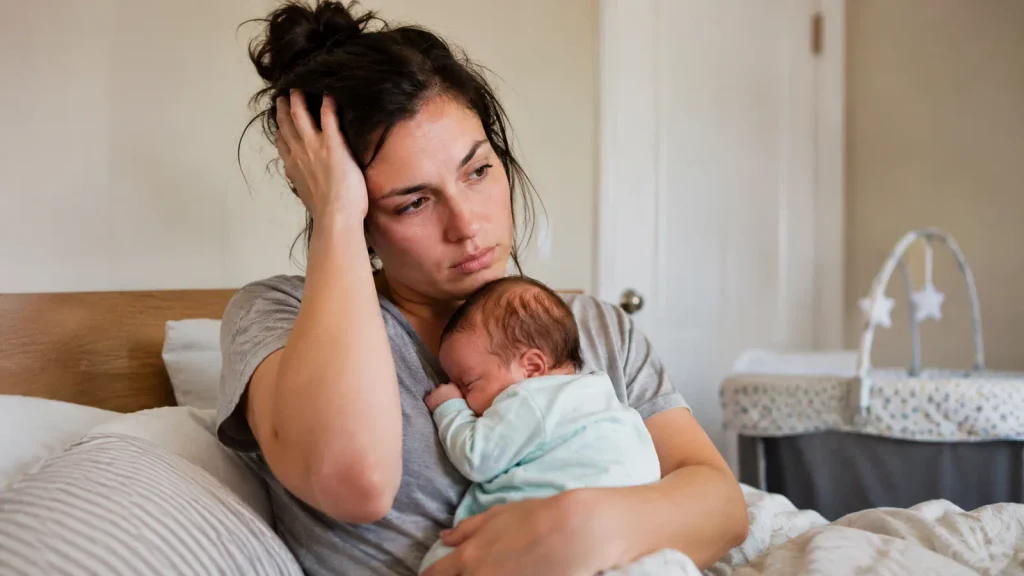
Postpartum psychosis is a severe condition that can follow childbirth, with symptoms such as hallucinations, delusions, confusion, extreme mood swings, and little need for sleep. It often begins in the first days to weeks after delivery. The strongest known risk factors are a history of bipolar disorder or a previous episode of postpartum psychosis. It needs immediate medical care, and with treatment, most people recover.
What postpartum psychosis is
Psychosis means losing touch with reality. In postpartum psychosis, this happens after giving birth. The Cleveland Clinic describes it as a reversible but severe condition that is rare yet dangerous. It estimates that it affects between about 0.09 and 2.6 of every 1,000 births. That is a wide range, which reflects how differently studies define and count it.
Yes, it is a mental illness. More precisely, it is a psychiatric emergency, and a treatable one. It is not listed as its own stand-alone diagnosis in the DSM-5-TR, so clinicians may describe it under related categories such as a mood or psychotic episode with onset after delivery. The label matters less than the response: emergency evaluation.
If you want background on psychosis in general, our article on psychosis symptoms, causes, diagnosis and treatment covers how it appears outside of pregnancy.
How it differs from the baby blues and postpartum depression
These three conditions are often confused, and the confusion can delay care.
| Condition | How common | What it looks like | Needs urgent care? |
|---|---|---|---|
| Baby blues | Very common | Tearfulness, mood swings, anxiety; fades within about two weeks | No |
| Postpartum depression | Common | Persistent sadness, hopelessness, trouble bonding or functioning | Needs treatment; urgent if suicidal |
| Postpartum psychosis | Rare | Hallucinations, delusions, confusion, severe mood changes | Yes, always |
Cleveland Clinic notes that about 85% of new mothers experience the baby blues and about 1 in 7 experience postpartum depression. A good rule of thumb is that sadness and worry alone point toward the first two. Losing track of what is real points toward psychosis.
Symptoms and real-world examples
People often search for “postpartum psychosis examples” because the description sounds abstract until you see it. The core symptoms are:
- Hallucinations: hearing voices or seeing things that are not there. The voices may comment, criticize, or give commands.
- Delusions: strongly held false beliefs that do not change with evidence.
- Confusion or disorganization: jumbled speech, odd behavior, trouble following a conversation.
- Mood extremes: elevated, wired, or irritable mood, or deep despair, sometimes swinging between them.
- Very little sleep without feeling tired.
- Suspiciousness or paranoia.
Here is what that can look like in practice, using general examples rather than any one person’s story:
- A new mother believes her baby is a divine figure, or has been replaced, or is in danger from the hospital staff.
- She hears a voice telling her the baby would be better off if she were gone, or that she must take some action.
- She insists she was never pregnant or that the baby is not hers.
- She has not slept for two nights, feels full of energy and special purpose, and talks rapidly in a way that is not like her usual self.
- She seems dazed, mute, or unaware of her surroundings.
Researchers sometimes group episodes into depressive, manic, and mixed or atypical patterns. A person can move between them. Nobody should need to match a “type” to be taken seriously.
Many people in the middle of an episode do not realize anything is wrong. That is part of the illness, not stubbornness. Family members, partners, or friends most often spot it.
When postpartum psychosis most often starts
Timing is one of the most useful clues. Postpartum psychosis usually begins in the first days after delivery, and it often emerges within the first two weeks. The Cleveland Clinic notes it can occur up to about six weeks afterward. Symptoms can come on quickly, sometimes over hours, and may start with trouble sleeping, restlessness, or unusual irritability.
This is why an unusual change in the first weeks, especially severe sleeplessness paired with odd thinking, should not be dismissed as “just exhaustion.” If you are unsure how to tell exhaustion from something more serious, our guide to why you might keep waking up at 3 a.m. explains common causes of disrupted sleep, though a new mother with strange beliefs or hallucinations needs medical evaluation rather than sleep tips.
What causes postpartum psychosis
No single cause has been proven. Researchers think several factors combine in a vulnerable person. Those under study include:
- Mood-disorder vulnerability. Many cases appear to be related to bipolar disorder, and some research suggests an episode may be an early sign of it.
- Sudden hormone changes after delivery. This is an active area of research, and more work is needed before conclusions can be drawn.
- Severe sleep loss, which can trigger mania in people who are prone to it.
- Genetic or family factors, since episodes cluster in some families.
- Medical problems that can mimic or contribute to psychosis, such as thyroid disease, infections, electrolyte imbalances, vitamin deficiencies, and conditions related to preeclampsia. This is why doctors check for physical causes first.
It is not caused by something a mother did, thought, or felt, and it is not caused by weak bonding or poor parenting.
Risk factors
People often ask, “What is the biggest risk factor?” The best-supported answer is a personal history of bipolar disorder or of a previous postpartum psychosis episode. After one episode, the chance of recurrence after a later birth is often cited as roughly 30% to 50%.
Other recognized risk factors include:
- A history of schizoaffective disorder or another psychotic illness
- A family history of postpartum psychosis, bipolar disorder, or related conditions
- A first pregnancy and delivery (it appears somewhat more common in first-time mothers)
- Major sleep disruption around childbirth
Roughly one-third of those affected had a known psychiatric diagnosis beforehand. That means many cases have no obvious warning, so absence of a history does not mean immunity.
If you have bipolar disorder or a past episode, planning ahead with your obstetrician and a psychiatrist makes a real difference. Do not change any prescribed medication on your own. Medicines such as sertraline are used for depression and anxiety, while antipsychotic medicines, a class that includes quetiapine, are used for conditions involving psychosis or mania. Which ones are suitable, and how they relate to pregnancy and breastfeeding, is a decision for your care team.
The risk of harm, discussed honestly
Many readers ask about infanticide and suicide, often out of fear. The facts deserve calm, accurate framing.
Postpartum psychosis is rare, and most affected mothers do not harm their babies. But because delusions or commanding voices can sometimes involve the baby, and because suicide risk is elevated, it is treated as an emergency. The Cleveland Clinic summarizes research reporting that in the depressive subtype, harm to a child occurred in roughly 4.5% of cases and suicide in about 5%, with lower rates in other subtypes. These figures come from small clinical samples and older studies of untreated illness, so they should be read as a measure of seriousness rather than a prediction for any individual.
The lesson is practical: do not leave a person who may have postpartum psychosis alone, especially with the baby, and get emergency help immediately.
What to do if you see these symptoms
Cleveland Clinic and other medical sources agree on the steps for family and friends:
- Treat it as an emergency. Call 911 or go to the nearest emergency department. If you cannot get someone safely to care, call 911.
- Stay calm and do not argue about what is real. Arguing rarely helps and can increase fear.
- Keep the mother and baby supervised until professionals take over.
- Share key details with the clinicians: when symptoms began, how much she has slept, any history of bipolar disorder, and any medicines or substances.
If someone is thinking about suicide, call or text the 988 Suicide & Crisis Lifeline. The National Maternal Mental Health Hotline (1-833-852-6262) also offers free, confidential support around the clock for pregnant and postpartum people and their families.
How it is diagnosed and treated
There is no single test. A psychiatrist or emergency physician evaluates symptoms and looks for medical causes with a physical exam and lab tests, and sometimes imaging. Treatment typically begins in a hospital, ideally one able to keep mother and baby together when safe, because round-the-clock monitoring matters. Treatment commonly involves medicines for psychosis and mood, and in some cases electroconvulsive therapy. Evidence is limited because the condition is rare, so decisions are individualized. For a clinical overview, see the StatPearls review on postpartum psychosis.
How long it lasts and what recovery looks like
With treatment, many people improve within a few weeks. Without treatment, an episode can drag on for weeks or months and become more dangerous. Full recovery takes longer than symptom relief, and many women go through a period of depression, anxiety, or grief afterward, including distress about what happened.
Some women never have another episode. Others develop bipolar disorder or have a recurrence after another birth. Continued follow-up with a psychiatrist is a standard part of care. The episode itself does not typically last for years, but an underlying mood disorder may need long-term management.
Peer support helps many families. Postpartum Support International offers resources and connects people with others who have lived through postpartum psychosis. If past trauma is part of the picture, our article on complex PTSD may also be relevant, and you can browse more in our Health section.
Frequently asked questions
What is the biggest risk factor for postpartum psychosis?
A history of bipolar disorder or of a previous postpartum psychosis episode is the strongest known risk factor. A family history of these conditions also raises risk.
When is postpartum psychosis most common?
Most often in the first days to two weeks after delivery, though it can appear later, up to about six weeks.
What are examples of postpartum psychosis?
Hearing voices, seeing things that are not there, holding fixed false beliefs about the baby or oneself, severe confusion, racing thoughts, and going days with almost no sleep. See the symptoms section above for specific examples.
Is postpartum psychosis a mental illness?
Yes. It is a serious psychiatric condition and a medical emergency, and it can be treated. For related reading, see our overview of psychosis.
How long does postpartum psychosis last, and can it last for years?
With treatment, many people recover within weeks. Without it, an episode may last months. The acute episode does not usually last for years, but related conditions such as bipolar disorder may need ongoing care. See the Cleveland Clinic overview for more.
Can postpartum psychosis be prevented?
It cannot always be prevented. For people at high risk, planning with an obstetrician and a psychiatrist before or during pregnancy, protecting sleep where possible, and having a clear emergency plan can lower the chance of a crisis or help it be caught sooner. If sleep trouble is a concern, our article on Ambien and sleep medication risks explains why any sleep aid should be discussed with a clinician, especially after delivery.
What is the rate of infanticide in postpartum psychosis?
It is uncommon. Reported figures vary by study and subtype, with roughly 4.5% cited for the depressive subtype in one clinical review. Because of the risk, any suspected case should be treated as an emergency.