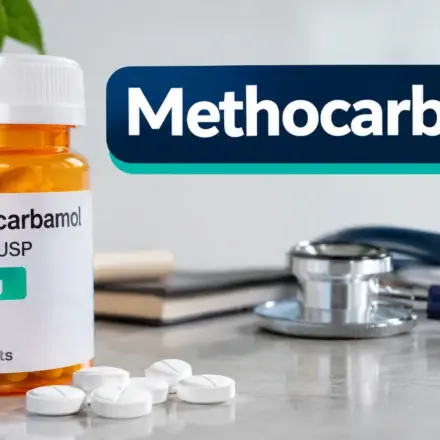
Methocarbamol: Uses, Side Effects, Dosage & Safety
Methocarbamol is the muscle relaxer many people are prescribed after a back strain or a wrenched shoulder, and the pharmacy label rarely says more than “take as directed.” The questions come quickly after that. How soon will it work? Why am I so sleepy? Can I take it with ibuprofen? Why did my urine change color?
This article answers those, and also covers what’s rarely spelled out: the evidence behind muscle relaxers is thinner than their popularity suggests, and treatment guidelines still put heat and staying active first. In the US, methocarbamol is sold generically and under the brand name Robaxin. Mayo Clinic’s drug information also lists Atmeksi, an oral liquid form.
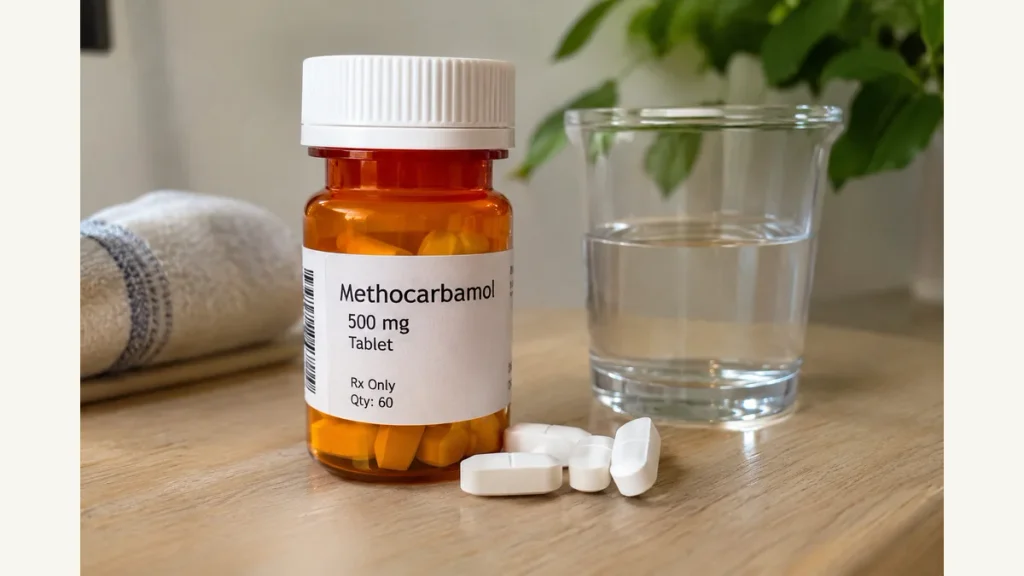
Methocarbamol is a prescription muscle relaxant approved as an add-on to rest, physical therapy, and other measures for acute, painful muscle and bone conditions such as strains and sprains. It starts working within about half an hour but wears off quickly, so it is taken several times a day. Drowsiness and dizziness are the most common problems, and alcohol and other sedating drugs make them worse. It is meant for short-term use, the research behind it is modest, and adults 65 and older are generally advised to avoid it.
What methocarbamol is used for
The FDA label describes it as an adjunct, meaning a helper alongside rest, physical therapy, and other measures, for the relief of discomfort from acute, painful musculoskeletal conditions. MedlinePlus gives examples: strains, sprains, and other muscle injuries. Mayo Clinic’s drug information is direct about its limits: it doesn’t take the place of rest, exercise, or physical therapy.
Doctors sometimes prescribe it off-label for other painful problems. According to StatPearls, the NIH-hosted clinical reference, these include chronic low back pain, inflammatory arthritis, fibromyalgia, myofascial pain, rib fractures, and recovery after joint replacement. Evidence for those uses is limited. If joint pain rather than muscle pain is your problem, our overview of arthritis symptoms, causes, and treatment is a better starting point.
It also has jobs it can’t do. Methocarbamol is not effective for spasticity caused by upper motor neuron injury, a different problem that is treated with different drugs.
How it works is less clear than the label suggests
The word “relaxant” suggests the drug acts on the muscle. It doesn’t. The FDA label says methocarbamol has no direct action on the muscle’s contractile mechanism, the motor end plate, or the nerve fiber. The mechanism hasn’t been established, and the label suggests it may be related to its sedative properties. StatPearls adds that the relief probably comes from general central nervous system depression.
That has a practical meaning. Sleepiness isn’t a quirky side effect running alongside the benefit. It’s closely tied to how the drug works, which is why it adds up so readily with alcohol and other sedating medicines.
What the research says about how well it works
Honestly, less than you’d expect for a drug that has been approved since 1957. StatPearls notes that there are few high-quality studies and no meta-analyses comparing methocarbamol with placebo or other drugs. The evidence is mostly older, small trials suggesting it beats placebo for acute musculoskeletal pain and performs about like other muscle relaxants.
Whether it adds anything to an anti-inflammatory is unsettled. A 2018 randomized trial of naproxen with or without methocarbamol for acute low back pain found no added improvement at one week, though the study was small. If you’re taking an NSAID already, see our guide to naproxen for how those work.
The American College of Physicians’ low back pain guideline takes a similar view. For acute or subacute low back pain, it recommends starting with non-drug approaches such as superficial heat, massage, acupuncture, or spinal manipulation, because most episodes improve over time regardless of treatment. If a medicine is wanted, it points to NSAIDs or skeletal muscle relaxants. The guideline covered non-radicular back pain, and for pain radiating down the leg it found the evidence insufficient to determine treatments, which matters if your problem is sciatica.
The fair summary: methocarbamol is a reasonable short-term option when pain is bad enough to limit movement, not a treatment that fixes the underlying problem.
Dosage: what the label says and what’s often prescribed
The figures below describe labeling for adults. Your own prescription may differ, and you shouldn’t adjust it yourself.
| Stage | What labeling describes |
|---|---|
| First 48–72 hours | About 6 g a day in four doses (for example, 1,500 mg four times daily) |
| Severe conditions | Up to 8 g a day |
| After the first few days | Usually reduced to about 4 g a day |
| Tablet strengths | 500 mg, 750 mg, and 1,000 mg |
Mayo Clinic describes the same starting dose as three 500 mg tablets or two 750 mg tablets, four times a day.
Real-world prescribing is often gentler than the label. StatPearls points out that lower doses are common in practice, citing a hospital cohort in which the typical dose was 500 mg every eight hours. A prescription that looks small next to the label isn’t necessarily a mistake.
If you miss a dose, MedlinePlus advises taking it when you remember unless the next dose is close, and not doubling up. If you’ve been given the liquid form, measure it with an oral syringe or marked spoon and shake it for 30 seconds first. Safety and effectiveness haven’t been established for children under 16.
How quickly it works
StatPearls puts the onset of oral methocarbamol at about 30 minutes, with peak levels around two hours. Its half-life is short, roughly one to two hours in healthy adults, which is why labeling spreads doses across the day.
Side effects
Common. Drowsiness and dizziness lead the list, along with lightheadedness, nausea or stomach upset, headache, blurred vision, and a metallic taste. Mayo Clinic also lists heartburn, double vision, vertigo, and trouble sleeping. StatPearls notes that sedation is the most frequent effect, followed by dizziness and headache. Confusion, memory lapses, fainting, and falls have been reported too.
Don’t drive or do anything risky until you know how it affects you. Dizziness has many causes, including chronic dehydration, so tell your prescriber if it persists instead of assuming it’s the medicine.
Urine color changes. MedlinePlus lists black, blue, or green urine as a possible effect. StatPearls says the discoloration isn’t clinically significant, but it can interfere with urine tests for 5-HIAA and VMA. If you’re ever scheduled for tests, mention that you take methocarbamol, as Mayo Clinic advises for any doctor or dentist.
Call your prescriber promptly for: rash, itching, or swelling of the face, lips, tongue, or throat; fever and sore throat; yellowing of the skin or eyes; fainting or a slow or irregular heartbeat; or seizures. The package insert lists seizures, low white blood cell counts, and cholestatic jaundice among severe effects, though StatPearls notes the NIH’s LiverTox resource hasn’t linked methocarbamol to liver or kidney injury. You can report side effects through the FDA’s MedWatch program.
Interactions and combinations
Alcohol. MedlinePlus warns that alcohol can make side effects worse, and Mayo Clinic lists it as usually not recommended.
Other sedating medicines. This includes opioids, benzodiazepines such as alprazolam, sleep aids, sedating antihistamines, and other muscle relaxers like cyclobenzaprine, carisoprodol, baclofen, and chlorzoxazone. Mayo Clinic notes that tizanidine can raise the risk of side effects, though prescribers sometimes combine the two deliberately. The MAO inhibitor isocarboxazid is on Mayo’s not-recommended list.
Myasthenia gravis medicines. The label says methocarbamol may inhibit the effect of pyridostigmine, so it should be used with caution in people with myasthenia gravis taking anticholinesterase drugs.
Pain relievers. Combining it with an NSAID is common. If you’re juggling several pain medicines, our explainer on taking ibuprofen and Tylenol together covers how those two fit together.
Supplements and everything else. MedlinePlus asks you to list every prescription, over-the-counter product, vitamin, and herbal supplement you use. That includes popular ones like magnesium glycinate.
Who needs extra caution
Adults 65 and older. Skeletal muscle relaxants, methocarbamol included, appear on the Beers Criteria list of medicines to avoid in people over 65. MedlinePlus says older adults should not usually take it because it’s less safe and less effective than other options. StatPearls cites an absolute increase in injury risk of about 0.2%, driven by falls, fractures, and confusion. Mayo Clinic adds that older adults are more sensitive to its effects.
Kidney or liver disease. Mayo Clinic advises caution, since the drug may be cleared more slowly. The FDA label reports an average half-life of about 3.4 hours in people with cirrhosis versus 1.1 hours in people without it.
Pregnancy. The label says safe use for fetal development hasn’t been established and notes reports of fetal and congenital abnormalities. StatPearls advises against use in pregnancy, particularly early on, unless the benefit outweighs the risk.
Breastfeeding. Sources disagree. Mayo Clinic says studies suggest minimal risk to the infant, the label advises caution, and StatPearls notes there are no studies. A lactation summary on Drugs.com says no data exist, that needing methocarbamol isn’t a reason to stop breastfeeding, and that the infant should be monitored for sedation, poor feeding, and poor weight gain. This is a conversation for your prescriber.
History of substance misuse. StatPearls notes that animal studies suggest low abuse potential, but some human studies have reported it, so use warrants caution in anyone with a substance use disorder or on other sedating drugs.
Overdose
Overdose is an emergency, particularly because it often involves alcohol or other sedating drugs. The label lists nausea, drowsiness, blurred vision, low blood pressure, seizures, and coma, and notes that deaths have been reported with methocarbamol alone or combined with other substances. StatPearls characterizes isolated overdose as rare and unlikely to be life-threatening without other drugs, but that’s not a margin worth testing. Call Poison Help at 1-800-222-1222 (or use poisonhelp.org), and call 911 if the person has collapsed, had a seizure, has trouble breathing, or can’t be woken.
Frequently Asked Questions
Can I take methocarbamol with ibuprofen or naproxen?
Doctors do pair them, and the 2018 trial mentioned above tested naproxen with and without methocarbamol. Whether it suits you depends on your stomach, kidneys, blood pressure, and other medicines, so confirm with your pharmacist. Our guides to naproxen and to ibuprofen and Tylenol together explain the pain-reliever side.
Does methocarbamol work for sciatica or nerve pain?
The evidence is thin. The ACP guideline found insufficient evidence to determine treatments for radicular low back pain, the kind that radiates down the leg. Methocarbamol is approved for acute musculoskeletal pain, not nerve pain as such. See our sciatica guide for causes and the options doctors discuss.
How long can I take methocarbamol?
It’s meant for acute problems, and Mayo Clinic advises against taking it longer than your doctor ordered. For chronic low back pain, the ACP guideline lists NSAIDs, tramadol, and duloxetine after non-drug therapies, not muscle relaxers. If you still need it after a short course, ask your prescriber to reassess.
Is methocarbamol the same as cyclobenzaprine or tizanidine?
No. They are separate muscle relaxers with different effects, and Mayo Clinic lists cyclobenzaprine among drugs usually not recommended with methocarbamol and tizanidine as a combination that raises side-effect risk. Don’t take two muscle relaxers together unless a prescriber has told you to.
Is methocarbamol an NSAID or a painkiller?
Neither. The label calls it a central nervous system depressant with sedative and musculoskeletal relaxant properties. It belongs to the skeletal muscle relaxant class, separate from anti-inflammatory drugs and opioids.
What if I miss a dose?
Take it when you remember, unless it’s almost time for the next dose. In that case skip the missed one and continue your schedule. Don’t double up. Report any unusual problems through MedWatch or to your prescriber.