
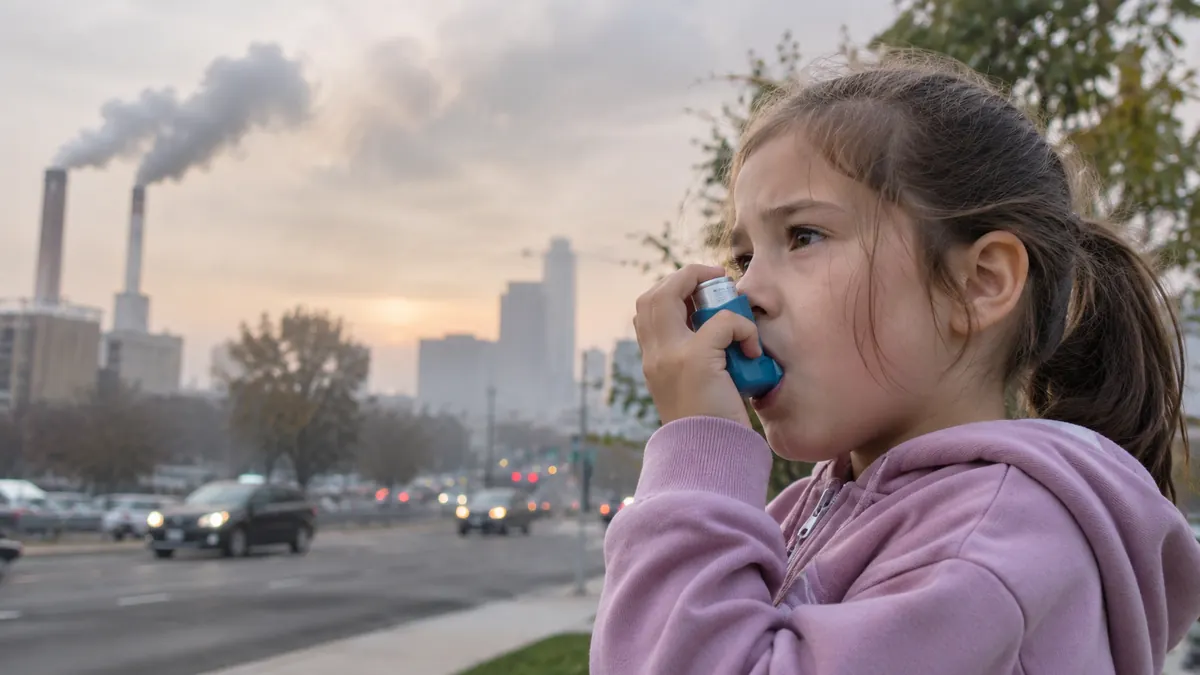
Dirty air does not just irritate a child’s throat—it actively inflames already sensitive airways, tightens bronchial muscles, and can push a mild cough into an emergency room visit days after exposure. A common misconception is that air pollution only threatens children during visible wildfire smoke events or extreme smog alerts. In reality, everyday traffic exhaust, fine particulate matter, and ground-level ozone can trigger flare-ups even on clear days and at levels below federal air quality limits.
Children breathe faster per pound of body weight than adults and have still-developing lungs, making them especially vulnerable to fine particulate matter (PM2.5), ozone, and nitrogen dioxide. Air pollution often causes delayed airway inflammation that peaks one to four days after exposure. Parents can lower flare-up risks by tracking daily Air Quality Index (AQI) forecasts, shifting outdoor sports to morning hours during high-ozone weather, and keeping rescue inhalers and HEPA filtration ready.
Why Children’s Lungs React Harder to Polluted Air
Children are not simply smaller adults when it comes to breathing polluted air. Three biological and behavioral differences amplify their exposure:
- Higher breathing rates: Children inhale more air per pound of body weight than adults, pulling a larger dose of airborne pollutants into their respiratory tract for every hour spent outside.
- Developing airways: The alveoli (tiny air sacs) and immune defenses in children’s lungs continue maturing throughout childhood and adolescence, leaving airway linings more permeable and reactive to chemical irritants.
- More time outdoors during peak pollution: School recess, afternoon sports practices, and active play frequently happen during late afternoon hours when traffic congestion and ground-level ozone peak.
For children living with asthma, the bronchial tubes already carry baseline inflammation. When inhaled pollutants land on this sensitive tissue, they trigger oxidative stress and immune signaling that cause airway walls to swell, produce excess mucus, and constrict.
The Main Outdoor Pollutants Behind Pediatric Flare-Ups
According to the U.S. Environmental Protection Agency (EPA) and CDC air pollution fact sheet, two primary outdoor pollutants drive most pollution-related asthma symptoms, alongside traffic-related gases:
| Pollutant | Common Sources | How It Affects a Child’s Airways | When Levels Peak |
| Fine Particulate Matter (PM2.5) | Car and truck exhaust, wildfire smoke, wood burning, power plants | Microscopic particles penetrate deep into small airways, triggering inflammation and mucus buildup | Any time of year, especially near highways or during stagnant weather and wildfire smoke |
| Ground-Level Ozone (O3) | Chemical reaction between sunlight, vehicle emissions, and industrial vapors | Irritates airway linings, reduces lung function, and increases sensitivity to allergens | Hot, sunny afternoons and early evenings |
| Nitrogen Dioxide (NO2) | Combustion engines, heavy highway traffic, unvented gas appliances | Inflames bronchial passages and lowers resistance to respiratory infections | Rush-hour traffic corridors and poorly ventilated indoor kitchens |
A study published in Environmental Epidemiology in October 2026 examining pediatric asthma hospitalizations in Louisiana found that cumulative four-day rises in PM2.5, ozone, and nitrogen dioxide were each associated with higher hospital admission odds (7.9% for fine particles, 8.2% for ozone, and 7.1% for nitrogen dioxide per typical pollutant increase). The researchers also observed that Black children experienced higher pollution exposures, accounted for 59.0% of known-race hospitalizations despite representing roughly 37% of Louisiana youth, and showed earlier lag responses to dirty air. Because this observational study analyzed hospital records within a single U.S. state, its exact percentage figures reflect regional exposure patterns and structural disparities rather than universal national rates, though the broader link between cumulative pollution and pediatric hospitalizations aligns with nationwide findings.
What Most Articles Leave Out: The Delayed Flare-Up and Allergen Priming
Many parents watch closely for coughing while their child is outside on a hazy afternoon, then assume the danger has passed once the child comes indoors without wheezing. Clinical research highlights two delayed effects that often catch families off guard:
- Multi-day lag windows: Airway inflammation triggered by PM2.5 and sulfur or nitrogen oxides builds gradually. Emergency department visits for childhood asthma frequently peak 24 to 96 hours after a high-pollution day rather than immediately during exposure.
- Allergen priming: Exposure to ozone and diesel exhaust damages the protective barrier of the airway lining. Once that barrier is irritated, a child’s immune system reacts much more strongly to ordinary indoor triggers—such as dust mites, pet dander, or mold spores—for up to a day or two afterward.
Understanding this lag helps explain why a child may wake up coughing two nights after an outdoor soccer tournament held near a busy roadway, disrupting nighttime breathing and sleep quality even when the bedroom itself is clean.
Indoor Air Pollution Matters Just as Much
Children spend roughly 80% to 90% of their time indoors, where outdoor pollutants can seep inside and mix with household irritants. As outlined in the CDC guide to controlling asthma triggers, common indoor culprits include secondhand tobacco or vaping aerosols, wood-burning fireplaces, mold in damp bathrooms or basements, dust mites, cockroach allergens, and volatile organic compounds from scented cleaners or air fresheners.
Unvented gas stoves also release nitrogen dioxide directly into the home. Running a range hood that vents outdoors while cooking and keeping indoor relative humidity between 30% and 50% help prevent indoor air from compounding outdoor pollution days.
Practical AQI Decision Guide for Parents
Checking the daily Air Quality Index (AQI) on AirNow.gov gives families an objective way to adjust outdoor plans before symptoms start. Following the EPA Air Quality and Outdoor Activity Guidance for Schools, parents can use this color-coded framework:
- Green (AQI 0–50, Good): Normal outdoor play and sports are fine for most children.
- Yellow (AQI 51–100, Moderate): Outdoor activity is generally safe, though children who are unusually sensitive to air pollution should be watched for mild coughing or fatigue during prolonged exertion.
- Orange (AQI 101–150, Unhealthy for Sensitive Groups): Children with asthma should shorten intense outdoor exercise, take frequent rest breaks, and keep quick-relief inhalers immediately accessible. On hot summer days, move vigorous practices to the morning when ozone is lower.
- Red (AQI 151–200, Unhealthy): Move all physical activities indoors, close windows, and run central air conditioning on recirculate mode or use a portable HEPA air cleaner.
- Purple or Maroon (AQI 201+, Very Unhealthy to Hazardous): Keep children indoors with filtered air and follow your pediatrician’s written Asthma Action Plan closely.
Common Mistakes That Increase Pollution Exposure
- Exercising near idling cars or major roads: Pollutant concentrations drop sharply a few hundred feet away from busy traffic. Avoid running or playing near school pickup lines with idling engines.
- Relying on surgical or cloth masks during wildfire smoke: Standard cloth and surgical masks do not filter microscopic PM2.5 smoke particles. When smoke is present, staying indoors with HEPA filtration is far more effective; if brief outdoor travel is unavoidable for older children, a well-fitting N95 or KN95 respirator offers better particle filtration.
- Skipping daily controller inhalers when air looks clear: Alongside daily controller inhalers and pairing meals with nutrient-rich foods that support immune defenses, keeping indoor air clean lowers baseline airway inflammation so lungs are less reactive when unexpected pollution spikes occur. Never stop or adjust prescribed asthma medications without consulting your child’s doctor.
Questions to Ask Your Child’s Pediatrician
- Does my child have an up-to-date written Asthma Action Plan that specifies what to do on Orange or Red AQI days?
- Should my child use a quick-relief inhaler 15 to 20 minutes before outdoor sports during moderate air quality days?
- Are my child’s current controller medications keeping baseline inflammation low enough to handle seasonal smoke or ozone spikes?
- How can we tell whether nighttime coughing is caused by delayed pollution irritation, indoor allergies, or a viral respiratory infection?
When to Seek Emergency Care
Because coughing, wheezing, and shortness of breath can stem from asthma flare-ups, viral infections, or other respiratory conditions, a physician should always evaluate new or worsening breathing symptoms. Seek immediate emergency medical attention if your child shows any of these warning signs:
- Ribs, stomach, or neck skin pulling inward with each breath (retractions)
- Nostrils flaring wide while breathing or breathing noticeably faster than normal
- Trouble speaking in full sentences, crying softly, or struggling to walk due to breathlessness
- Bluish or gray tint around the lips, tongue, or fingernails
- Symptoms that fail to improve—or return quickly—after using a prescribed quick-relief rescue inhaler
Frequently Asked Questions
Can air pollution cause asthma in a child who has never had it before?
Research indicates that long-term exposure to traffic-related air pollution, particularly fine particulate matter (PM2.5) and nitrogen dioxide during early childhood, is associated with a higher risk of developing new-onset childhood asthma. However, asthma develops through a combination of genetic susceptibility, allergies, early respiratory infections, and environmental exposures rather than a single factor.
Why does my child’s asthma flare up a day or two after a smoky or smoggy day?
Airway inflammation triggered by fine particles and ozone continues developing after a child goes indoors, often peaking 24 to 96 hours later. Polluted air also temporarily irritates the protective lining of the airways, making children more reactive to indoor triggers like dust mites or pet dander the following day.
Do portable HEPA air purifiers actually help children with asthma?
Yes, portable air cleaners equipped with true HEPA filters can substantially reduce indoor concentrations of PM2.5, wildfire smoke, pollen, and pet dander in bedrooms and living areas. According to the EPA guide on air cleaners in the home, choosing a unit sized for the specific room and avoiding devices that intentionally emit ozone gives the safest indoor protection.
Is it safe for a child with asthma to play sports on days when the AQI is Yellow or Orange?
On Yellow days (AQI 51–100), most children with well-controlled asthma can participate normally while keeping their rescue inhaler nearby. On Orange days (AQI 101–150), guidelines recommend shorter sessions, frequent breaks, lower exertion, or shifting games to early morning hours before afternoon ozone builds up.
Should I give my child a higher dose of their inhaler when air quality is bad?
Never change the dose or schedule of a daily controller inhaler on your own. Follow the exact green, yellow, and red zone instructions on your child’s personalized Asthma Action Plan, and contact your pediatrician if your child needs their quick-relief inhaler more than twice a week.