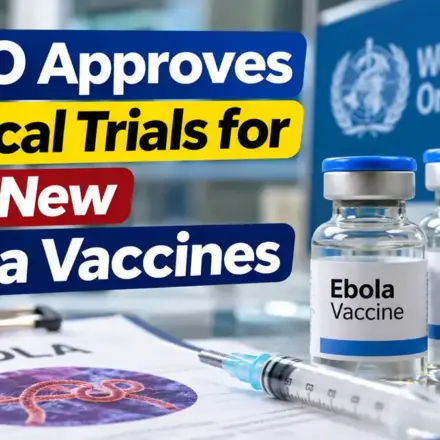
WHO Approves Clinical Trials for Two New Ebola Vaccines
The World Health Organization (WHO) has recommended adding two new experimental vaccine candidates to clinical trials in the Democratic Republic of the Congo (DRC). The decision marks a critical milestone in global biosecurity: for the first time, researchers will evaluate vaccines designed specifically to target the Bundibugyo strain of the Ebola virus during an active outbreak.
Whenever “Ebola” surfaces in international headlines, it tends to provoke immediate alarm. For decades, the disease has carried an aura of swift, untreatable danger. Yet headlines announcing clinical trials often skip the single detail that matters most to everyday readers: existing, highly effective Ebola vaccines already protect against the well-known Zaire species, but they do not confer reliable protection against rarer lineages like Bundibugyo.
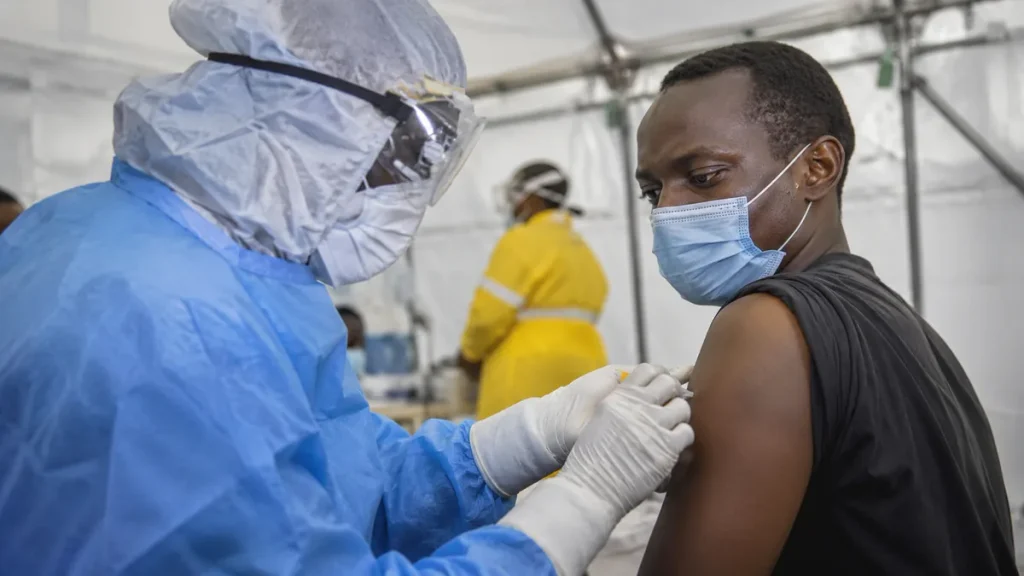
Closing that gap is the reason this move by global health authorities carries such significant weight.
The Core Takeaways
- What Happened: The WHO recommended two candidate vaccines—Oxford’s ChAdOx1 bi-valent platform and Moderna’s mRNA-1469—for inclusion in the Tumaini clinical trial in Central Africa.
- The Clinical Gap: Current approved shots (such as Ervebo) protect only against the Zaire ebolavirus. They offer little to no cross-protective defense against the Bundibugyo strain.
- US Risk Profile: The risk to the general public in the United States remains exceedingly low. Ebola does not spread through casual airborne contact, and public health surveillance systems remain tightly configured around travelers arriving from affected regions.
- The Long-Term Impact: Expanding vaccine platforms to mRNA and adenoviral vectors sets up a faster, more flexible response infrastructure for future hemorrhagic fever outbreaks.
Why a “New” Ebola Vaccine Is Necessary: The Strain Problem
One of the most persistent misconceptions about viral illness is that an umbrella term like “Ebola” describes a single, static entity. In reality, the genus Orthoebolavirus includes multiple distinct viral species known to infect humans, most notably:
- Zaire ebolavirus: Historically responsible for the largest, deadliest outbreaks, including the massive 2014–2016 West African epidemic.
- Sudan ebolavirus: An aggressive strain that has triggered multiple localized crises in East Africa, most recently in Uganda.
- Bundibugyo ebolavirus: A less frequent but lethal strain first identified in 2007, carrying high case fatality rates and unique antigenic profiles.
The licensed vaccine most people are familiar with—Ervebo (rVSV-ZEBOV), approved by the U.S. Food and Drug Administration (FDA) —is monovalent. It trains the human immune system to recognize the specific outer glycoprotein of the Zaire strain.
Viruses, however, present distinct outer protein architectures. Because the surface proteins of the Bundibugyo species differ substantially from Zaire, antibodies generated by existing vaccines fail to bind effectively. Without targeted prophylactic options, frontline medical responders and close contacts facing a Bundibugyo outbreak have had to rely almost entirely on barrier nursing, quarantine protocols, and supportive intensive care.
The newly approved trials are designed to end that vulnerability.
The Candidate Vaccines: How Modern Platforms Are Being Deployed
The WHO’s independent Technical Advisory Group selected two candidate formulations to join the ongoing Tumaini clinical trial following regulatory approvals:
- ChAdOx1 (University of Oxford & Serum Institute of India): A chimpanzee adenovirus-vectored platform engineered to deliver genetic blueprints for viral surface proteins. This same carrier foundation was deployed globally during the COVID-19 pandemic and can be adapted to present antigens from both the Sudan and Bundibugyo strains.
- mRNA-1469 (Moderna): An investigational messenger RNA vaccine that instructs host cells to temporarily produce harmless mimic proteins of the target virus, prompting a robust cellular and neutralizing antibody response without utilizing live virus material.
Evaluating both an adenoviral vector and an mRNA candidate gives international teams two distinct technological pathways to study safety, immunogenicity, and logistical storage requirements in field settings.
Building systemic immune resilience against emerging pathogens remains a foundational tenet of modern medicine. To read more about how your body’s baseline defenses identify novel invaders, explore our guide on everyday immune function and long-term vitality.
How Ebola Spreads (and How It Doesn’t)
Whenever hemorrhagic fever emerges in the news cycle, anxiety often outpaces biology. It is essential to understand the transmission dynamics:
| Characteristic | What the Science Shows |
| Transmission Route | Direct contact with broken skin or mucous membranes (eyes, nose, mouth) via infected blood, secretions, organs, or bodily fluids. |
| Airborne Spread | None. Ebola is not transmitted through casual breathing, coughing, or airborne particles like influenza, RSV, or measles. |
| Infectiousness Window | An individual is only infectious after they begin manifesting active symptoms (such as sudden fever, vomiting, or diarrhea). |
| Environmental Survival | While fluids remain hazardous on porous surfaces, the virus possesses an envelope that is rapidly degraded by hospital-grade disinfectants, bleach, and routine soap-and-water handwashing. |
Because transmission requires direct interaction with contaminated biological fluids, healthcare workers and family caregivers caring for bedridden patients without personal protective equipment (PPE) bear the overwhelming majority of transmission risk.
For routine household hygiene and preventative habits that reduce seasonal pathogens, our overview on practical home hygiene and everyday infection control offers actionable steps.
What Is the Actual Risk to People Living in the United States?
According to ongoing surveillance assessments by the Centers for Disease Control and Prevention (CDC), the threat of an Ebola outbreak in the United States remains near zero.
During major global alerts, U.S. health agencies implement multi-layered containment protocols:
- Targeted Entry Monitoring: Border and transit points screen travelers originating from active outbreak zones, routing anyone with fever or documented exposure history into specialized public health observation channels.
- Specialized Biocontainment Care Centers: Across the country, regional biocontainment facilities—such as those at Emory University and the University of Nebraska—maintain high-level isolation capabilities specifically equipped to safely care for infected travelers without risking domestic community spread.
- Emergency Laboratory Protocols: U.S. hospital networks operate standardized Laboratory Response Network (LRN) diagnostic tests capable of ruling out hemorrhagic pathogens within hours of a suspected case presentation.
The primary benefit of these trials is not shielding suburban American neighborhoods from immediate infection; it is containing outbreaks at their origin, protecting regional African healthcare workers, and closing blind spots in the global infectious disease playbook.
Understanding the basics of personal wellness also means staying grounded when news updates induce anxiety. If global health headlines are stressing you, take a moment to review our recommendations on managing health anxiety and mental well-being.
From Early Symptoms to Clinical Complications
Ebola virus disease (EVD) typically develops 2 to 21 days following exposure, with an average incubation period of 8 to 10 days. The illness follows an escalating, non-specific early pattern:
- Initial Phase (Days 1–3): Sudden onset of profound fatigue, high fever, diffuse muscle aches, severe headache, and sore throat. At this early stage, symptoms closely mimic malaria, typhoid fever, or severe influenza.
- Gastrointestinal Phase (Days 4–7): Severe watery diarrhea, recurrent vomiting, and acute abdominal pain. Fluid losses can exceed 5 to 10 liters per day, rapidly precipitating life-threatening hypovolemic shock.
- Advanced Multi-System Failure: Vascular leakage, electrolyte collapse, severe kidney and liver dysfunction, and, in severe presentations, internal and external bleeding complications.
Prompt intervention with modern therapeutics, intravenous fluid replacement, and aggressive electrolyte stabilization—as documented by clinical consensus panels with the National Institutes of Health (NIH) —has steadily improved patient survival rates compared to earlier historical outbreaks.
Balanced hydration and metabolic support form the core of early clinical care during systemic infections. To learn more about how daily fluid balance affects organ function, read our breakdown on proper hydration, electrolytes, and physical wellness.
What Happens Next with the Clinical Trials?
The rollout of candidate vaccines under the WHO R&D Blueprint follows a rigorous ethical and operational framework:
- Ring Vaccination Strategies: Rather than dosing whole general populations, clinical teams identify newly confirmed patients and offer the investigational shot to their close contacts and contacts-of-contacts, constructing an immune buffer around the transmission chain.
- Safety and Immunogenicity Tracking: Independent Data and Safety Monitoring Boards (DSMB) continuously review adverse event markers and monitor antibody levels to determine whether the candidates safely generate adequate immune memory.
- Manufacturing Scalability: If efficacy is observed, partnerships with institutional manufacturers—such as the Serum Institute—aim to ensure that production can be scaled for regional stockpiles rather than remaining restricted to high-income laboratory reserves.
These ongoing trials represent an essential evolution in public health: transitioning from an era of reactive scrambling during lethal outbreaks toward proactive, strain-specific vaccine readiness.
For more evidence-based information on pediatric, family, and nutritional wellness, visit our comprehensive library covering whole-body wellness, nutrition, and healthy living.
Frequently Asked Questions
Can someone get Ebola from an Ebola vaccine?
No. The experimental vaccines evaluated in these trials do not contain live, replicating Ebola viruses. The ChAdOx1 platform uses a harmless, non-replicating adenovirus to carry surface genetic code, while mRNA vaccines provide temporary instructions for cells to manufacture a single surface protein. Neither candidate can cause an actual Ebola infection.
Why do some Ebola outbreaks have higher death rates than others?
Case fatality rates vary based on the specific viral species, regional healthcare infrastructure, and speed of medical care. The Zaire strain has historically averaged an untreated fatality rate between 60% and 90%, while Sudan and Bundibugyo have typically ranged between 40% and 55%. When patients receive rapid intravenous rehydration, balanced electrolyte therapy, and targeted antibody treatments, mortality drops considerably. For insights into how clinical evaluations are conducted, see our guide on preventive health screenings and clinical lab testing.
Is there an approved cure for Ebola?
While there is no universal “cure” that eradicates all strains instantly, specific monoclonal antibody treatments—such as Inmazeb and Ebanga—are approved by the FDA for the treatment of Zaire ebolavirus in adults and children. These therapies neutralize the virus and significantly improve survival outcomes when administered early in the disease course. Clinical trials are working to develop similar antibody therapies for Sudan and Bundibugyo strains.
Should American travelers cancel overseas trips when these outbreaks occur?
General international travel remains safe. Outbreaks of this nature are typically concentrated in rural, localized districts of Central Africa. The CDC Travelers’ Health division issues precise, localized travel advisories rather than blanket global warnings. Standard travelers should simply follow routine regional travel notices, avoid consuming undercooked bushmeat, and adhere to recommended destination immunizations. For sensible advice on family travel preparation, explore our guide on healthy travel habits and wellness on the go.