What Really Happens When You Stop Eating Sugar for 30 Days?
When we talk about “quitting sugar,” we need to be clear about what we are actually cutting out. We are talking specifically about added sugars—the high-fructose corn syrup, cane sugar, and refined syrups injected into everything from breakfast cereal to pasta sauce. We are not talking about the natural sugars found in whole fruit or dairy. An apple contains sugar, but it comes heavily packaged with dietary fiber, water, and micronutrients that deliberately slow down absorption in your digestive system.
Taking added sugar out of your diet for 30 days is not just a passing diet challenge; it is a profound biological reset for your metabolic system and your brain’s reward pathways. Your body is forced to recalibrate how it sources and utilizes energy. The transition is highly noticeable, and to get through it successfully, it helps to know exactly what is happening beneath the surface.
Table of Contents
This short overview visualizes the physiological timeline your body goes through during a dietary sugar reset:
What Happens When You Stop Eating Sugar for 30 Days? The 30-Day Timeline
The process of resetting your system happens in distinct phases. Knowing what to expect can make the difficult days much easier to navigate.
Days 1 to 3: The Crash
Week 1
This is the hardest phase. Sugar reliably triggers the release of dopamine—the brain’s primary reward chemical. When you abruptly cut off that supply, your brain protests. You will likely experience genuine withdrawal symptoms: dull headaches, irritability, brain fog, and intense cravings. Your body is essentially demanding its usual quick-energy fix.
Days 4 to 7: The Fog Lifts
Week 1
By the end of the first week, the acute physical cravings usually fade. As your blood glucose levels stabilize—meaning you are no longer riding a brutal rollercoaster of sugar spikes and insulin crashes—your daily energy starts to level out. You may notice that the 3:00 PM slump, which previously required a coffee or a sweet treat to survive, practically disappears.
Weeks 2 and 3: The Physical Shifts
Weeks 2-3
This is when the systemic changes become obvious in your daily life.
- Water Weight: You will likely drop a few pounds quickly. Sugar causes your body to store excess glycogen, which holds onto a significant amount of water. As glycogen depletes, the retained water goes with it.
- Skin Clarity: Sugar binds to collagen and elastin in the bloodstream through a process called glycation, triggering inflammation and exacerbating acne. Many people notice a noticeable reduction in breakouts and a clearer complexion by week three.
- Deeper Sleep: Without late-day sugar spikes disrupting your natural cortisol levels and circadian rhythm, you will likely fall asleep faster and experience deeper, less interrupted rest.
Week 4: The Palate Reset
Week 4
By day 30, your taste buds will have fundamentally changed. When you constantly eat highly sweetened foods, your palate becomes desensitized. After a month without it, natural foods taste entirely different. A strawberry will taste remarkably sweet, and a sip of your old favorite soda will likely taste aggressively, unpleasantly syrupy. You haven’t just starved a craving; you have rewired what you actually enjoy eating.
The Hidden Sugar Trap
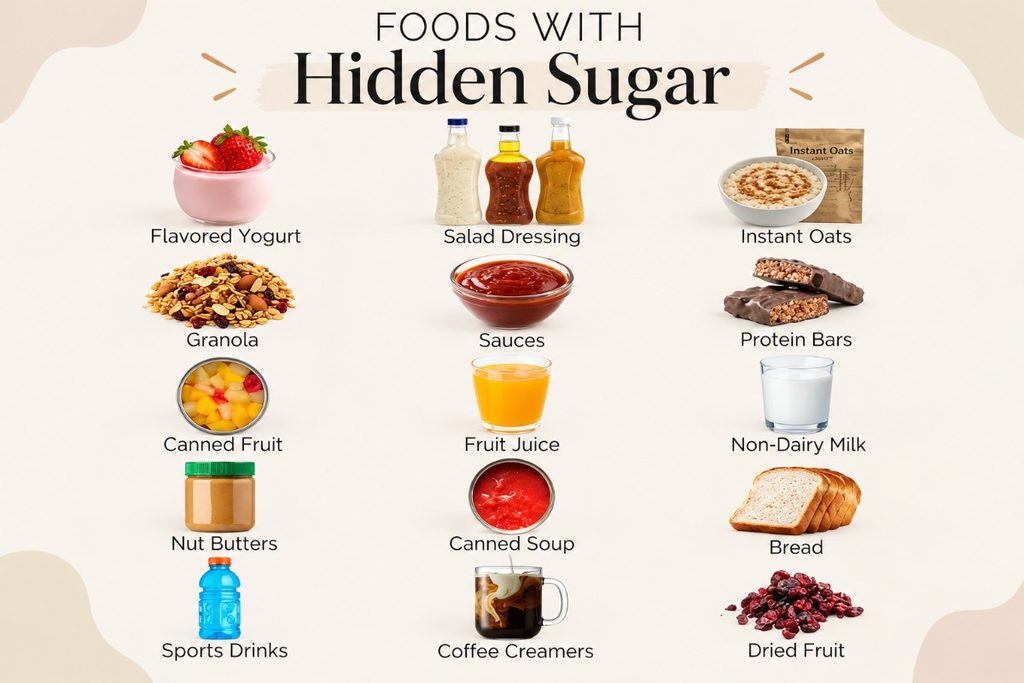
The reason many people struggle to make it through a 30-day sugar reset isn’t because they lack willpower around the dessert table. It’s because sugar is heavily engineered into savory, everyday foods where you least expect it.
If you are trying to cut sugar, checking nutrition labels on “healthy” or savory items is mandatory. A single half-cup serving of store-bought pasta sauce can contain more added sugar than a homemade chocolate chip cookie. Flavored yogurts, instant oatmeal packets, salad dressings, and supposedly healthy granola bars are common culprits that can unknowingly keep you trapped in the insulin cycle, even when you think you are eating well.
Life After Day 30
What actually happens on day 31? The goal of a 30-day challenge shouldn’t be to fear a slice of cake for the rest of your life. Going completely zero-added-sugar permanently is incredibly difficult in the modern food environment, and for the vast majority of people, it isn’t necessary for long-term health.
The true value of this reset is regaining your biological autonomy. You break the daily chemical dependency. You stop the chronic inflammation that comes from constant insulin spikes. Most importantly, you recalibrate your baseline. When you eventually choose to have a dessert, you will do so because you genuinely want to celebrate and enjoy it—not because your blood glucose is crashing and your brain is screaming for a fix.