
How Much Protein Does Your Body Need a Day?
Walk down any grocery store aisle, and you will see protein shoved into almost everything. We have protein-infused water, high-protein pancakes, and enough shakes to flood a small town. With all this marketing, it is easy to assume you are constantly falling short of your daily needs.
But beneath the hype, how much protein does your body need actually to function, repair itself, and keep you feeling energized? The answer is not a flat number you can pull off a supplement tub. It is highly individualized, depending heavily on your age, activity level, and overall health goals.
Table of Contents
The Official Minimum: Surviving vs. Thriving
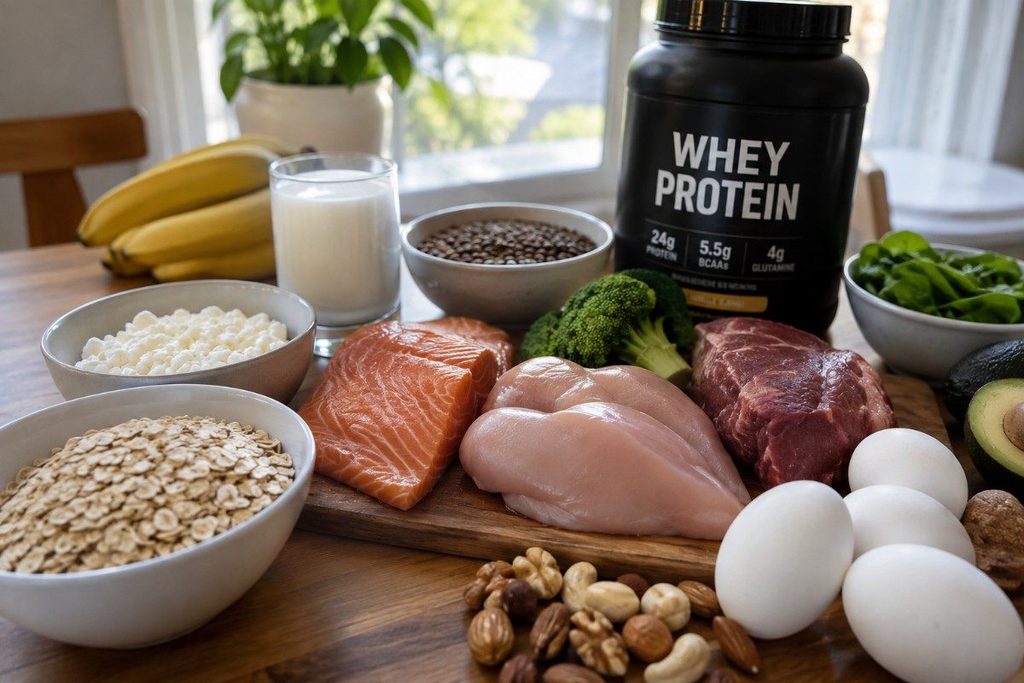
Let’s start with the baseline. The Recommended Dietary Allowance (RDA) for protein in the United States is 0.8 grams per kilogram of body weight, or about 0.36 grams per pound. If you weigh 150 pounds, that comes out to roughly 54 grams a day. To put that in perspective, a cup of Greek yogurt and a decent-sized chicken breast will easily get you there.
However, there is a massive catch that most people misunderstand. The RDA is not the amount you need for optimal health; it is the bare minimum required to prevent a nutritional deficiency. It is enough to keep your organs functioning and prevent severe muscle wasting if you are entirely sedentary. If you are regularly active, trying to build muscle, or recovering from an illness, that baseline simply will not cut it.
Factoring in Your Activity Level
Your muscles experience microscopic tears every time you engage in strenuous physical activity. Protein provides the essential amino acids needed to patch up those tears, making the muscle stronger than it was before. If you hit the gym, run, or work a physically demanding job, your needs increase significantly.
The American College of Sports Medicine suggests active individuals aim for 1.2 to 2.0 grams of protein per kilogram of body weight (about 0.5 to 0.9 grams per pound). Going back to our 150-pound example, a highly active person might need anywhere from 75 to 135 grams daily. If you are lifting heavy weights with the specific goal of putting on muscle mass, you will naturally aim toward the higher end of that spectrum.
The Age Factor: Why Older Adults Need More
As we age, our bodies become less efficient at processing protein. This leads to a natural, gradual loss of muscle mass known as sarcopenia. Losing muscle impacts your balance, your metabolic health, and your ability to recover from physical setbacks.
Because the aging body is somewhat resistant to the muscle-building signals of dietary protein, older adults actually need a higher intake to trigger the same physical response as a younger person. Health experts generally recommend adults over 65 aim for at least 1.0 to 1.2 grams per kilogram of body weight. Unfortunately, appetite often decreases with age, making it harder to hit these targets. Finding easily digestible, high-quality sources like eggs, fish, and dairy becomes vital as the years go by.
Can You Eat Too Much Protein?
With the rise of extreme high-protein diets, you might wonder if there is an upper limit. For a long time, a popular myth circulated that eating too much protein would wreck your kidneys. Current medical consensus shows that in healthy adults, a high-protein diet does not damage healthy kidneys.
However, that does not mean you should eat an unlimited amount of steak. Protein still contains calories. If you eat a massive surplus, your body will store the excess calories as fat. Beyond that, relying too heavily on animal protein often means you crowd out other vital nutrients. If your diet is mostly meat, you are likely missing out on the fiber found in plants, which can quickly lead to severe digestive issues.
Timing Matters: Space Out Your Intake
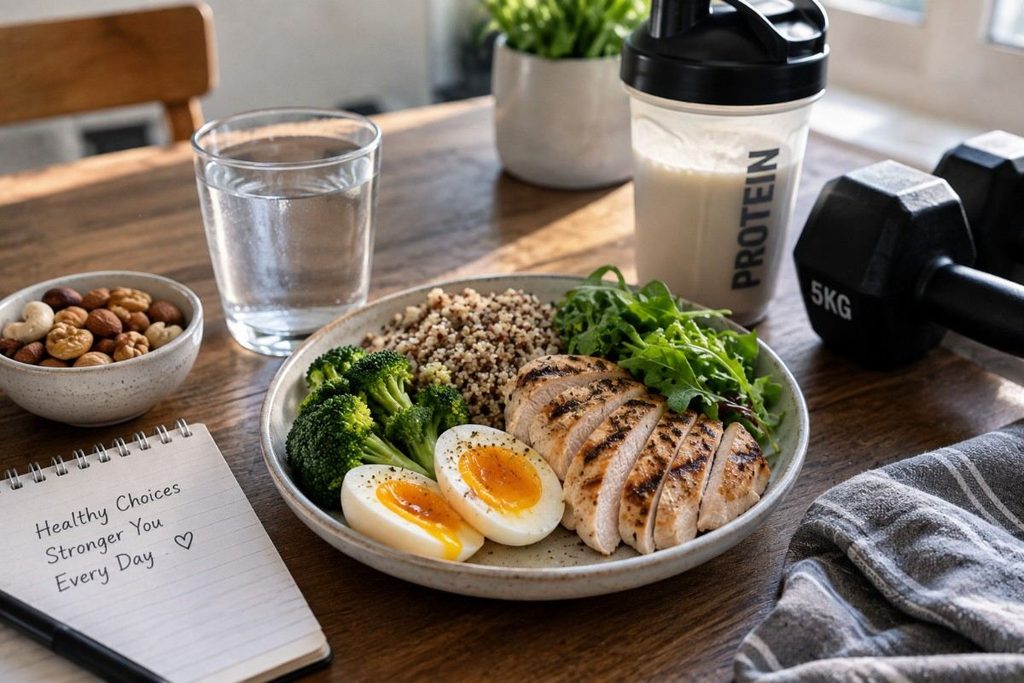
One of the biggest dietary mistakes people make is eating a tiny breakfast, a meager lunch, and then trying to cram 70 grams of protein into a massive dinner. The human body does not store protein for later use the way it stores carbohydrates and fats.
It can only utilize a certain amount of protein for muscle synthesis in a single sitting—usually around 25 to 35 grams. Any excess in that meal is essentially used for basic energy or stored. To get the most out of your diet, aim to spread your protein evenly throughout the day, including a solid source with every meal.
Finding Your Personal Target
Figuring out exactly how much protein you need requires an honest look at your lifestyle. Start by ensuring you hit the baseline to prevent deficiency, then adjust upward based on your exercise habits and age. If you have underlying health conditions—particularly kidney issues—or if you are unsure where to start, always consult a registered dietitian or a qualified healthcare professional to build a nutritional plan tailored to your specific body.