
Blood Pressure Medication Recall: What Patients Should Know
Hearing that your daily heart or blood pressure medication is part of an FDA recall can trigger immediate panic. For millions of Americans managing hypertension, these daily tablets are not optional; they are a vital buffer against stroke, heart attack, and kidney damage.
When news headlines flash warnings about drug withdrawals, the instinctive reaction for many people is to toss the prescription bottle straight into the trash.
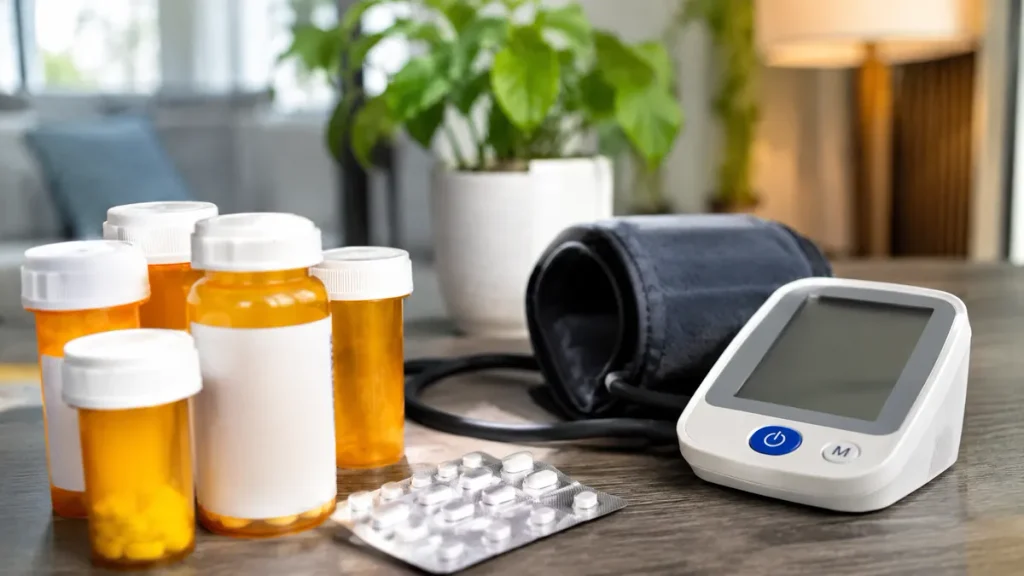
In medicine, however, a sudden knee-jerk stop can be far more dangerous than the recall itself. Navigating a drug recall requires a calm, methodical approach: verifying whether your specific bottle is truly affected, understanding why the withdrawal happened, and securing an immediate replacement without missing a single dose.
Never stop taking your blood pressure medication abruptly, even if you see it named in a recall alert. Halting anti-hypertensive drugs can trigger acute rebound hypertension, hypertensive crisis, or cardiac events within 24 to 48 hours. Instead, check your prescription bottle for the exact manufacturer, lot number, and NDC, compare them against official FDA recall lists, and call your dispensing pharmacy for an immediate replacement or substitute.
Why You Must Never Stop Your Medication Abruptly
The single most critical rule of any cardiovascular drug recall is simple: continue your medication until your doctor or pharmacist gives you an alternative.
Most blood pressure drug recalls are initiated due to long-term manufacturing quality issues—such as tablets failing dissolution tests (not dissolving at the exact rate needed for absorption) or trace chemical impurities detected during routine factory monitoring. The potential health risks from these manufacturing variances generally develop over prolonged exposure.
By contrast, the acute hazard of abruptly discontinuing blood pressure therapy is immediate and severe:
- Rebound Hypertension: Stopping medications—particularly beta-blockers like metoprolol or clonidine—causes an abrupt surge in catecholamines (adrenaline), driving blood pressure significantly higher than pre-treatment levels.
- Hypertensive Crisis: A rapid spike (systolic pressure exceeding 180 mm Hg or diastolic exceeding 120 mm Hg) strains delicate cerebral and coronary blood vessels, sharply escalating the immediate odds of hemorrhagic stroke, aortic dissection, or acute heart failure.
- Ischemic Cardiac Events: Sudden withdrawal of heart rate-regulating medications can provoke unstable angina, rapid arrhythmias, or myocardial infarction in patients with underlying coronary artery disease.
Unless you are having a severe, acute allergic reaction (such as facial swelling, hives, or throat constriction), the danger of uncontrolled hypertension vastly outweighs the short-term risk of continuing your current bottle for another day or two while arranging a switch. For broader perspective on tracking cardiovascular vital signs safely at home, explore our guide on what constitutes a dangerous blood pressure reading.
How to Check If Your Prescription Is Actually Affected
One of the most common misunderstandings during a drug safety alert is assuming that all pills bearing a specific drug name are tainted.
If a news report announces a recall of losartan, metoprolol, or chlorthalidone, it does not mean every bottle in American pharmacies is contaminated. Pharmaceuticals are produced across dozens of manufacturing facilities worldwide. Recalls are almost always restricted to specific manufacturers, distinct National Drug Codes (NDCs), and particular lot numbers.
To find out where your bottle stands, locate these three pieces of information on your prescription container label:
- The Drug Name and Exact Strength: Verify whether the active ingredient and dosage match the bulletin (for instance, Chlorthalidone 25 mg or Metoprolol Succinate ER 50 mg).
- The Manufacturer / Distributor: Many generic bottles are filled by different repackagers or labelers (such as Solco, Teva, Aurobindo, or Sandoz). Your label will indicate who manufactured or distributed the formulation.
- The Lot Number and Expiration Date: This is a stamped alphanumeric code (such as RISA24001) that pinpoints the exact factory production batch.
If the lot number is not clearly visible on your pharmacy label—which frequently happens when pharmacies dispense generic pills into amber vials from larger bulk stock bottles—do not guess. Call your local dispensing pharmacy directly. Pharmacists maintain detailed electronic dispense logs and can instantly tell you which stock lot was used to fill your exact script.
You can also cross-reference your bottle details directly with the official U.S. Food and Drug Administration (FDA) Drug Recalls Database to confirm active recall notices.
Why Blood Pressure Medications Get Recalled
Understanding why pharmaceutical recalls occur removes much of the mystery and fear surrounding these headlines. According to safety oversight by the National Institutes of Health (NIH), drug recalls typically stem from three regulatory classifications:
| Recall Class | Severity Level | What It Means in Practice |
| Class I | High / Critical | Reasonable probability that use of the drug will cause serious adverse health consequences or death (e.g., severe label mix-ups, dangerous microbial contamination). |
| Class II | Moderate / Most Common | Use of the product may cause temporary or medically reversible health effects, or the probability of serious harm is remote (e.g., dissolution failure, trace nitrosamines). |
| Class III | Low / Minor | Use is not likely to cause adverse health consequences (e.g., minor packaging defects, small labeling typos). |
Most modern anti-hypertensive recalls fall squarely into Class II. In recent years, these notices have centered around two main technical issues:
1. Dissolution Testing Failures
Tablets must dissolve at a predictable, controlled rate inside the digestive tract so your body absorbs the active compound evenly. When extended-release tablets (such as metoprolol succinate) or thiazide-like diuretics (such as chlorthalidone) fail laboratory dissolution testing, they may break down too slowly or irregularly. This can reduce drug absorption, leading to less effective blood pressure control.
2. Nitrosamine Impurities
Over the past decade, several angiotensin II receptor blockers (ARBs)—including valsartan, losartan, and irbesartan—faced widespread voluntary recalls. Regulators discovered trace quantities of nitrosamine compounds (such as NDMA or NDEA) formed during active pharmaceutical ingredient synthesis. Nitrosamines are common environmental compounds found in water and cured foods, but high levels over long periods can increase potential cancer risks. The recall was an abundance-of-caution measure to eliminate unnecessary cumulative exposure, not a sign of acute poisoning.
Managing underlying vascular conditions alongside medication safety is critical; learn more about holistic cardiac habits in our guide on aerobic exercise and heart health.
4 Actionable Steps to Take If Your Medication Is Recalled
If your lot number matches an active recall notice, follow this clear, 4-step checklist to resolve the issue safely:
- Keep Taking Your Current Medication: Maintain your scheduled doses while you arrange your transition. The risk of skipping your therapy is vastly higher than taking a recalled tablet for an extra 24 hours.
- Contact Your Dispensing Pharmacy First: Your pharmacist is your fastest resource. They will check their current inventory for an unaffected lot of the same medication from another manufacturer or supply a replacement bottle. In most recalled scenarios, pharmacies can exchange the product or process a clean refill directly.
- Notify Your Prescribing Physician: If the entire drug category or molecule is experiencing a wider regional shortage, your doctor can immediately route a prescription for a therapeutic alternative (for instance, moving from one ARB to another, or transitioning from an ACE inhibitor to a calcium channel blocker).
- Dispose of the Recalled Pills Correctly: Once you have your new, safe supply in hand, do not flush your old pills down the toilet or leave them in a medicine cabinet where someone else could mistakenly take them. Use an authorized pharmacy drug take-back kiosk or follow national disposal guidelines outlined by the Centers for Disease Control and Prevention (CDC).
To help support blood vessel elasticity and natural vascular function through everyday nutrition, check out our insights on daily habits for steady blood sugar and vascular balance.
When to Seek Urgent Medical Care
While you are waiting for a prescription replacement, pay close attention to how your body feels. If your recalled medication failed dissolution standards, your actual blood pressure may have drifted higher than anticipated.
Seek emergency medical attention or contact your doctor immediately if you notice:
- Severe, throbbing headaches that do not resolve with rest.
- Chest pain, tightness, or a sensation of heaviness across your chest.
- Sudden shortness of breath, dizziness, or fainting spells.
- Vision disturbances, such as sudden blurriness or seeing spots.
- Unexplained numbness, tingling, or weakness in your face, arms, or legs.
For adults looking to maintain overall cardiovascular resilience through structured lifestyle changes, explore our evidence-based sustainable weight management strategies and our guide to restoring healthy sleep patterns for heart health.
Frequently Asked Questions
Will I have to pay out-of-pocket for a replacement prescription?
In many cases, no. When a drug manufacturer issues a voluntary Class I or Class II recall, pharmacies generally process replacements or work with your insurance provider to authorize an early override for an unaffected batch. If there is a temporary copay dispute, speak directly with the supervising pharmacist; pharmacies routinely manage manufacturer recall claims to ensure patients do not experience gaps in essential cardiovascular therapy.
What should I do if my pharmacy does not have an unaffected lot in stock?
If your pharmacy’s current inventory of that specific medication is completely affected by the recall, request that they transfer your prescription to another nearby pharmacy chain or contact your prescriber immediately. Your doctor can easily switch you to an equivalent drug within the same therapeutic family—such as transitioning from losartan to valsartan or amlodipine—ensuring your blood pressure remains controlled without interruption. You can also review current clinical guidelines from the American Heart Association (AHA) regarding standard alternative first-line anti-hypertensive therapies.
How do I know if my symptoms are from a recalled drug or something else?
A manufacturing flaw like poor tablet dissolution typically results in gradual loss of blood pressure control rather than acute, overt toxicity. You might notice your home blood pressure readings creeping up or experience subtle headaches or mild fatigue. If you feel significantly unwell, have your blood pressure checked by a professional right away. For general preventive care benchmarks, review our overview of preventive family healthcare and adult screening routines.
Can I report an adverse reaction to a recalled medication myself?
Yes. The FDA maintains an open reporting portal called MedWatch. Both healthcare professionals and everyday consumers can report unexpected side effects, medication failures, or product packaging defects directly to the agency. Submitting a report helps federal regulators track post-market surveillance data and determine whether wider production interventions are necessary to protect the public.
Are generic blood pressure drugs less safe than brand-name versions?
No. Generic drugs are required by federal law to contain the exact same active pharmaceutical ingredient, strength, dosage form, and route of administration as brand-name drugs. Both generic and brand-name medications undergo strict manufacturing oversight. Recalls can happen to brand-name medications just as they do to generics. Generic medications remain a safe, cost-effective cornerstone of modern cardiovascular care. If you are experiencing other unexplained symptoms alongside chronic health changes, see our deep dive on when fatigue and common symptoms point to underlying conditions.




[…] step toward tracking this progress; explore our comprehensive guide on what constitutes a dangerous blood pressure reading and key metabolic markers to see how cardiovascular risks interconnect with blood […]