
Holotranscobalamin Blood Test: Active B12 Levels
Fatigue, brain fog, and unexplained tingling in the hands or feet often lead doctors to check vitamin B12 levels. Yet some people receive a “normal” total B12 result while still dealing with persistent symptoms consistent with deficiency. This diagnostic challenge has brought increased attention to the holotranscobalamin (HoloTC) blood test, often referred to as the active B12 test.
TL;DR: The holotranscobalamin blood test measures active vitamin B12—the fraction of circulating B12 bound to transcobalamin that body cells can actually take up and use. While standard total B12 tests measure all circulating B12 (including inactive forms), HoloTC reflects bioavailable cobalamin. It is typically interpreted alongside clinical symptoms and, when necessary, other confirmatory metabolic markers.
What Is a Holotranscobalamin (HoloTC) Blood Test?
A holotranscobalamin blood test evaluates the biologically active portion of vitamin B12 in your bloodstream.
Once vitamin B12 enters circulation, it attaches to two distinct transport proteins: transcobalamin and haptocorrin.
- Transcobalamin binds approximately 10% to 30% of total circulating B12. This specific complex is known as holotranscobalamin (HoloTC). Cellular receptors throughout the body recognize transcobalamin, allowing cells to absorb this form of B12 directly. Because this fraction is available for receptor-mediated cellular uptake, it is commonly called active B12.
- Haptocorrin binds the remaining 70% to 90% of circulating B12, forming holohaptocorrin. Tissues cannot readily absorb this form for everyday metabolic processes, making it largely unavailable for immediate cellular needs.
A standard total vitamin B12 test measures both protein-bound fractions together. Consequently, a total B12 test can show adequate overall levels even if the amount available for your cells to absorb is relatively low. The HoloTC assay isolates the active fraction to assess bioavailable cobalamin more directly.
Active B12 vs. Total Vitamin B12: The Key Differences
The choice between a standard total B12 test and an active B12 test often comes down to diagnostic clarity in borderline or unclear situations.
| Feature | Standard Total B12 Test | Holotranscobalamin (Active B12) Test |
| What It Measures | All B12 in serum (both active and inactive fractions) | Only B12 bound to transcobalamin (bioavailable form) |
| Portion of Blood B12 | 100% of circulating cobalamin | Roughly 10% to 30% of circulating cobalamin |
| Primary Strength | Widely available, inexpensive first-line screening tool | More specific to cellular availability; not obscured by variations in haptocorrin |
| Primary Limitation | May produce ambiguous or falsely reassuring results in early or borderline deficiency | Less widely available across standard commercial laboratories |
| Standard Units | pg/mL (picograms per milliliter) or pmol/L | pmol/L (picomoles per liter) |
Because haptocorrin levels can fluctuate based on liver health, systemic inflammation, or individual variations, total B12 levels may not always reflect cellular B12 availability. Evaluating HoloTC can provide useful clarification when symptoms and total B12 levels do not clearly align.
Holotranscobalamin Normal Range and Interpretation
Holotranscobalamin is standardly measured in picomoles per liter (pmol/L).
Because different laboratories use different testing platforms and diagnostic assays, there is no single universal reference range. Reference intervals and cutoffs vary depending on the specific laboratory performing the analysis.
In clinical practice and literature, three-tier diagnostic cutoffs are frequently used as interpretive guides, though exact thresholds depend on the assay:
- Deficiency Likely: Values below 25 pmol/L generally indicate a high probability of vitamin B12 deficiency.
- Indeterminate / Gray Zone: Values between 25 and 70 pmol/L fall into an intermediate zone where B12 status is uncertain. In this range, deficiency cannot be confirmed or excluded by HoloTC alone, and secondary testing is often considered.
- Deficiency Unlikely: Values above 70 pmol/L generally indicate adequate active B12 levels.
Some clinical laboratories report standard reference intervals (for example, approximately 25 to 165 pmol/L), while others utilize established decision cutoffs to categorize results. Always refer directly to the reference intervals and interpretive notes provided on your specific laboratory report.
What Does a Low Holotranscobalamin Level Mean?
A low active B12 level indicates that the fraction of B12 available for cellular uptake is reduced. Research suggests that HoloTC may decline earlier than total B12 in some cases of negative B12 balance.
A low result may point to several common underlying factors:
- Inadequate Dietary Intake: Diets lacking animal products (strict vegan or vegetarian diets) without consistent supplementation or fortified foods.
- Impaired Gastrointestinal Absorption: Digestive conditions affecting the stomach or small intestine, such as atrophic gastritis, celiac disease, Crohn’s disease, or a history of bariatric surgery.
- Pernicious Anemia: An autoimmune disorder where the lack of intrinsic factor prevents normal B12 absorption in the ileum.
- Medication Effects: Long-term use of medications that alter stomach acid or gut absorption, such as proton pump inhibitors (PPIs), H2 receptor blockers, or metformin.
What Does a High Holotranscobalamin Level Mean?
An elevated active B12 level is less common during routine deficiency workups.
In many instances, elevated HoloTC levels simply reflect recent supplementation with oral vitamin B12, high-dose multivitamins, B-complex products, or recent B12 injections. When supplements are not a factor, an elevated result does not automatically point to a specific disease, but it warrants discussion with your healthcare professional to evaluate your overall clinical context and medical history.
Can Active B12 Detect Early B12 Deficiency?
Active B12 testing can often identify low bioavailable cobalamin earlier than total B12 measurements because it tracks the fraction delivered directly to cells. When B12 intake or absorption decreases, the circulating pool of HoloTC may begin to drop while total serum B12 remains temporarily within normal laboratory limits.
However, medical evidence does not show that HoloTC is definitively superior in every diagnostic scenario. Because test performance varies across different patient populations, and because an indeterminate result still requires further evaluation, HoloTC is best used as a complementary tool alongside clinical symptom assessment and additional functional testing when needed.
Holotranscobalamin vs. MMA and Homocysteine
When active B12 results are indeterminate (such as within the 25 to 70 pmol/L range) or symptoms remain unexplained, healthcare providers often look at functional metabolic markers:
- Methylmalonic Acid (MMA): Vitamin B12 is an essential cofactor for the enzyme methylmalonyl-CoA mutase. When intracellular B12 is inadequate, MMA levels in the blood and urine rise. While elevated MMA is a sensitive marker of cellular B12 deficiency, kidney impairment also reduces MMA clearance and elevates blood levels. Therefore, an elevated MMA level is not absolute proof of B12 deficiency and must be interpreted alongside kidney function tests.
- Homocysteine: Vitamin B12 and folate work together to convert homocysteine to methionine. A deficiency in active B12 can cause homocysteine levels to climb. However, homocysteine is less specific than MMA because folate deficiency, renal impairment, and thyroid disorders can also elevate it.
While HoloTC measures the available supply of usable B12 in the blood, MMA and homocysteine help demonstrate whether cells have enough B12 to carry out metabolic reactions properly.
Who May Benefit from an Active B12 Test?
A healthcare provider may consider an active B12 test in clinical situations such as:
- Unclear or Borderline Total B12 Results: A patient exhibits fatigue, tingling, or mood changes, but standard total B12 levels sit in an ambiguous middle range.
- Conditions Affecting Absorption: Individuals with known malabsorptive disorders, including celiac disease, inflammatory bowel disease, or prior stomach or intestinal surgery.
- Strict Plant-Based Diets: Long-term vegans and vegetarians seeking an accurate assessment of bioavailable B12 status.
- Long-Term Medication Use: People on extended regimens of metformin or stomach acid reducers who experience unexplained neurological or hematological symptoms.
- Older Adults: Age-related reductions in stomach acid and intrinsic factor production can quietly compromise B12 absorption.
How the Test Is Performed and What to Expect
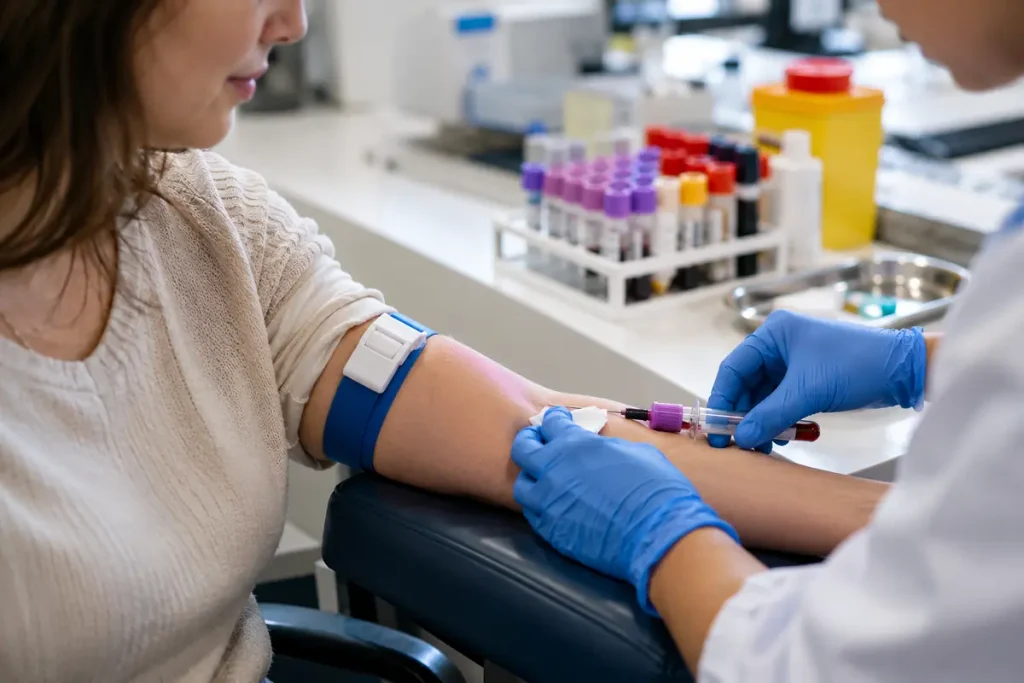
The active B12 test requires a standard blood draw (venipuncture) from a vein in your arm.
- Preparation and Fasting: Preparation requirements depend on the laboratory analyzing the sample. Some facilities specify no special preparation, while others may provide specific guidance. If your doctor has ordered other tests alongside your HoloTC (such as a lipid panel or fasting glucose), fasting may be required for those components.
- Supplements and Medications: Follow your specific laboratory’s preparation instructions, and always inform your healthcare professional about any B12 supplements, multivitamins, or prescription medications you currently take, as these can affect how your results are interpreted.
What to Do After an Abnormal Result
If your holotranscobalamin level falls outside the expected reference interval:
- Review the Complete Clinical Picture: A single lab value should not be viewed in isolation. Your doctor will typically assess your active B12 alongside a complete blood count (CBC) to check for anemia, your kidney function, and, if needed, MMA levels.
- Determine the Root Cause: Distinguishing between low dietary intake and physiological malabsorption determines the treatment strategy. If your gut cannot absorb B12 effectively (as in pernicious anemia), high-dose oral regimens or intramuscular B12 injections may be required instead of standard over-the-counter options.
- Address Symptoms Early: Because untreated B12 deficiency can lead to persistent nerve damage or cognitive symptoms, report any numbness, balance changes, or persistent fatigue to your clinician so appropriate treatment can begin promptly.
Frequently Asked Questions
What is the normal range for holotranscobalamin?
Reference ranges for holotranscobalamin depend on the specific laboratory and assay used. Many clinical guidelines use decision cutoffs where levels below 25 pmol/L suggest deficiency is likely, 25 to 70 pmol/L represents an indeterminate zone, and levels above 70 pmol/L indicate deficiency is unlikely. Always check the specific intervals listed on your lab report.
What does high active B12 mean?
An elevated active B12 level may reflect recent use of B12 supplements, fortified foods, or B12 injections. When supplements are not involved, high levels should be interpreted by a healthcare professional in the context of your overall medical history.
What does low active B12 mean?
A low active B12 result indicates that the concentration of cobalamin available for cellular uptake is reduced. It can be an indicator of inadequate dietary intake, impaired gut absorption, or conditions such as pernicious anemia.
Is holotranscobalamin the same as active B12?
Yes. Holotranscobalamin is the medical term for vitamin B12 bound to the carrier protein transcobalamin. Because this is the form tissues can absorb, it is commonly called active B12.
What is the difference between total B12 and active B12?
Total B12 measures all circulating cobalamin, the majority of which is bound to haptocorrin and not readily taken up by cells. Active B12 measures only the cobalamin bound to transcobalamin, which represents the bioavailable fraction.
What does active B12 mean on a blood test?
On a blood test, active B12 represents the circulating fraction of B12 bound to transcobalamin that is available for receptor-mediated cellular uptake.
Can active B12 detect B12 deficiency?
Yes, active B12 testing can help identify a deficiency and may decline earlier than total B12 in some individuals. However, because indeterminate results can occur, it is most reliable when evaluated alongside symptoms and, when appropriate, other tests like methylmalonic acid (MMA).