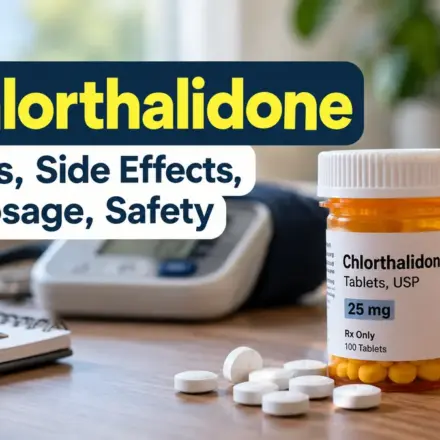
Chlorthalidone: Uses, Side Effects, Dosage, Safety
Chlorthalidone is one of the older blood pressure medicines still in everyday use, and in 2026 it has been in the news for a different reason: two FDA recalls of 25 mg tablets from one manufacturer. People searching for it usually fall into two groups. Some were just prescribed it and want to know what to expect. Others have a bottle at home and want to know whether the recall applies to them.
This article covers both. It explains how chlorthalidone works, what it is used for, how it compares with hydrochlorothiazide, which side effects deserve attention, and which medicines interact with it. Then it walks through what the recalls actually say, based on the FDA’s enforcement reports and reporting from the past few months.

Chlorthalidone is a once-daily water pill (a thiazide-like diuretic) prescribed mainly to lower blood pressure and, at higher doses, to reduce fluid buildup. Its most important risks are lab changes, especially low potassium and low sodium, which is why periodic blood tests matter. The 2026 recalls involve specific lots of 25 mg tablets; the FDA classed both as Class II, and for that class patients can generally keep taking their medicine unless the recalling company says otherwise. The practical step is to check your lot number with your pharmacy, not to stop the pills on your own.
What chlorthalidone is and how it works
Chlorthalidone is a thiazide-like diuretic. It is chemically related to the thiazides, but it is not identical to them, and the FDA first approved it in 1960. It works in the kidney, in a stretch of tubule called the distal convoluted tubule, where it blocks a sodium-chloride transporter. Less sodium gets pulled back into the blood, so more sodium leaves in the urine, and water follows it. Early on, blood pressure falls partly because there is less fluid in circulation. With longer use, the drug is also thought to lower resistance in the blood vessels, which helps explain why the blood pressure effect continues even after the initial fluid shift settles (see the pharmacology overview in StatPearls).
What sets chlorthalidone apart from many other diuretics is how long it stays active. According to the FDA label text, the diuretic effect begins in a few hours and can continue for up to 72 hours, with a half-life of roughly 40 hours or more depending on the dose. In practice that means one dose a day gives steady coverage, and a late dose is less likely to leave a gap. It also means side effects such as potassium loss do not switch off quickly once they start.
The drug comes in several forms. Generic tablets are commonly 25 mg and 50 mg, and other products come in 12.5 mg and 15 mg strengths. There are also combination pills that pair chlorthalidone with atenolol, azilsartan, or clonidine. One practical detail from the Thalitone label is worth knowing: that product states it cannot be substituted with other chlorthalidone formulations, so you should not assume that a different brand or strength is interchangeable milligram for milligram.
What chlorthalidone is prescribed for
The main use is high blood pressure, either alone or alongside other medicines. Chlorthalidone is also used as an add-on treatment for swelling (edema) linked to heart failure, cirrhosis of the liver, and kidney disease, including nephrotic syndrome. Doctors sometimes prescribe it for other reasons as well. Because it reduces the amount of calcium the kidneys lose in urine, it has been used to help prevent calcium kidney stones in people with high urinary calcium, and MedlinePlus notes it may also be used in certain cases of diabetes insipidus and electrolyte problems.
Where does it sit in current guidelines? The 2025 AHA/ACC high blood pressure guideline lists thiazide-type diuretics as one of four first-line drug classes, alongside ACE inhibitors, angiotensin receptor blockers, and long-acting dihydropyridine calcium channel blockers. Chlorthalidone, indapamide, and hydrochlorothiazide are all listed as acceptable choices within the thiazide group. For stage 2 hypertension (140/90 mm Hg or higher), the guideline favors starting two first-line drugs together, ideally in a single pill. For resistant hypertension, one early step is to switch from hydrochlorothiazide to chlorthalidone or indapamide before adding spironolactone.
If you want to understand the numbers behind those categories, Healthfity’s guide to high blood pressure, its stages, and what your readings mean is a good companion to this article.
Chlorthalidone vs. hydrochlorothiazide: what the trials show
For years, many cardiologists assumed chlorthalidone was the better thiazide. There were reasons. Per milligram, chlorthalidone is more potent, and StatPearls describes it as roughly 1.5 to 2 times as effective as hydrochlorothiazide at lowering systolic pressure. It lasts longer, and it was the reference diuretic in the large ALLHAT trial, where it held up well against amlodipine and lisinopril. But for a long time nobody had run a big head-to-head outcomes trial between the two drugs.
The Diuretic Comparison Project, published in the New England Journal of Medicine in 2022, finally did. It enrolled 13,523 mostly older U.S. veterans (average age 72) who were already taking hydrochlorothiazide. Half stayed on it, and half were switched to chlorthalidone at 12.5 or 25 mg daily. After a median of about 2.4 years, major cardiovascular events or non-cancer deaths occurred in 10.4% of the chlorthalidone group and 10.0% of the hydrochlorothiazide group, a difference too small to be meaningful (hazard ratio 1.04). Low potassium, however, was more common with chlorthalidone: 6.0% versus 4.4%, and hospitalizations for low potassium were slightly higher too.
Three points help put that result in context:
- It was a pragmatic, real-world trial in patients who were already tolerating hydrochlorothiazide, so it tested a switch, not a first-time choice.
- The doses of hydrochlorothiazide used in practice were fairly high relative to the chlorthalidone doses, which narrows the potency gap.
- A secondary analysis suggested possible benefit with chlorthalidone in people with a prior heart attack or stroke, but the investigators treated this as hypothesis-generating because the main result was neutral.
The fair reading is that chlorthalidone did not prove superior at commonly used doses, but it also did not prove worse, and it carries a somewhat higher potassium cost. That is probably why the 2025 guideline accepts all of the thiazide-type options rather than naming a single winner.
Chlorthalidone dosage: what the labels describe
Your dose is set by your prescriber based on your blood pressure, kidney function, other medicines, and lab results, so treat what follows as background, not instructions. For high blood pressure, the label for a 12.5 mg chlorthalidone product recommends starting at 12.5 mg or 25 mg once daily with food, with the dose doubled every 2 to 4 weeks if needed, up to a maximum of 100 mg daily, and notes that doses above 100 mg usually add nothing. Thalitone uses a different scheme: it starts at 15 mg daily and may go to 25 mg after two weeks, with no extra blood pressure benefit expected above 25 mg. In clinical studies, lower doses are common. The Diuretic Comparison Project used 12.5 to 25 mg, and a trial in advanced kidney disease started at 12.5 mg.
Edema is a different situation. The Thalitone label describes an initial range of 50 to 100 mg daily, or 100 mg on alternate days, with a ceiling of 200 mg daily, and higher doses bring a higher risk of electrolyte problems.
A few practical points about taking it:
- Take it in the morning with food, so that increased urination does not interrupt your sleep.
- Early on, you may urinate more often. MedlinePlus notes this usually settles after a few weeks.
- Chlorthalidone controls blood pressure but does not cure it. Feeling fine is not a reason to stop, and stopping without talking to your prescriber can let blood pressure climb back up.
- If you miss a dose, the standard advice is to take it when you remember unless it is nearly time for the next one, and never to double up. Your pharmacist can confirm what applies to your product.
Chlorthalidone side effects
Most people tolerate chlorthalidone well, but the side effect profile is more than a list of minor annoyances. The key issue is that the drug changes how the kidneys handle salts, and those changes show up in blood tests before they cause symptoms.
Electrolyte changes
Low potassium (hypokalemia). This is the best-known problem. When more sodium reaches the later parts of the kidney tubule, potassium is lost in exchange. The effect is dose-related. Symptoms can include muscle cramps or weakness, unusual tiredness, increased thirst, nausea, and a racing or irregular heartbeat. People who take digoxin need particular care, because low potassium can worsen digoxin’s effects on the heart.
Low sodium (hyponatremia). If it occurs, it tends to appear in the first few weeks of treatment. Headache, nausea, confusion, and unusual fatigue are the kinds of symptoms to report.
Low magnesium (hypomagnesemia). This matters because the label warns that low magnesium can make low potassium hard to correct, even with potassium replacement. Healthfity’s overview of magnesium, deficiency, and food sources explains the mineral’s role in more depth. Long-term use of acid-reducing medicines such as omeprazole can also lower magnesium, so the two together are worth mentioning to your clinician.
High calcium. Chlorthalidone reduces urinary calcium loss and can raise blood calcium, which is the same effect that makes it useful for some kidney stones.
Metabolic changes
- Uric acid and gout. Chlorthalidone reduces uric acid clearance, and the rise is dose-related. In susceptible people it can trigger gout flares.
- Blood sugar. It can nudge glucose up and may change the need for diabetes medicines. These effects appear to be dose-related, with low doses having less impact. If you take something like metformin, your clinician may check your glucose more closely after starting a diuretic.
- Cholesterol and triglycerides. These can rise modestly, and the label recommends monitoring them.
Everyday effects
Dizziness, lightheadedness when standing, stomach upset, nausea, diarrhea or constipation, headache, and muscle spasms are the more common complaints listed in the label. Impotence is also listed, although the label says there is not enough systematic data to estimate how often it occurs. Photosensitivity is listed as a possible skin reaction, so sun protection is sensible.
Standing up slowly helps with dizziness. So does staying hydrated; because chlorthalidone pulls fluid out, the symptoms of chronic dehydration can overlap with its side effects, and a dry, dizzy feeling is worth taking seriously, especially in hot weather or during hard exercise.
Rare but serious reactions
The label lists acute kidney injury (mainly when someone is volume-depleted), pancreatitis, jaundice, low blood cell counts, and severe skin reactions including vasculitis and toxic epidermal necrolysis. These are uncommon, and the label notes that frequencies are not well estimated. Severe abdominal pain, a widespread painful rash with blistering, fainting, very little urine, or a heartbeat that feels wrong all warrant prompt medical attention. Healthfity’s article on heart health warning signs covers symptoms that should never be brushed off.
One frequently asked question: thiazide diuretics have been reported to worsen lupus, but the chlorthalidone label states that lupus flares have not been reported with chlorthalidone itself.
Who needs extra caution
Chlorthalidone is contraindicated in people who cannot produce urine (anuria) and in people with hypersensitivity to chlorthalidone or other sulfonamide-derived drugs. If you have ever reacted to a sulfa drug, tell your prescriber and pharmacist. Whether a past reaction matters for a thiazide-like diuretic is a clinical judgment, not something to guess at.
Caution is also advised in people with:
- Kidney disease. Diuretics can cause acute kidney injury when someone is dehydrated. Yet the CLICK trial, published in the New England Journal of Medicine, found that chlorthalidone lowered 24-hour systolic pressure by about 10.5 mm Hg more than placebo in 160 people with stage 4 chronic kidney disease, challenging the old belief that thiazides stop working at that stage. It also reduced albuminuria, but it caused more low potassium, high blood sugar, and reversible rises in creatinine, so close monitoring was part of the picture.
- Liver disease, because fluid and electrolyte shifts can be harmful.
- Gout, diabetes, lupus, or high calcium, for the reasons above.
- Older age. Older adults can be more prone to dizziness, falls, and electrolyte problems.
Pregnancy and breastfeeding. The label states that decades of observational data have not identified an increased risk of major birth defects or miscarriage with chlorthalidone. But thiazides cross the placenta and have been associated with newborn jaundice, low platelets, low blood sugar, and electrolyte problems, and the label says chlorthalidone should not be first-line treatment for high blood pressure in pregnancy. Chlorthalidone also passes into breast milk. If you are pregnant, planning pregnancy, or nursing, ask your clinician about alternatives.
Drug and substance interactions
- Lithium. Chlorthalidone reduces lithium clearance and can raise lithium to toxic levels, so lithium blood levels need monitoring if both are used.
- Other blood pressure medicines. Chlorthalidone adds to their effect, which is often intended, but it also raises the risk of lightheadedness.
- Diabetes medicines. Insulin or oral agents may need adjustment.
- Digoxin. Low potassium can magnify its effects on heart rhythm.
- Anti-inflammatory painkillers. NSAIDs can blunt blood pressure control and put extra strain on the kidneys, particularly in someone taking a diuretic. If you rely on ibuprofen or naproxen, check with your pharmacist before combining them with chlorthalidone.
- Anesthesia. The label notes that chlorthalidone may increase responsiveness to tubocurarine, a muscle relaxant. Tell surgeons and anesthesia teams that you take a diuretic.
- Alcohol. MedlinePlus advises asking your doctor about alcohol because it can make side effects such as dizziness worse.
Supplements and salt substitutes deserve a mention too. Potassium-based salt substitutes are discussed in the 2025 guideline as potentially useful for lowering blood pressure, but whether they are suitable depends on your kidney function and other medicines, so ask before using them, and do not start potassium supplements on your own.
The 2026 chlorthalidone recalls: what they cover
Two recalls drew most of the attention. Both involve chlorthalidone tablets, USP, 25 mg, made by Inventia Healthcare Limited and distributed in the U.S. by Rising Pharma Holdings. Both were voluntary, and the reason in each case was listed as failed dissolution specifications. Based on the FDA’s enforcement report and news coverage:
- June 2026 recall (D-0610-2026): initiated June 5, 2026, affecting 11,460 bottles across two lots: RISA24001 in 100-tablet bottles (NDC 64980-599-01) and RISB24002 in 1,000-tablet bottles (NDC 64980-599-10).
- September 2026 recall (D-0852-2026): initiated September 3, 2026, classified Class II on September 17, affecting 13,567 bottles of lot RISA24002 in 100-tablet bottles (NDC 64980-599-01).
- All three lots expire in April 2027, and together the recalls cover about 25,000 bottles. Reports described the September recall as ongoing.
What failed dissolution means. A dissolution test places a tablet in a controlled liquid to measure how quickly and completely the active ingredient is released. The FDA’s dissolution guidance explains the concept. If a tablet releases the drug more slowly or less completely than the approved standard, less medicine may be absorbed, which could in theory weaken blood pressure control. In a notice about the June recall that was posted by the California State Board of Pharmacy, the distributor reported that testing at the 18-month mark found about 91.5% of the labeled amount of chlorthalidone (the minimum is 92%) and an average of 78% dissolving (the standard requires at least 80%). The distributor stated that no impact on patient health or safety was anticipated. Those are the company’s figures, and the FDA enforcement report itself does not give the details.
What Class II means. According to the FDA’s explanation of drug recall classes, a Class II recall means using the product may cause temporary or medically reversible health effects, or that the chance of serious harm is remote. For Class II and III recalls, consumers can generally continue taking the medicine unless the recalling company provides other instructions. Stopping a blood pressure drug abruptly can be riskier than taking a tablet that is slightly under spec. News reports at the time said the FDA had not listed any reported injuries or illnesses in connection with the September recall.
How to check your own supply:
- Look at the label or pharmacy receipt for the manufacturer, NDC, and lot number, or call the pharmacy and ask them to read it from your refill record.
- Compare it with the lots above. The recalled 25 mg tablets are described in the DailyMed drug label as light yellow, round, and flat with 103 on one side, but appearance alone is not a reliable way to confirm a lot, since other manufacturers’ tablets can look similar.
- If your lot is affected, ask the pharmacy for a replacement and whether to keep taking the current tablets until you get it.
- Keep track of your home blood pressure readings. If they climb after a refill, tell your clinician rather than waiting for the next appointment.
Recall information can change. If you want the current status, search the FDA’s enforcement report database or ask your pharmacist.
Making chlorthalidone work well over time
Blood tests are part of the treatment, not an optional extra. Clinicians commonly check potassium, sodium, kidney function, and sometimes magnesium, calcium, glucose, and uric acid, often after starting or changing a dose and then periodically. Home blood pressure monitoring is also recommended by current guidelines, and a written log makes appointments more productive.
Some habits help the medicine do its job. Limiting salt, staying active, moderating alcohol, and keeping a healthy weight all lower blood pressure, and Healthfity’s piece on everyday habits that can raise blood pressure lists common ones people overlook. If you are vomiting or have severe diarrhea and cannot keep fluids down, contact your prescriber or pharmacist the same day. Diuretics can add to fluid loss and strain the kidneys, and some clinicians advise a temporary pause, but that should be their decision.
Report side effects to your prescriber, and, if they are serious, to the FDA’s MedWatch program.
Frequently asked questions
Is chlorthalidone the same as hydrochlorothiazide?
No. Both are thiazide-type diuretics, but chlorthalidone is chemically distinct, stronger per milligram, and acts for much longer. In the large Diuretic Comparison Project, the two produced similar rates of heart attacks, strokes, and related events, although chlorthalidone caused low potassium more often.
What time of day should I take chlorthalidone?
Usually in the morning, with food. That keeps the extra urination during the day instead of overnight. Follow the instructions on your prescription label.
How long does chlorthalidone take to work?
The diuretic effect starts within a few hours of a dose, with peak blood levels about 2 to 6 hours after taking it. The full blood pressure effect builds over days to weeks, which is why prescribers often wait a few weeks before adjusting the dose.
Does chlorthalidone lower potassium, and should I take a supplement?
It can lower potassium, especially at higher doses. But taking potassium without being told to can be risky, particularly if you have kidney disease or take certain other medicines. Let your prescriber check your levels and decide.
Can I drink alcohol while taking chlorthalidone?
Ask your doctor. Alcohol can add to dizziness and lightheadedness, and can contribute to dehydration, which makes the medicine’s side effects harder to tolerate.
Can I take ibuprofen or naproxen with chlorthalidone?
Sometimes people do, but NSAIDs can blunt blood pressure control and raise the risk of kidney problems, particularly alongside diuretics. Check with your pharmacist or doctor first, and ask about other options for pain.
Is chlorthalidone a weight-loss drug?
No. It increases water loss, so the scale may drop slightly at first, but that is fluid, not fat, and it is not a safe or effective weight-loss method.
Is my chlorthalidone part of the 2026 recall?
Only if it is a 25 mg tablet from the specific lots listed above, made by Inventia Healthcare and distributed by Rising Pharma. Check the manufacturer, NDC, and lot number on your bottle or ask your pharmacy.
Should I stop taking chlorthalidone because of the recall?
Not on your own. The FDA classed both recalls as Class II, and for that class patients can generally continue taking the medicine unless the recalling company says otherwise. If your lot is affected, call your pharmacy about a replacement and ask whether to keep taking your current supply in the meantime.
Is chlorthalidone safe for older adults?
It is widely used in older adults, including in the large trials discussed above. But older people are more likely to have dizziness, falls, or electrolyte problems, so regular lab checks and a low starting dose are common.
This article is for general information and does not replace advice from your doctor or pharmacist. Do not change or stop a prescribed medicine without speaking to the person who prescribed it.