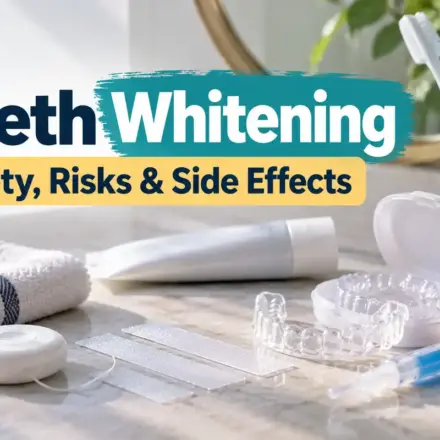
Teeth Whitening: Safety, Risks & Side Effects
A bright smile is one of the most sought-after cosmetic goals, leading to an aisle full of whitening strips, charcoal powders, LED light kits, and specialized toothpastes. With so many over-the-counter options available alongside professional dental treatments, it is easy to assume that any product claiming to brighten teeth is harmless.
However, teeth whitening involves active chemicals and abrasive agents that interact directly with the mineral structure of your teeth and delicate gum tissue. Choosing the right method depends on what is causing the discoloration, whether you have existing dental work, and how your teeth handle active bleaching agents.
Teeth whitening is generally safe and effective when done correctly using tested products, but it is not risk-free. The most common side effects are temporary tooth sensitivity and gum irritation. While over-the-counter strips and professional treatments can lighten natural enamel, they do not work on crowns, veneers, or fillings. People with untreated cavities, gum disease, or severe baseline sensitivity should always consult a dentist before attempting any whitening treatment.
What Is Teeth Whitening?
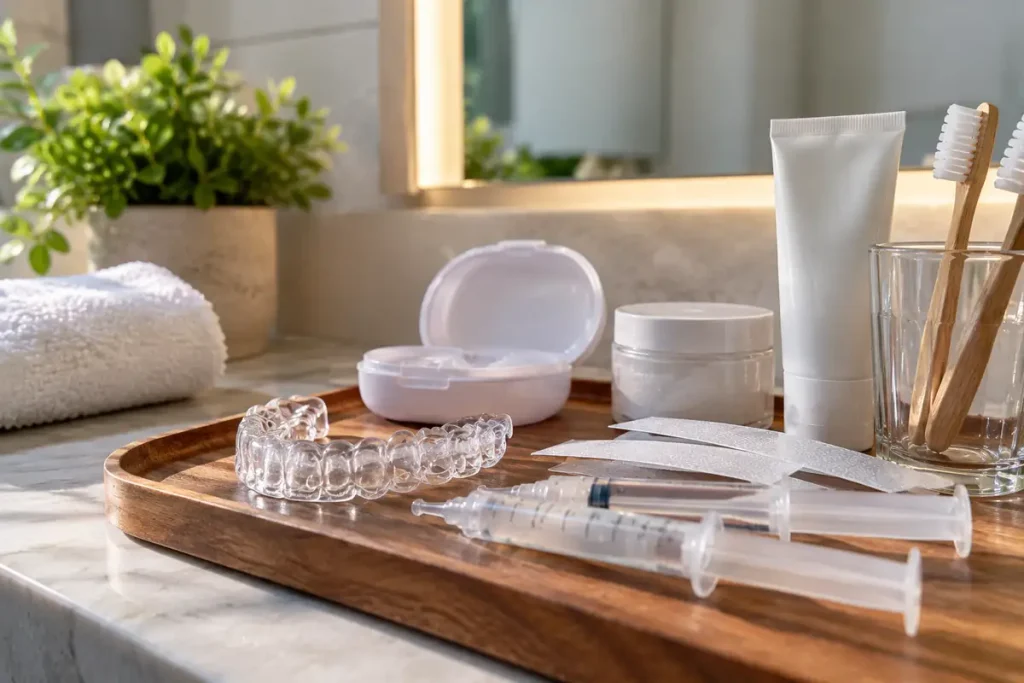
In dental terminology, “whitening” refers to any process that makes teeth appear whiter. This can happen in two fundamentally different ways:
- Stain Removal (Non-Bleaching): Products that rely on mild abrasives or chemical agents to polish away surface-level (extrinsic) stains caused by food, drinks, or tobacco. Whitening toothpastes fall into this category.
- Bleaching: Treatments that use peroxide-based chemicals to penetrate the semi-permeable enamel and break apart deep (intrinsic) stain molecules through an oxidation reaction. True bleaching changes the actual internal color of the tooth structure.
How Bleaching Works: Hydrogen Peroxide vs. Carbamide Peroxide
Most bleaching products rely on one of two active ingredients:
- Hydrogen Peroxide: The direct bleaching agent. It breaks down rapidly, releasing free radicals that oxidize stain molecules within the tooth. Because it acts quickly, it is the primary ingredient in high-concentration in-office treatments and shorter-wear whitening strips.
- Carbamide Peroxide: A compound that breaks down into hydrogen peroxide and urea when it comes into contact with water or saliva. Carbamide peroxide releases its whitening power more slowly and steadily. A roughly 10% carbamide peroxide gel yields about 3.5% hydrogen peroxide. Because of its slower release, it is frequently used in take-home tray systems designed for longer wear times.
Why Do Teeth Become Discolored?
Teeth naturally darken or discolor over time, but the causes fall into two distinct categories:
Extrinsic Stains (Surface Level)
Extrinsic discoloration occurs on the outer layer of the enamel. Common culprits include:
- Dark Food and Beverages: Coffee, black tea, red wine, dark sodas, soy sauce, and berries contain chromogens (intense color pigments) that bind to enamel.
- Tobacco Use: Nicotine and tar from cigarettes, cigars, or chewing tobacco readily penetrate enamel pores.
- Poor Oral Hygiene: Inadequate brushing and flossing allow plaque and tartar (calculus) to accumulate, creating a yellow or brownish appearance along the gumline.
Intrinsic Stains (Deep Tissue)
Intrinsic stains occur within the inner layer of the tooth, called the dentin. These cannot simply be brushed away:
- Natural Aging: Over time, the outer enamel layer thins from normal wear, allowing the naturally yellowish dentin beneath to show through more prominently.
- Medications: Exposure to tetracycline antibiotics during childhood tooth development or certain antihistamines, antipsychotics, and blood pressure medications can alter tooth shade.
- Trauma: Physical injury to a tooth can cause the nerve to lay down extra dentin or bleed internally, turning the tooth gray, brown, or black.
- Fluorosis: Ingesting excessive fluoride during early childhood while teeth are forming beneath the gums can cause white spots or brownish streaks.
Key Takeaway: Yellowish stains generally respond best to peroxide bleaching. Brownish discoloration responds less predictably, and grayish or trauma-related discoloration often requires cosmetic dental restorations rather than chemical bleaching.
Comparing Teeth Whitening Methods
| Method | How It Works | Typical Use | What to Expect |
| Whitening Toothpaste | Mild abrasives polish extrinsic stains; some contain low peroxide | Daily brushing | Subtle surface-stain removal; does not alter internal tooth shade |
| Whitening Strips | Thin plastic strips coated with hydrogen peroxide gel | Daily for 1–2 weeks (30–60 min/day) | Noticeable lightening of natural teeth; temporary sensitivity possible |
| Whitening Rinses | Low-concentration peroxide rinse swished briefly | Daily oral hygiene | Very gradual results due to minimal contact time with teeth |
| Custom Dentist Trays | Professionally fitted trays loaded with carbamide peroxide gel | At home daily for 1–3 weeks | High precision; lower risk of gum contact; reliable results |
| In-Office Bleaching | High-concentration hydrogen peroxide applied under dental supervision | 1–2 dental visits (60–90 minutes) | Fastest, most dramatic results; dentist protects gums throughout |
Is Teeth Whitening Safe?
According to the American Dental Association (ADA), teeth whitening using peroxide-based agents is considered safe and effective when manufacturer instructions or dental directions are followed carefully.
However, “safe” does not mean entirely risk-free. Using products too frequently, leaving bleaching gels on longer than directed, or using poorly fitting trays can lead to irritation and tissue stress. The two most common and documented side effects are tooth sensitivity and gum irritation.
Common Side Effects and Risks
1. Tooth Sensitivity
Sensitivity to hot, cold, or sweet temperatures is the most frequent adverse effect of peroxide bleaching. During treatment, the peroxide penetrates through the enamel micro-pores to reach the organic pigments in the dentin. This process can temporarily irritate the underlying pulp tissue and fluid-filled dentinal tubules that communicate directly with the tooth nerve.
This sensitivity is almost always temporary and typically resolves within a few days to a week after discontinuing treatment. Higher peroxide concentrations carry a higher risk of triggering sensitivity.
2. Soft Tissue (Gum) Irritation
If bleaching gel seeps over the edge of a strip or escapes an ill-fitting tray, it can chemically burn the gums. This presents as white, blanching spots on the gingival margin, mild burning sensations, or localized inflammation. Like sensitivity, mild gum irritation usually heals on its own once the irritant is removed, but repeated chemical burns can damage tissue.
3. Uneven Coloration
If teeth have natural variations in mineralization, white spots (hypocalcification) can appear temporarily more pronounced immediately following a whitening session. While the overall shade often evens out as teeth rehydrate over 24 to 48 hours, uneven results are common when baseline staining is irregular.
4. Does Whitening Damage Tooth Enamel?
Under normal, regulated use, peroxide whitening does not erode or dissolve healthy enamel. However, research indicates that aggressive, unregulated, or excessively frequent bleaching—particularly with low-pH (highly acidic) products—can alter the micro-hardness and surface mineral composition of the enamel. This is why following designated wear times and avoiding continuous, year-round bleaching is essential.
Whitening and Dental Work: Crowns, Veneers & Fillings
One of the most critical facts to understand before whitening is that bleaching products only work on natural tooth structure.
Materials used in restorative dentistry—including composite resin fillings, porcelain veneers, ceramic crowns, and dental implants—are non-porous and do not respond to peroxides.
- If you whiten your natural teeth, your crowns and fillings will remain their original shade.
- This can result in an obvious color mismatch, especially if you have tooth-colored fillings or bonding on your front teeth.
- Anyone considering both whitening and restorative dental work should whiten their natural teeth first, allow the shade to stabilize for two weeks, and then have their restorations color-matched to the new baseline.
Professional In-Office Whitening vs. At-Home Whitening
Neither option is universally “better”; each serves different needs, budgets, and tolerance levels.
Professional In-Office Care
- The Process: A dentist isolates and coats the gum tissue with a protective barrier before applying a high-concentration hydrogen peroxide gel (typically 25% to 40%).
- Advantages: Immediate results (often within a single visit), complete professional oversight, and custom protection that keeps active bleaching chemicals off your gums.
- Drawbacks: Significantly higher cost than over-the-counter options, and a higher immediate chance of acute sensitivity during the first 24 hours due to the potency of the gel.
At-Home Whitening Strips and Trays
- The Process: Lower-concentration peroxides (typically 6% to 14% hydrogen peroxide or 10% to 22% carbamide peroxide) are applied via flexible adhesive strips or trays over multiple consecutive days.
- Advantages: Accessible, cost-effective, and allows you to pace the treatment or pause if sensitivity develops.
- Drawbacks: Slower results, potential for user error, and generic strip shapes that may not conform well to crooked or crowded teeth, leading to patchy results or gum contact.
Whitening Toothpaste vs. Whitening Strips
Many consumers start with whitening toothpaste expecting significant shade changes, only to be disappointed.
- Whitening Toothpaste: Primarily works mechanically. Formulations contain specialized silica, calcium carbonate, or mild polishing agents designed to scrub away surface tea, coffee, and plaque films. While they help maintain brightness after a treatment, they generally do not alter the inherent color of the tooth because they contain little to no active bleaching agent and are rinsed away within two minutes.
- Whitening Strips: Rely on prolonged direct contact (typically 30 minutes) between hydrogen peroxide and the tooth surface. This sustained exposure allows the bleaching agent to permeate the enamel and lift deeper stains.
DIY and “Natural” Teeth Whitening: What Works and What Harms
Social media frequently promotes household ingredients as cheap alternatives to dental products. However, several popular home remedies present genuine oral health risks:
- Lemon Juice, Apple Cider Vinegar, and Fruit Rubs: Highly acidic substances chemically erode tooth enamel. Once enamel erodes, it cannot regenerate. Thinned enamel exposes the yellow dentin underneath, ultimately making teeth look darker while permanently increasing sensitivity and cavity risk.
- Baking Soda (Sodium Bicarbonate): Mildly abrasive and effective at clearing superficial plaque stains when formulated correctly. However, scrubbing vigorously with coarse baking soda paste can abrade the protective enamel layer over time.
- Activated Charcoal Powders: There is insufficient clinical evidence showing that charcoal safely or effectively whitens teeth beyond surface abrasion. Because charcoal powders can be abrasive, regular use risks scratching the enamel surface and damaging dental restorations.
- Household Hydrogen Peroxide Bottles: Using the brown-bottle hydrogen peroxide from your first-aid cabinet as an oral rinse is not recommended. These formulations are not stabilized or pH-balanced for oral tissue, carrying risks of soft-tissue irritation, chemical burns, or accidental ingestion.
- Oil Pulling: Swishing oils (such as coconut oil) may reduce oral bacteria slightly, but there is no reliable scientific evidence that it bleaches teeth or lifts intrinsic stains.
How to Minimize Tooth Sensitivity During Whitening
If you are prone to sensitive teeth or experience sharp twinges during bleaching, several practical adjustments can help:
- Switch to a Desensitizing Toothpaste: Use a toothpaste containing potassium nitrate or stannous fluoride for two weeks prior to whitening and throughout the treatment. Potassium nitrate helps calm the nerve pathways inside the tooth.
- Space Out Your Applications: Instead of whitening every consecutive day, switch to every other day or every third day. This gives the tooth pulp time to rest and rehydrate.
- Reduce Wear Time: If using strips designed for 30 minutes, try removing them after 15 to 20 minutes for the first few sessions.
- Avoid Extreme Temperatures: Stick to room-temperature foods and beverages for 48 hours following a whitening session to avoid triggering irritated nerves.
Special Considerations: Teens and Pregnancy
Children and Teenagers
The American Academy of Pediatric Dentistry discourages routine cosmetic bleaching for children and young adolescents with baby teeth or mixed dentition. In developing teeth, the pulp chamber (the nerve space inside the tooth) is significantly larger, and the enamel is thinner, making young teeth much more susceptible to severe sensitivity and chemical pulp inflammation. Cosmetic whitening is generally deferred until all permanent teeth have fully erupted and calcified.
Pregnancy and Breastfeeding
While systemic absorption of peroxide from properly used dental trays or strips is minimal, clinical safety studies on pregnant and nursing women are lacking. Most dental organizations and clinicians recommend delaying elective cosmetic whitening procedures until after delivery and nursing are completed.
When to See a Dentist First
Before starting any whitening regimen—even an over-the-counter kit—a basic dental evaluation is strongly advised. You should always be evaluated by a dental professional if:
- You have visible or suspected cavities (bleaching gel seeping into an open cavity can reach the nerve directly, causing intense pain)
- Your gums are red, swollen, or bleed when brushing (active gingivitis or periodontitis must be treated first)
- A single tooth has turned gray, brown, or dark after an old injury
- You have existing composite bonding, veneers, or crowns on your front teeth
- You experience chronic baseline sensitivity to cold water or air
Frequently Asked Questions
Can yellow teeth become fully white again?
Yellowish discoloration caused by surface food stains, natural aging, or mild enamel thinning typically responds very well to peroxide bleaching. However, natural teeth are rarely pure paper-white; healthy teeth have a natural warmth and translucency based on the thickness of the enamel and the shade of the underlying dentin.
How long do teeth whitening results last?
Whitening is not permanent. Results generally last anywhere from six months to two years depending on your oral hygiene habits and lifestyle. Regularly consuming coffee, tea, red wine, or using tobacco products will cause stains to return much faster.
Will whitening strips work if I have braces?
Whitening strips should not be used while wearing traditional metal or ceramic braces. The bleaching gel cannot penetrate behind the glued brackets, which would leave distinct, darker squares on your teeth once the braces are removed. Whitening can be done after orthodontic treatment is complete.
Does teeth whitening make teeth permanently sensitive?
No. Bleaching-induced sensitivity is an acute, temporary response that typically resolves within 48 to 72 hours after stopping the treatment as the teeth rehydrate and the pulp tissue settles.
Can I whiten my teeth every day?
You should only whiten daily for the designated treatment window specified by the product manufacturer (usually 7 to 14 consecutive days). Continuous, non-stop bleaching throughout the year can cause chronic gum irritation and enamel damage. Maintenance touch-ups are usually only needed once or twice a year.