Clavicle (Collarbone) Pain: Causes, Symptoms & Treatment
Clavicle (collarbone) pain can stem from a variety of issues, including physical trauma or fractures, acromioclavicular (AC) or sternoclavicular (SC) joint problems, arthritis, overuse, thoracic outlet syndrome, or infection. Because symptoms often overlap across different conditions, the underlying cause cannot be determined by symptoms alone. Pain occurring after significant trauma, visible deformity, severe swelling, numbness or weakness, difficulty breathing, or chest symptoms requires prompt medical evaluation.
Emergency Warning: Seek immediate emergency medical care if your collarbone pain follows a severe fall or vehicle accident and is accompanied by an obvious physical deformity, a bone protruding through the skin, inability to move your arm, sudden numbness or weakness in the arm or hand, cold or pale skin in the affected arm, difficulty breathing, or crushing chest discomfort.
What Is Clavicle (Collarbone) Pain?
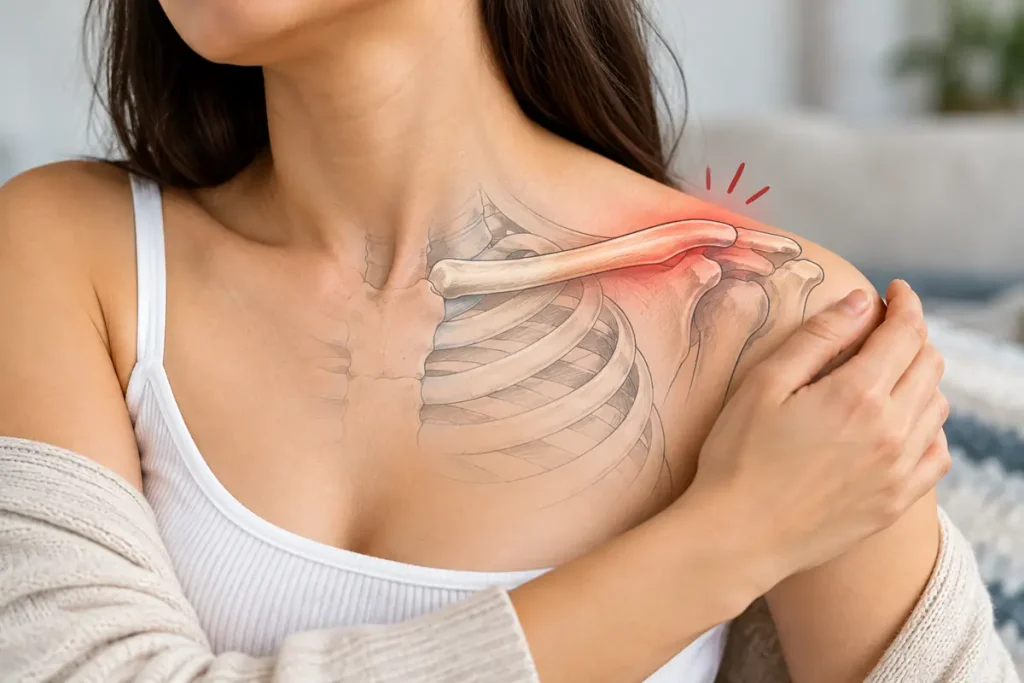
The clavicle, commonly known as the collarbone, is an S-shaped bone that acts as a rigid support strut connecting your breastbone (sternum) to your shoulder blade (scapula). It forms a vital mechanical bridge that allows your shoulder and arm to move freely and stably.
Pain in this region does not always originate directly from the bone itself. Because the collarbone serves as a primary anchor point for surrounding muscles, tendons, ligaments, and nerves, discomfort can arise from structures immediately adjacent to it—specifically the two joints positioned at either end:
- The Acromioclavicular (AC) Joint: Located at the outer end of the collarbone where it meets the shoulder blade.
- The Sternoclavicular (SC) Joint: Located at the inner end of the collarbone where it attaches to the upper breastbone.
Understanding where the pain is located and what activities aggravate it is the first step toward identifying its source.
What Does Collarbone Pain Feel Like?
Collarbone pain can manifest in several distinct patterns depending on the underlying structure involved:
- A sharp, intense ache right after an acute physical impact or injury.
- A dull, persistent ache that may worsen when moving the arm or shoulder.
- Localized tenderness directly over the bone or at either joint.
- Discomfort when lying down on the affected side.
- A catching, clicking, or grinding sensation during shoulder movement.
- Pain radiating upward toward the neck or downward into the chest and arm.
Where Does Collarbone Pain Occur?
Pinpointing the exact location of discomfort helps narrow down potential causes:
Middle of the Clavicle
Pain centralized along the shaft of the bone is commonly associated with direct trauma, fractures, or localized bone injury.
Outer Collarbone Near the Shoulder
Discomfort localized to the outer tip of the collarbone frequently points toward AC joint sprains, separation, osteoarthritis, or repetitive microtrauma.
Inner Collarbone Near the Breastbone
Pain near the center of the chest where the collarbone meets the sternum is often linked to SC joint sprains, instability, arthritis, or inflammatory conditions.
Collarbone Pain with Neck or Arm Symptoms
Pain that radiates from the collarbone region down into the arm, accompanied by tingling, numbness, or weakness, suggests possible nerve or blood vessel compression in the lower neck and upper chest.
Common Causes of Collarbone Pain
1. Clavicle Fracture
A broken collarbone is one of the more frequent skeletal injuries, typically resulting from a fall directly onto the shoulder, a sports collision, or a motor vehicle accident.
- Symptoms: Severe localized pain, swelling, bruising, a visible bump or sagging shoulder, a grinding sensation when attempting to move the arm, and difficulty lifting the arm.
- Diagnosis & Treatment: Confirmed via X-ray. Many fractures heal successfully with a simple arm sling and activity modification, while complex or displaced fractures may be evaluated for surgical stabilization depending on individual clinical considerations.
2. Acromioclavicular (AC) Joint Injury or Separation
The AC joint can be injured when a fall or sudden blow stretches or tears the ligaments holding the outer end of the collarbone to the shoulder blade.
- Symptoms: Pain and tenderness at the top of the shoulder, swelling, and sometimes a visible step-deformity where the collarbone separates from the shoulder blade.
- Treatment: Ranging from rest, activity modification, and physical therapy for mild sprains to specialized medical or surgical evaluation for severe separations.
3. Sternoclavicular (SC) Joint Injury
Though less common than AC joint injuries, trauma to the inner collarbone can sprain or dislocate the SC joint.
- Symptoms: Pain, swelling, and tenderness near the breastbone.
- Important Note: Because important mediastinal structures lie directly behind the SC joint, significant trauma or posterior dislocation requires prompt professional medical assessment.
4. Osteoarthritis
Wear-and-tear arthritis can develop in either the AC or SC joints over time, particularly in individuals who have experienced prior trauma or shoulder injuries earlier in life.
- Symptoms: Gradual onset of deep, aching pain, joint stiffness, morning discomfort, and visible enlargement or bone spur formation around the joint.
5. Distal Clavicular Osteolysis (“Weightlifter’s Shoulder”)
This condition involves micro-fractures and bone resorption at the outer end of the collarbone caused by repetitive high-intensity stress, such as heavy bench pressing, weightlifting, or gymnastics.
- Symptoms: A deep, dull ache at the outer collarbone that worsens during or after heavy upper-body workouts, particularly when bringing the arm across the body.
6. Muscle Strain and Overuse
The muscles attached to the clavicle can become strained from sudden heavy lifting, intense athletic training, or repetitive overhead movements.
- Symptoms: Generalized soreness, tightness, and tenderness in the soft tissues surrounding the bone rather than directly on the bone itself.
7. Thoracic Outlet Syndrome (TOS)
Thoracic outlet syndrome is a group of disorders caused by compression or irritation of nerves or blood vessels in the lower neck and upper chest.
- Symptoms: Aching pain in the collarbone and shoulder region, accompanied by symptoms such as pain, tingling, numbness, weakness, swelling, heaviness, or changes in skin color or temperature.
8. Sleeping Position
Prolonged pressure on the shoulder and collarbone while sleeping on your side can irritate an already sensitive joint or pinch surrounding soft tissues, leading to temporary morning soreness.
9. Osteomyelitis and Bone Infection
Though uncommon, bacteria can infect the collarbone either through a nearby skin wound, a surgical site, or via the bloodstream.
- Symptoms: Persistent, worsening pain, localized swelling, warmth, redness, and systemic signs such as fever and chills. This requires prompt medical evaluation and antibiotic therapy.
10. Bone Lesions and Tumors
Primary bone tumors or metastatic lesions affecting the clavicle are rare causes of collarbone pain. Unexplained, persistent pain that worsens at night, combined with an unprovoked lump or swelling, warrants diagnostic imaging.
Collarbone Pain Without Injury
When collarbone pain appears suddenly or develops gradually without any history of a fall, accident, or trauma, it can be driven by several non-traumatic factors:
- Gradual degenerative changes like osteoarthritis in the AC or SC joints.
- Repetitive microtrauma from occupational tasks, sports, or heavy gym routines (such as distal clavicular osteolysis).
- Nerve or vascular compression syndromes like thoracic outlet syndrome.
- Referred pain originating from cervical spine issues or musculoskeletal strain in the neck and upper back.
Right vs. Left Collarbone Pain
The specific side of the body experiencing pain does not reliably indicate the underlying cause. While injury patterns or joint conditions can occur on either the right or left side, laterality alone cannot establish a diagnosis. Any persistent or severe collarbone discomfort requires a professional physical evaluation rather than an assumption based on which side is affected.
How Is Collarbone Pain Diagnosed?
A thorough professional evaluation helps determine the exact source of discomfort:
Medical History
Your physician will ask detailed questions about when the pain started, whether a specific injury occurred, which movements aggravate it, and whether you experience associated neurological symptoms like numbness or tingling.
Physical Examination
The clinician will visually inspect the area for asymmetry, bruising, or swelling, gently palpate the length of the bone and its joints to check for tenderness, evaluate your shoulder range of motion, and assess your arm’s neurovascular status.
Imaging and Diagnostic Tests
- X-rays: The primary imaging tool used to visualize fractures, joint alignment, arthritis, or bone lesions.
- CT Scans or MRIs: Ordered when detailed visualization of complex joint injuries, soft tissue damage, stress fractures, or nerve compression is needed.
- Blood Tests: Utilized if an infection or inflammatory arthropathy is suspected.
How Is Collarbone Pain Treated?
Treatment plans vary entirely depending on the underlying diagnosis:
Home Care for Mild Pain
For mild, non-traumatic discomfort or minor muscle strain, initial management typically involves resting the shoulder, modifying activities that aggravate the pain, applying cold packs to help manage acute discomfort and swelling, and maintaining comfortable posture.
Medications
Over-the-counter pain relievers such as acetaminophen or nonsteroidal anti-inflammatory drugs (NSAIDs) may help manage pain and inflammation when appropriate. Medication choices should always take into account individual health history, stomach sensitivity, kidney function, and potential drug interactions.
Immobilization and Slings
If a fracture, severe sprain, or joint separation is diagnosed, a simple arm sling and activity modification are frequently preferred over rigid bracing to support natural healing.
Physical Therapy
Guided rehabilitation focuses on restoring gentle range of motion, strengthening the muscles supporting the shoulder girdle, and improving mechanics to prevent recurring strain.
Surgical Intervention
Surgery may be considered for selected fractures, severe joint displacement, or other specific conditions based on individual patient factors and clinical evaluation.
How Long Does Collarbone Pain Last?
Recovery timelines vary widely based on the root cause:
- Minor muscle strain or overuse: Often improves over a short period with rest and activity modification.
- AC joint sprains: Recovery depends heavily on the injury grade and treatment approach.
- Clavicle fractures: While many adults regain normal function and show bone healing around 6 to 12 weeks, exact recovery timelines vary considerably.
- Osteoarthritis or chronic conditions: May require ongoing management, activity modification, and periodic physical therapy.
When to Seek Medical Care
Emergency Evaluation
Seek immediate emergency medical care for symptoms such as:
- Severe pain following significant trauma.
- Obvious physical deformity or a bone protruding through the skin.
- Numbness, significant weakness, or cold/pale skin in the arm or hand.
- Difficulty breathing or severe chest discomfort.
Prompt Medical Evaluation
Schedule a prompt medical assessment for:
- Fever accompanied by localized redness, warmth, or swelling.
- Persistent unexplained pain or significant swelling.
- Neurological symptoms like persistent tingling or weakness.
Routine Evaluation
Schedule a routine appointment for:
- Mild pain that does not improve after about a week or repeatedly returns.
- Persistent soreness affecting sleep, work, or regular physical activity.
How to Prevent Collarbone Injuries and Pain
While accidents cannot always be predicted, you can reduce your risk of collarbone pain and injury by:
- Using appropriate protective gear during contact sports, cycling, or high-risk athletic activities.
- Practicing home fall-prevention habits, such as removing tripping hazards and ensuring adequate lighting.
- Using safe lifting techniques and avoiding sudden, unconditioned increases in weightlifting intensity.
- Maintaining core and upper-body strength to support shoulder joint stability.
- Practicing good posture while working at a desk or driving to help prevent neck and shoulder strain.
Frequently Asked Questions
What is the most common cause of collarbone pain?
Physical trauma resulting in a clavicle fracture or an acromioclavicular (AC) joint injury is among the most common causes of acute collarbone pain.
Can collarbone pain happen without an injury?
Yes. Chronic conditions such as osteoarthritis, distal clavicular osteolysis from weightlifting, muscle strain, thoracic outlet syndrome, or sleeping position can cause collarbone pain without any traumatic event.
Why does my collarbone hurt when I lift my arm?
Lifting your arm requires movement at both the shoulder joint and the AC joint. Pain during this motion can be associated with AC joint arthritis, a joint sprain, or other shoulder and neck conditions.
Why does my collarbone hurt when I sleep on my side?
Side sleeping places direct body weight onto the shoulder girdle, compressing the collarbone and surrounding joints. This sustained pressure can irritate sensitive joints or inflamed tendons.
What does a broken collarbone feel like?
A broken collarbone typically causes sharp, severe pain at the fracture site, immediate swelling, bruising, difficulty moving the arm, and sometimes a noticeable grinding sensation or visible bone misalignment.
Can arthritis cause collarbone pain?
Yes. Osteoarthritis frequently affects either the acromioclavicular (AC) joint or the sternoclavicular (SC) joint, leading to deep aching pain and stiffness.
Can poor posture cause collarbone pain?
Poor posture may contribute to neck and shoulder muscle strain or discomfort in some people, though it is not typically an isolated direct cause of clavicle pain.
Can collarbone pain be related to the heart?
Pain around the collarbone can sometimes occur with conditions affecting the chest, heart, or lungs. Emergency symptoms and overall clinical signs matter more than the exact location of the pain.
Should I use ice or heat for collarbone pain?
Cold packs may help manage acute pain and swelling during initial flare-ups. Heat is sometimes used later for chronic muscle tightness or stiffness once acute inflammation has subsided.