7 Weight Loss Mistakes You Should Stop Making Today
Losing weight can sometimes feel frustrating. You may be eating better, trying to stay active, and making an effort every day, but the results may still feel slower than expected.
Sometimes, the problem isn’t that you’re not trying hard enough. A few everyday habits may simply be making your weight-loss journey more difficult than it needs to be.
Here are 7 common mistakes you may want to look at—and some simple ways to approach them differently.
1. Eating Too Little to Lose Weight Quickly
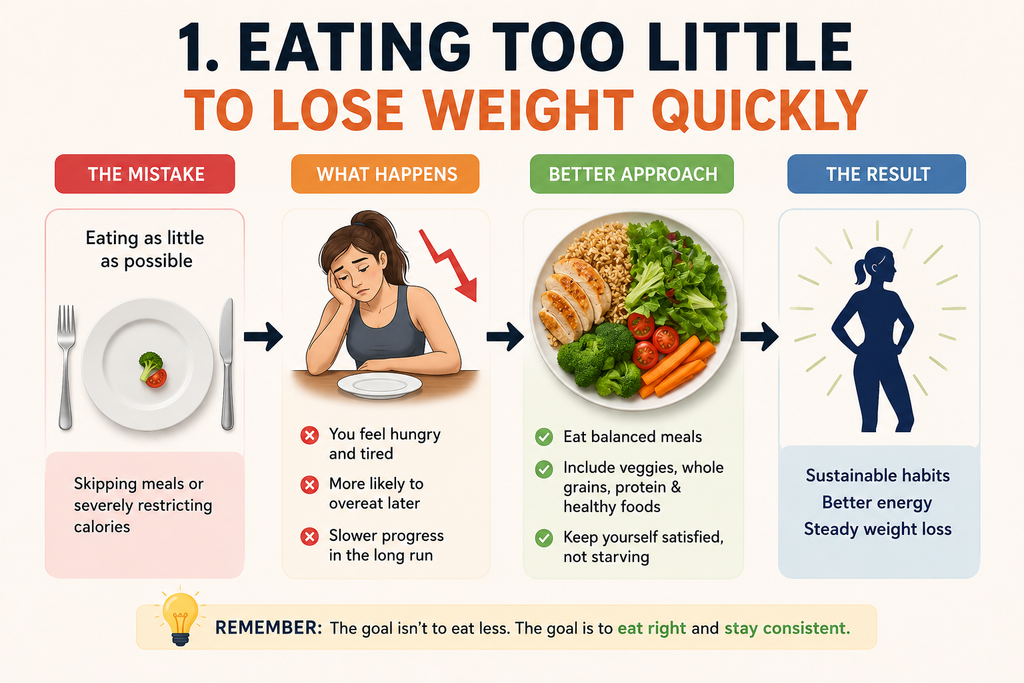
One common mistake is thinking that eating as little as possible will automatically help you lose weight faster.
Eating too little can leave you feeling hungry, tired, and more likely to overeat later. Instead of skipping meals or following an extremely restrictive diet, try to build balanced meals that keep you satisfied.
Include foods such as vegetables, whole grains, protein-rich foods, and other nutrient-dense options. The goal isn’t to stay hungry—it’s to develop an eating pattern that you can actually maintain.
2. Letting the Weighing Scale Control Your Mood
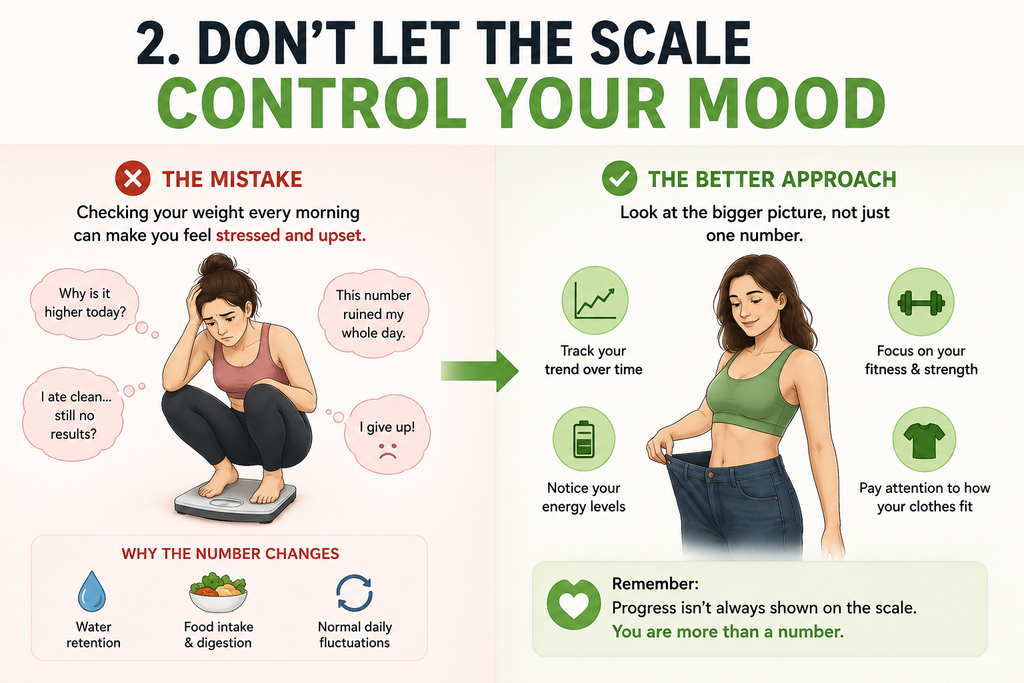
Checking your weight every morning can sometimes make the process unnecessarily stressful.
Your weight can naturally change from day to day because of things like water retention, food intake, and other normal fluctuations. So, one number doesn’t always tell you what’s happening with your overall progress.
Instead, look at the bigger picture. Pay attention to your weight trend over time, your energy levels, your fitness, and how your clothes fit.
3. Completely Banning Your Favorite Foods
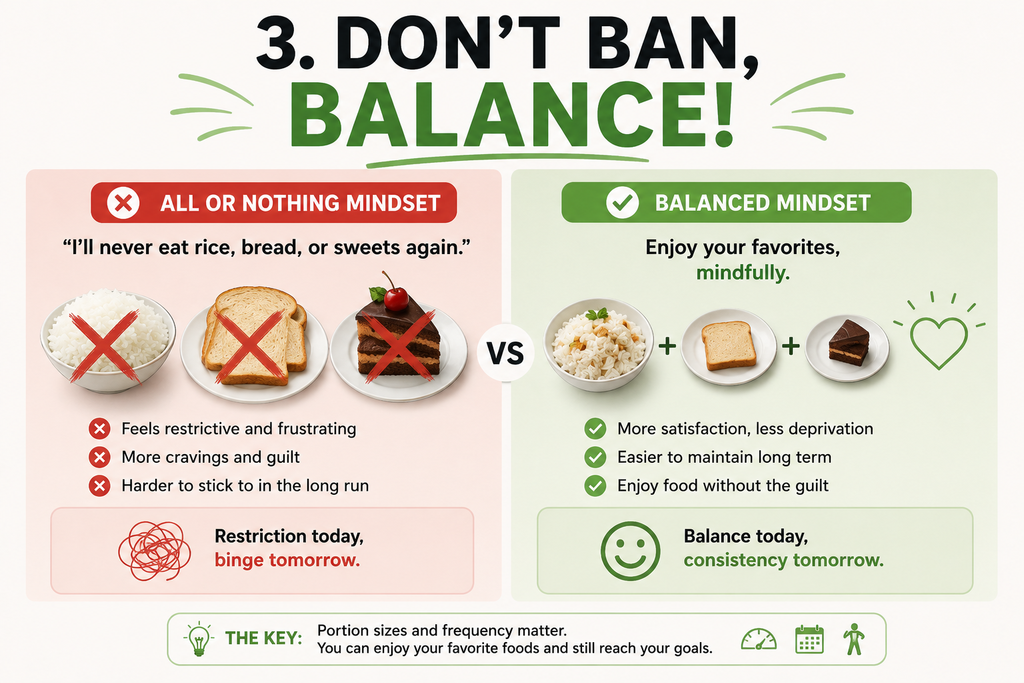
“I’ll never eat rice, bread, or sweets again.”
For many people, completely removing favorite foods isn’t necessary. In fact, making certain foods completely off-limits can make a diet harder to follow.
You can still enjoy the foods you like while being mindful of portion sizes and how often you eat them. A balanced approach is generally easier to maintain than trying to follow a list of foods you can never have.
4. Forgetting About Liquid Calories
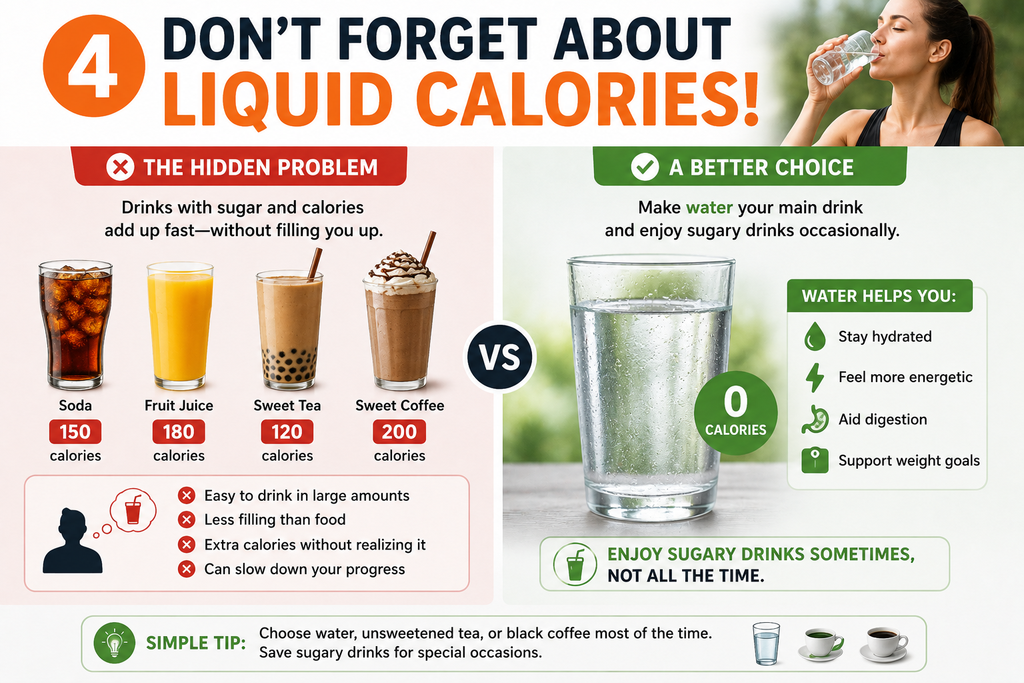
You may be paying close attention to what’s on your plate while forgetting about what’s in your glass.
Soft drinks, sugary juices, sweetened tea or coffee, and other calorie-containing drinks can add extra calories to your day. Because drinks may be less filling than a meal, it’s also easy to consume more than you realize.
Try making water your main drink and keep sugary beverages as an occasional choice. It’s a simple habit that can help you manage your overall calorie intake.
5. Going Too Hard on Your First Day at the Gym
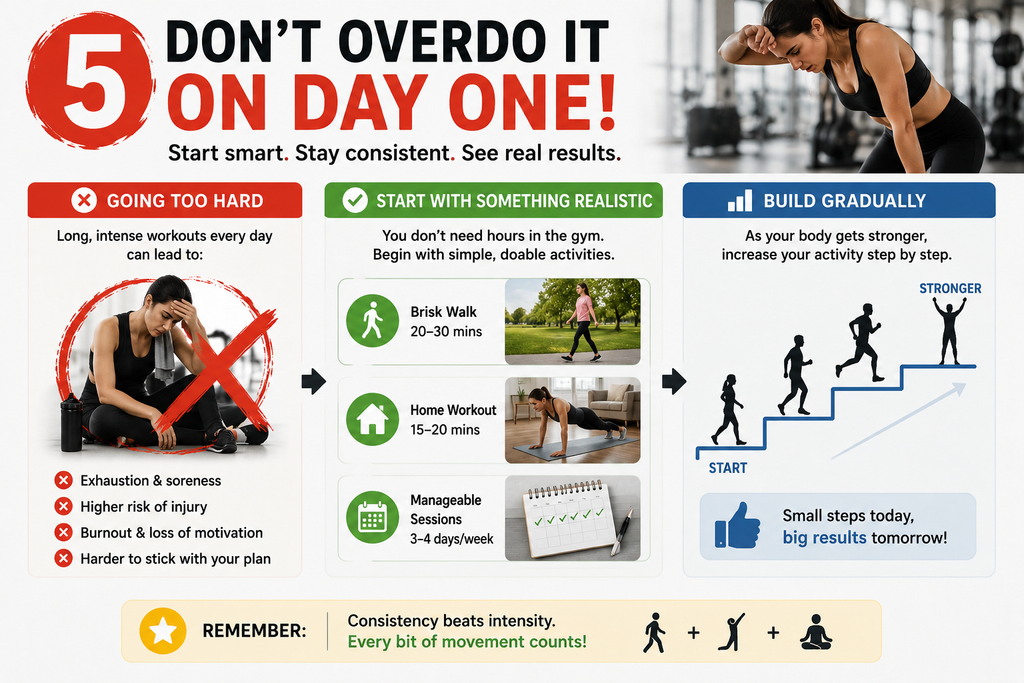
When motivation hits, it’s tempting to start with long, intense workouts every single day.
But doing too much too soon can leave you exhausted or sore, making it harder to continue. You don’t need to spend hours in the gym to start becoming more active.
Start with something realistic—a brisk walk, a short home workout, or a few manageable exercise sessions each week. As you become more comfortable, you can gradually increase your activity. Even smaller amounts of physical activity are better than doing nothing.
6. Ignoring Your Sleep
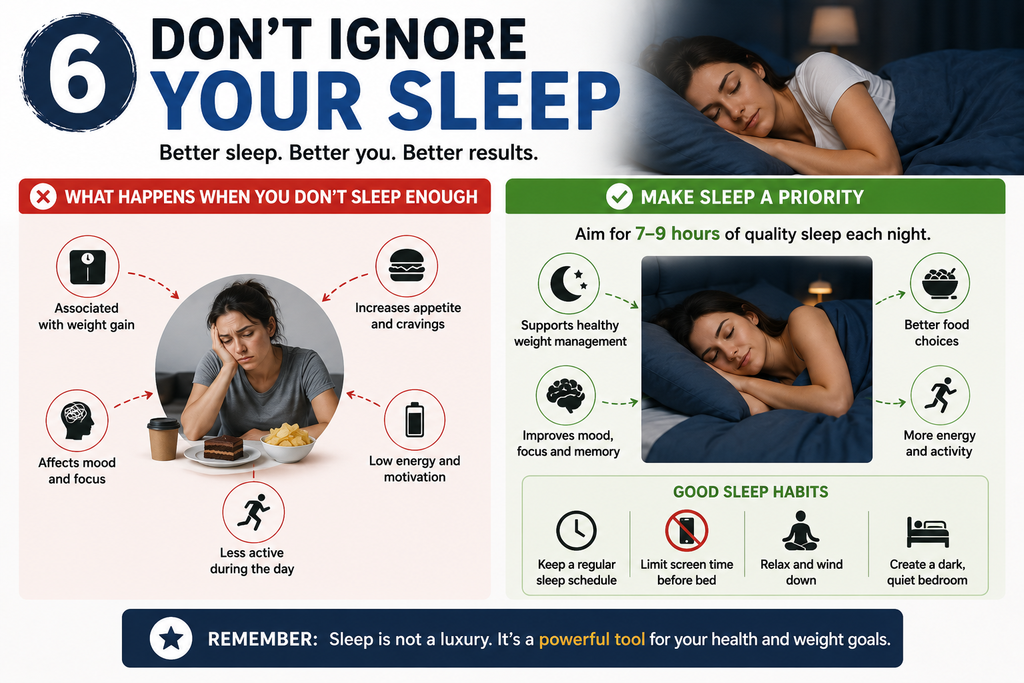
Sleep is easy to overlook when you’re focused on diet and exercise.
Getting too little sleep is associated with weight gain and may affect appetite, food choices, and how active you feel during the day. Adults generally need around 7–9 hours of sleep each night, although individual needs can vary.
So, don’t treat sleep as something you can sacrifice while working on your fitness. Try to maintain a regular sleep schedule and give your body enough time to rest.
7. Looking for a “Magic” Weight-Loss Fix
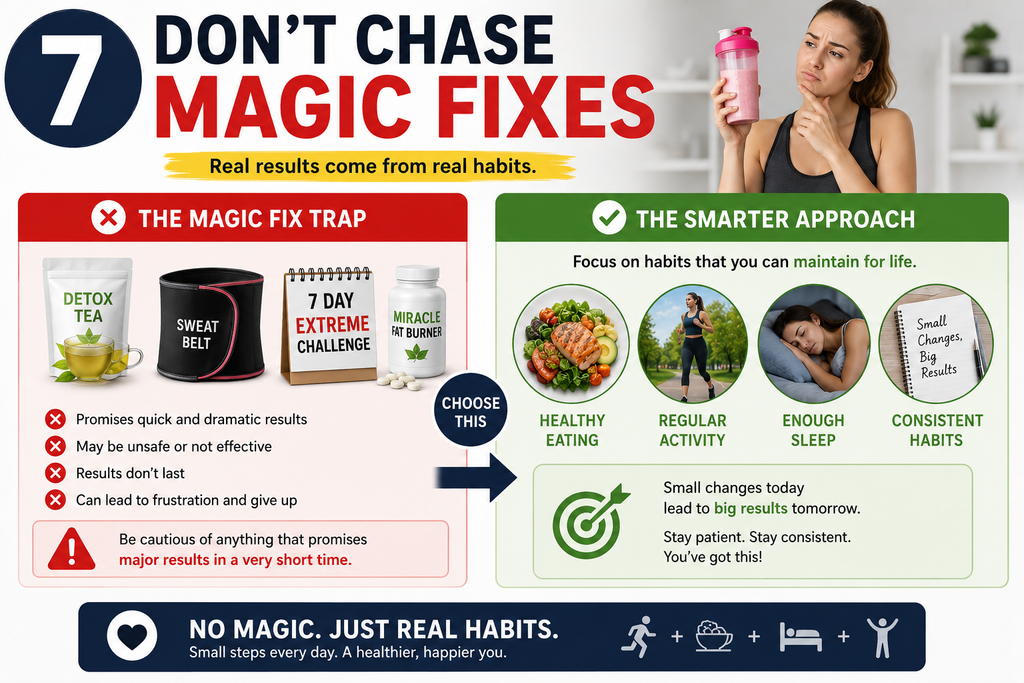
Detox teas, sweat belts, extreme short-term challenges, and products promising dramatic results can be tempting when you want to lose weight quickly.
But be cautious about anything that promises major results in a very short time. A good weight-loss plan should focus on realistic goals, healthy eating, regular physical activity, and habits you can maintain over time.
Instead of constantly searching for the next quick fix, focus on small changes that fit naturally into your everyday life.
Weight loss doesn’t have to be an all-or-nothing process.
You don’t need to starve yourself, completely give up your favorite foods, or spend hours working out every day. Start by identifying the habits that may be making things harder and change them one step at a time.
Be patient, stay consistent, and focus on habits you can maintain for the long term.