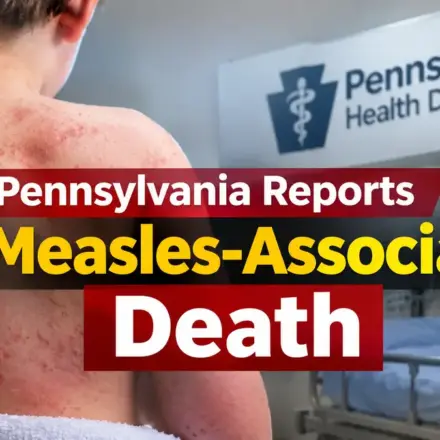
Pennsylvania Reports Its 6th Measles-Associated Death
The Pennsylvania Department of Health has confirmed a sixth measles-associated death linked to an ongoing statewide outbreak that has now crossed 1,400 confirmed infections.
For decades, many across the United States regarded measles as an illness of the distant past—a rite of passage from the mid-twentieth century managed with dark rooms, calamine lotion, and chicken soup before being declared eliminated domestically in 2000. Public health reports coming out of Pennsylvania demonstrate that rubeola has not lost its virulence. When baseline community immunity slips, an airborne virus of this caliber does not merely circulate; it finds and severely harms those without active immunity.
Understanding why this virus remains dangerous, how its clinical trajectory unfolds, and what specific steps protect households of all ages is essential as community transmission continues.
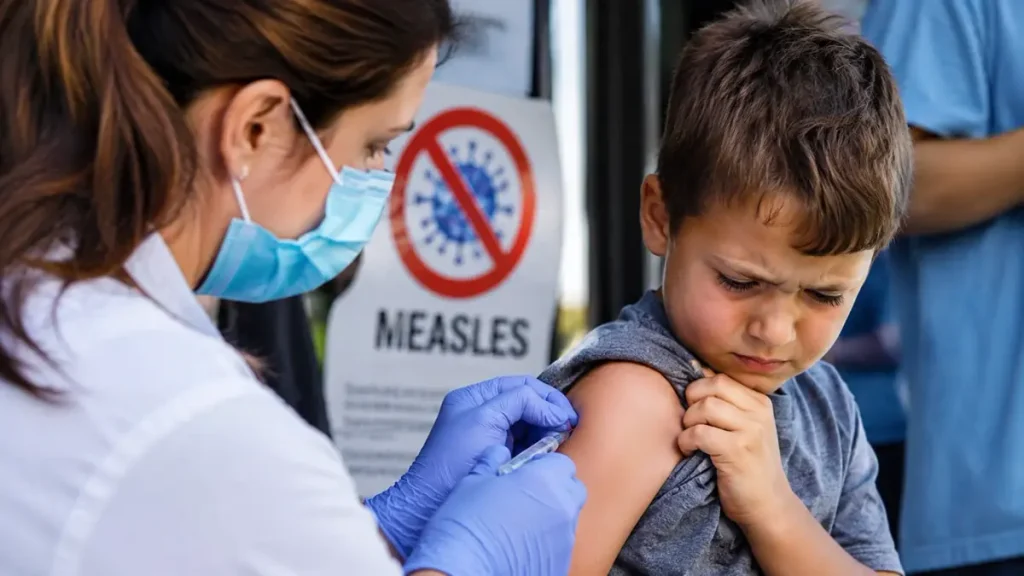
Pennsylvania health officials have recorded six measles-related fatalities amid a sustained outbreak largely affecting unvaccinated individuals. Measles is not a harmless childhood rash; it is a serious airborne viral infection capable of causing viral pneumonia, acute encephalitis, and lasting immune memory suppression. Two doses of the MMR vaccine provide approximately 97% lifetime protection, and adults unsure of their status can confirm immunity through an inexpensive IgG blood titer test.
The Pennsylvania Outbreak: What the Data Shows
According to surveillance updates released by the Pennsylvania Department of Health, the majority of documented cases and virtually all severe hospitalizations have occurred among unvaccinated individuals or those whose vaccination records could not be verified.
The geographic distribution has extended well beyond initial clusters, affecting dozens of counties and resulting in hundreds of inpatient admissions. The primary drivers for hospitalization have included acute dehydration, severe secondary lower respiratory tract infections, and high, unremitting fevers requiring intravenous stabilization.
This situation reflects broader warning signs tracked by the Centers for Disease Control and Prevention (CDC). The threshold for community herd immunity against measles is exceptionally high: 95% of the population must be protected to prevent sustained transmission chains. When local rates fall even a few percentage points below that mark, the virus circulates rapidly among pockets of vulnerable children and non-immune adults.
Why Measles Is Far More Than a Skin Rash
One of the most persistent public health misunderstandings is that measles is fundamentally a skin condition accompanied by a temporary fever. Clinically, the rash is merely the final, visible manifestation of a widespread systemic viral assault.
Measles directly infects endothelial cells lining blood vessels and epithelial tissues throughout the respiratory and immune systems. Severe clinical complications documented by the National Institutes of Health (NIH) include:
- Severe Viral and Bacterial Pneumonia: The leading cause of measles-related death across all age groups. Measles strips away the protective ciliated lining of the bronchial tree, giving opportunistic secondary bacteria direct access to deep lung tissue.
- Acute Encephalitis: Occurring in roughly 1 out of every 1,000 infected individuals, viral brain inflammation can trigger intractable seizures, permanent sensorineural deafness, and long-term cognitive deficits.
- Immune Amnesia: Unlike routine viral infections that leave behind broader defensive readiness, measles can destroy between 20% and 70% of a patient’s pre-existing antibody repertoire. For months or years after recovering from the rash, patients remain unusually susceptible to other common bacterial and viral infections because their immune memory was essentially reset. For those already balancing chronic health conditions, reviewing warning signs of a weakened immune system is critical during periods of active community disease transmission.
- Subacute Sclerosing Panencephalitis (SSPE): A rare, delayed-onset, fatal neurodegenerative disease that manifests 7 to 10 years after an apparent complete recovery from measles, caused by a persistent mutated virus remaining dormant in central nervous system tissue.
Adults who contract measles frequently experience more severe systemic symptoms than school-aged children, often requiring clinical intervention. Understanding the specific measles symptoms in adults helps differentiate early signs from typical seasonal respiratory illnesses.
Transmission: The Airborne Mechanics of Rubeola
Measles is recognized as one of the most infectious biological agents encountered in human medicine.
Unlike viruses that require close physical contact or direct droplet spray, the measles virus remains viable suspended in microscopic aerosol nuclei. When an infected individual breathes, coughs, speaks, or sneezes, the pathogen hangs suspended in stagnant indoor air for up to two hours after that person has vacated the room.
The basic reproduction number ($R_0$) for measles ranges between 12 and 18. That means a single infected person introduced into an unvaccinated room will, on average, transmit the illness to 12 to 18 people. By contrast, seasonal influenza typically carries an $R_0$ near 1.3.
Furthermore, infected individuals become highly contagious approximately four days before the diagnostic rash ever appears. During this early prodromal window, symptoms look identical to standard winter viral syndromes, making isolation difficult without high clinical suspicion.
Recognizing the Stages of Measles Progression
Medical training traditionally emphasizes identifying measles through a distinct timeline rather than waiting for the skin eruption alone.
| Disease Phase | Typical Onset Window | Primary Symptoms & Presentation |
| Incubation | 7 to 14 days post-exposure | Asymptomatic; viral replication within lymphoid tissue |
| Prodromal Phase | Days 10 to 12 post-exposure | High spiking fever ($103^\circ\text{F}–105^\circ\text{F}$), the “3 Cs” (Cough, Coryza, Conjunctivitis) |
| Enanthem (Koplik Spots) | Days 12 to 13 post-exposure | Small, bluish-white specks on an erythematous base inside the inner cheek |
| Exanthem (Rash) | Days 14 post-exposure | Flat red maculopapular rash beginning at hairline/behind ears, spreading downward |
The onset of high fever accompanied by extreme light sensitivity and red eyes often prompts people to consider other neurological or acute conditions. In clinical triage, distinguishing early viral prodromes from meningitis symptoms and red flags or dengue fever early signs depends heavily on tracking respiratory symptoms alongside detailed exposure histories.
Adult Vulnerability: Are You Truly Protected?
A significant segment of the adult population operates under an inaccurate assumption that childhood exposures or historical shots automatically provide lifelong security without verification. Immunity gaps exist across specific demographics:
Adults Born Before 1957
Generally presumed to have acquired wild-type natural immunity through widespread community exposure prior to vaccine availability, which typically confers robust lifelong antibodies.
Adults Vaccinated Between 1963 and 1967
Between 1963 and 1967, an early killed-virus measles vaccine was administered alongside the live version. The killed-virus preparation did not confer durable, long-term immunity. Individuals who received only the inactivated vaccine during those years, or who are unsure of which version they received, should discuss revaccination with their physician.
Adults Born After 1967
Many received only a single dose of the live MMR vaccine, as the two-dose schedule was not universally introduced by public health authorities until 1989. While one dose offers roughly 93% protection against clinical illness, two doses raise protection to approximately 97%.
Adults can confirm their standing by requesting a simple Measles IgG antibody titer blood test through their primary healthcare provider. If the titer returns negative or equivocal, receiving a modern MMR booster is safe, effective, and fully supported by recommendations from the American College of Obstetricians and Gynecologists (ACOG) and the CDC for non-pregnant individuals.
What To Do If You Suspect an Exposure
If you develop a spiking fever, cough, bloodshot eyes, or a spreading rash after being in an area experiencing an active outbreak:
- Call Ahead Before Seeking Care: Never walk unannounced into an urgent care clinic, doctor’s office, or emergency room waiting room. Notify the facility from your car or home so healthcare personnel can arrange appropriate airborne-isolation precautions or examine you via a private entrance.
- Track Hydration and Vital Signs: Rapid fluid loss from high fevers requires proactive monitoring. Severe dehydration can complicate recovery rapidly; familiarizing yourself with chronic dehydration warning signs and risks helps identify when intravenous replenishment becomes necessary.
- Use Medications Responsibly: Never administer aspirin to children or teenagers recovering from viral infections due to the risk of Reye’s syndrome. For adults managing persistent high fevers, follow evidence-based guidance regarding fever reducers, and review appropriate clinical parameters such as those outlined for ibuprofen dosage and safety precautions to avoid organ strain.
- Post-Exposure Prophylaxis (PEP): If an unvaccinated individual is exposed to confirmed measles, receiving the MMR vaccine within 72 hours of initial contact—or receiving human immunoglobulin (IG) within six days—can provide substantial protection against severe disease, as outlined by the World Health Organization (WHO).
Frequently Asked Questions
Can a fully vaccinated person still catch measles?
Yes, but it is uncommon. About 3 out of every 100 people who receive two documented doses of the MMR vaccine will contract measles if exposed to the virus. When breakthrough infections happen, vaccinated individuals typically experience milder illness, shorter fevers, and a substantially lower risk of pneumonia or hospitalization. They are also significantly less likely to transmit the virus to others.
How do I know if I need a booster shot as an adult?
If you have written records verifying two doses of the MMR vaccine administered after your first birthday, you generally do not need an additional booster. If you work in healthcare, travel internationally, attend college, or live in an active outbreak zone and cannot locate documentation, your physician can draw an IgG antibody titer or administer an updated dose safely.
Is the MMR vaccine safe for adults?
Decades of continuous safety surveillance across millions of doses show that the MMR vaccine is exceptionally safe. Most adults experience nothing beyond mild soreness at the injection site or a low-grade fever. Because it is a live-attenuated vaccine, it should not be administered to pregnant individuals or people with severe immune compromise.
How long does measles remain contagious on surfaces?
The primary threat is airborne rather than surface contact. However, the virus can survive on hard surfaces and in ambient air for up to two hours. Disinfecting high-touch fixtures with standard EPA-registered hospital-grade disinfectants neutralizes the viral lipid envelope effectively.