Greasy Skin by Midday: Why Your Face Feels Dry
Washing your face in the morning only to be greeted by a slick, greasy forehead and nose by noon is a deeply frustrating experience. What makes it even more confusing is when that midday shine is accompanied by a persistent feeling of tightness, flaking around the mouth, or a stinging sensation when applying lotion.
Having skin that looks oily while simultaneously feeling parched is not a contradiction. Oil and water operate on two entirely distinct pathways in human skin biology. When you understand how surface lipids and epidermal hydration interact, you can stop the cycle of over-cleansing and finally balance your complexion.
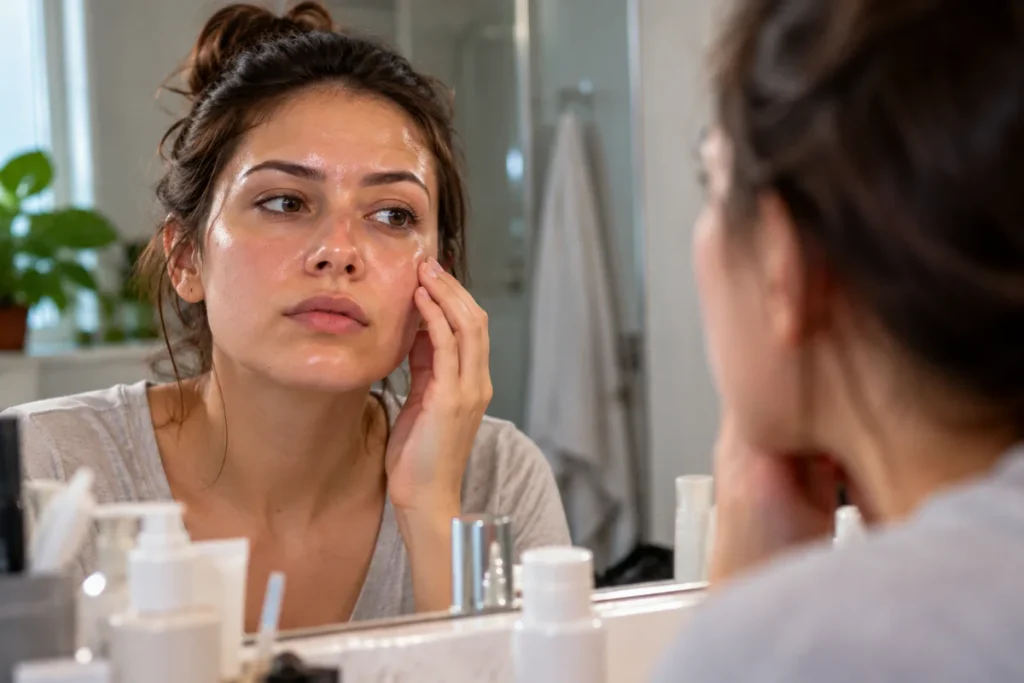
Your skin gets oily by midday while feeling dry because oil production and hydration are separate biological systems. Sebum is oil produced by sebaceous glands, whereas hydration refers to the water content trapped in your skin barrier. Stripping your face with harsh cleansers damages your barrier, causing tightness and water loss while your natural sebum continues to flow over the top.
Why Does Your Face Get Greasy by Midday?
Sebum does not simply vanish because you cleansed your face at 7:00 AM. Several physiological, hormonal, and environmental factors influence how rapidly surface shine accumulates throughout the morning.
Natural Sebum Production
Your skin is equipped with thousands of microscopic sebaceous glands, with the highest concentration clustered in the central T-zone (forehead, nose, and chin). According to clinical dermatology reviews from DermNet, these glands produce sebum—a complex mixture of triglycerides, wax esters, squalene, and free fatty acids—to lubricate the stratum corneum and deliver fat-soluble antioxidants like vitamin E to the surface. Cleansing removes accumulated surface lipids, but it does not shut down glandular activity. Within two to four hours, your glands naturally replenish that lipid film.
Genetics and Baseline Skin Type
Some individuals are genetically predisposed to larger, more active sebaceous glands. If your biological parents had oily or combination skin, your baseline rate of sebum secretion is likely higher. This genetic blueprint dictates the size and output of your pores regardless of how much water you drink or how dry the surrounding climate is.
Hormonal Fluctuations and Circadian Rhythms
Sebaceous gland activity is heavily mediated by circulating androgens, primarily dihydrotestosterone (DHT). Hormonal surges during menstrual cycles, perimenopause, or periods of acute psychological stress directly upregulate sebum excretion. Furthermore, dermatological research indicates that human sebum excretion follows a circadian rhythm, often peaking between midday and early afternoon.
For those interested in how endocrine shifts influence skin vitality, reading through Healthfity’s general health guides can provide helpful context on systemic hormone balance.
Heat, Humidity, and Sweating
Warm ambient temperatures liquefy surface sebum, causing it to spread more easily across the face. When environmental humidity or indoor heating prompts microscopic perspiration, sweat mixes with surface oils to create an emulsion that looks far greasier than sebum alone.
Incompatible Skincare Formulations
Heavy, occlusive balms, mineral oils, or silicone-dense primers can sit on top of the skin without absorbing. When mixed with your morning sebum output, these products break down into a slick layer by lunchtime.
Over-Cleansing and Chemical Irritation
Using aggressive foaming cleansers, sulfate-laden face washes, or exfoliating toners strips the superficial lipid matrix. While this creates a fleeting “squeaky clean” sensation, it injures the stratum corneum, creating a dynamic where the skin feels tight and inflamed beneath an active layer of oil.
How Can Your Face Be Oily and Dry at the Same Time?
To make sense of dry, greasy skin, you must separate moisture from oil.
| Skin Condition | Primary Biological Deficiency | Visual Appearance | Physical Sensation |
| Oily Skin | None (Excess sebum production) | Visible shine, enlarged pores, thick texture | Supple, comfortable, rarely tight |
| Dry Skin | Insufficient natural lipid production | Dullness, fine flaking, invisible pores | Rough, tight, prone to chapping |
| Dehydrated Skin | Inadequate water content in stratum corneum | Shiny surface with underlying crinkles | Tight, papery, easily irritated |
| Combination Skin | Variable lipid output across facial zones | Oily T-zone, normal to dry lateral cheeks | Mixed; comfortable T-zone, dry cheeks |
The Difference Between Dry and Dehydrated Skin
Dry skin is an inherited skin type characterized by underactive sebaceous glands that produce insufficient lipids. Dehydrated skin, on the other hand, is a temporary, acquired physiological state characterized by low water content within the outer layer of the epidermis (the stratum corneum). You can have an oily skin type with highly active glands, yet still suffer from acute epidermal dehydration.
The Role of the Skin Barrier
The outermost skin layer functions like a brick wall: dead skin cells (corneocytes) are the bricks, and a matrix of ceramides, cholesterol, and free fatty acids forms the mortar. When this protective barrier is intact, it prevents excessive transepidermal water loss (TEWL). When the barrier is damaged by harsh products or cold weather, microscopic fissures allow water to rapidly evaporate into the air.
As noted by the National Library of Medicine (NIH), an impaired barrier leads to severe hydration loss, resulting in feelings of tightness and irritation even as underlying sebaceous glands continue pumping oil through the pores.
The “Rebound Oil” Myth: What Does the Science Actually Say?
Skincare marketing frequently claims that if your skin is dehydrated, your oil glands “panic” and produce compensatory extra oil to make up for the missing water.
From a strict dermatological perspective, sebaceous glands do not possess hydration sensors that detect epidermal water levels; their output is primarily regulated by hormones, genetics, and local temperature.
However, an impaired barrier dramatically changes how oil behaves. Without sufficient water to keep the stratum corneum plump and supple, sebum cannot distribute evenly across a smooth epidermal surface. Instead, it pools on top of rough, desquamating skin, appearing more reflective and grease-laden against dry, tight patches.
Learning how balanced nutrition supports cellular membrane health is essential. Explore Healthfity’s nutrition section for evidence-based dietary strategies that protect skin vitality.
What Causes Oily Skin With Dry Patches?
When you notice a shiny sheen over flaky, tight patches, specific routine habits and environmental stressors are almost always at play.
- Aggressive Cleansers and Hot Water: Washing with hot water or high-pH bar soaps strips the intercellular lipids needed to retain water.
- Over-Exfoliation: Daily use of chemical exfoliants (glycolic or salicylic acids) or gritty physical scrubs erodes the protective surface layer faster than it can regenerate.
- Drying Acne Therapies: Topical treatments like benzoyl peroxide or prescription retinoids accelerate cell turnover and cause peeling, leaving the skin dry even if natural sebum is still present.
- Low Ambient Humidity: Winter air, air-conditioned offices, and indoor heating pull moisture directly out of the epidermis via transepidermal water loss.
- Medical Conditions That Mimic Dry/Oily Skin: Conditions such as seborrheic dermatitis cause scaly, flaking patches over oily areas like the eyebrows, sides of the nose, and hairline. Guidance from the National Eczema Association clarifies that seborrheic dermatitis is an inflammatory response to yeast on the skin, not simple dryness.
Supporting systemic resilience helps manage inflammatory skin reactions. Check out Healthfity’s lifestyle resources to understand the connections between stress modulation and skin health.
How to Stop Your Face From Getting Greasy by Midday
Addressing midday shine without worsening dehydration requires an approach that protects barrier water while absorbing excess surface oil.
1. Stop Stripping the Skin in the Morning
Do not use harsh, squeaky-clean foaming cleansers when you wake up. A gentle, non-foaming gel or hydrating lotion cleanser clears away overnight sweat and sebum without stripping intercellular ceramides.
2. Prioritize Humectants Over Heavy Occlusives
Hydrate dehydrated skin with water-binding humectants like glycerin and hyaluronic acid. These molecules pull water into the epidermis without adding surface grease. Follow with a light lotion rather than a thick, petrolatum-based ointment that traps excess shine.
3. Switch to Oil-Absorbing Sunscreens
Sunscreen is essential, but heavy chemical formulas can exacerbate midday oiliness. Look for broad-spectrum SPF 30 or higher featuring oil-absorbing minerals (such as zinc oxide) or silica, which the American Academy of Dermatology (AAD) highlights as crucial for maintaining comfort without inducing breakouts.
4. Use Blotting Sheets Instead of Re-Washing
Washing your face in the middle of the day strips away what little barrier hydration remains, prompting increased tightness. Instead, gently press an unpowdered blotting sheet against your T-zone. This lifts excess oil while leaving your protective skincare barrier undisturbed.
Maintaining overall metabolic health and physical fitness plays a significant role in managing systemic inflammation. Visit Healthfity’s fitness guides for actionable wellness regimens.
The Best Daily Routine for Oily but Dry Skin
Morning Routine:
1. Cleanse: Mild, hydrating, non-stripping cleanser
2. Hydrate: Lightweight humectant serum (Glycerin or Hyaluronic Acid)
3. Protect: Fluid, noncomedogenic broad-spectrum SPF 30+
Midday Check:
1. Lift Shine: Press unpowdered blotting papers onto the T-zone
2. Maintain: Avoid mid-day washing or alcohol-based toners
Evening Routine:
1. Cleanse: Gentle emulsifying wash to remove sunscreen and pollution
2. Repair: Barrier moisturizer featuring ceramides and fatty acids
3. Target: Introduce active treatments (retinoids/acids) only 2-3 nights per week
Morning Routine: Gentle Protection
- Cleanser: Use a gentle, pH-balanced cleanser formulated for sensitive skin.
- Hydrating Layer: Apply a water-based serum containing glycerin or low-molecular-weight hyaluronic acid to damp skin to maximize water retention.
- Moisturizer/Sunscreen: Choose a lightweight, oil-free fluid moisturizer or a hybrid moisturizing sunscreen labeled noncomedogenic.
Midday Strategy: Shine Control
- Resist the urge to scrub your face with paper towels or splash it with harsh tap water.
- Use single-use blotting papers to dab the nose and forehead.
- If your skin feels uncomfortably tight in an air-conditioned room, a light mist of thermal spring water followed by a gentle pat can restore superficial comfort.
Evening Routine: Barrier Restoration
- Cleanse: Thoroughly remove the day’s mineral sunscreen, sebum, and environmental particulates with a mild cleanser.
- Barrier Repair: Apply a lotion containing physiological lipids—specifically ceramides, cholesterol, and fatty acids—which research from PubMed Central (PMC) demonstrates are critical for repairing stratum corneum permeability.
- Targeted Actives: If you use active treatments like retinol or salicylic acid, reduce their frequency to two or three nights per week until your skin barrier feels calm, flexible, and free of stinging.
For detailed steps on product selection and application order, explore Healthfity’s skin and hair care archives.
Key Ingredients: What Helps and What Harms
Choosing the right ingredients makes the difference between a calm, balanced barrier and a worsening cycle of shine and tightness.
Beneficial Ingredients
- Glycerin: A classic, highly effective humectant that draws water into the stratum corneum without leaving an oily residue.
- Ceramides: Essential lipids that replenish the skin’s natural moisture barrier, reducing transepidermal water loss.
- Niacinamide (Vitamin B3): Clinical studies documented by the Mayo Clinic show that niacinamide helps strengthen barrier integrity while helping regulate surface sebum excretion at moderate concentrations (2% to 5%).
- Hyaluronic Acid: Binds water molecules to the surface layers, improving skin plumpness and suppleness.
Ingredients to Avoid or Limit
- Denatured Alcohol (Alcohol Denat): Found in many “mattifying” toners; provides a momentary dry feel by evaporating moisture, ultimately degrading barrier lipids.
- Harsh Sulfates (Sodium Lauryl Sulfate): Strong detergents that strip away essential stratum corneum structural fats.
- High-Concentration Fragrances and Essential Oils: Common triggers for irritant contact dermatitis that exacerbate barrier leakage.
- Astringent Witch Hazel Formulations: Often formulated with alcohol, stripping surface moisture while doing nothing to resolve the underlying cause of oil production.
For additional insight into how whole-body health impacts skin hydration and weight management, check out Healthfity’s weight loss resources.
When Should You See a Dermatologist?
While most cases of midday oiliness combined with dryness can be resolved through barrier-supportive skincare, certain symptoms warrant evaluation by a board-certified dermatologist:
- Persistent facial redness, visible broken capillaries, or flushing triggered by food, heat, or stress, which may indicate rosacea according to clinical outlines from the National Rosacea Society.
- Greasy, yellow scales accompanied by persistent itching along the folds of the nose, eyebrows, or scalp, which points toward seborrheic dermatitis.
- Stinging or burning that occurs even when applying plain water or gentle ointments, indicating advanced barrier breakdown or contact dermatitis.
- Severe cystic acne or inflammatory papules that do not respond to over-the-counter barrier management after 8 to 12 weeks.
Professional organizations such as the American College of Mohs Surgery and the American Society for Dermatologic Surgery (ASDS) provide patient-centered resources for finding qualified dermatologists who can evaluate chronic skin disorders.
Frequently Asked Questions
Why does my face get oily so quickly after washing?
Cleansing removes surface lipids from the outer layer of your skin, but it does not deactivate the sebaceous glands deeper in the dermis. Within a few hours, your glands naturally excrete a fresh layer of sebum. If your skin barrier is stripped and dry, this returning oil sits directly on top of dehydrated skin, making the shine stand out more noticeably.
Can oily skin also be dehydrated?
Yes. Oily skin refers to a genetic skin type that produces an abundance of sebum (oil). Dehydration refers to a skin condition characterized by an inadequate amount of water in the stratum corneum. Because oil and water operate via different biological systems, your skin can easily be rich in surface sebum while depleted of cellular water.
Does washing your face more often reduce oiliness?
No. Washing your face more than twice a day strips away the natural lipid matrix that prevents water evaporation. This leads to barrier damage, redness, and flaking. The underlying sebaceous glands will continue their baseline oil production, leaving you with dry, irritated, and shiny skin.
Should you moisturize if your skin is already greasy?
Yes. Skipping moisturizer deprives the outer layers of the skin of hydration, accelerating water loss and worsening tightness. The key is using an oil-free, noncomedogenic moisturizer formulated with water-attracting humectants (like glycerin) and barrier-supporting ceramides rather than heavy occlusive oils.
Why is my forehead oily while my cheeks are dry?
This is the hallmark of combination skin. The central T-zone (forehead, nose, and chin) naturally possesses a significantly higher concentration of sebaceous glands than the cheeks. Consequently, the forehead produces noticeably more oil, while the cheeks remain prone to dryness.
Can a damaged skin barrier make your face look shiny?
Yes. A healthy skin barrier has a soft, supple texture that diffuses light. When the skin barrier is damaged, dehydrated, and over-exfoliated, the surface cells flatten and become taut, creating a mirror-like, plastic sheen that reflects light even before sebum has accumulated.
What is the best way to handle midday grease without ruining makeup or sunscreen?
Use plain, unpowdered blotting papers to gently press and absorb oil from your T-zone. Avoid rubbing, scrubbing, or splashing your face with water mid-day, which strips away moisture and disrupts your sunscreen protection.