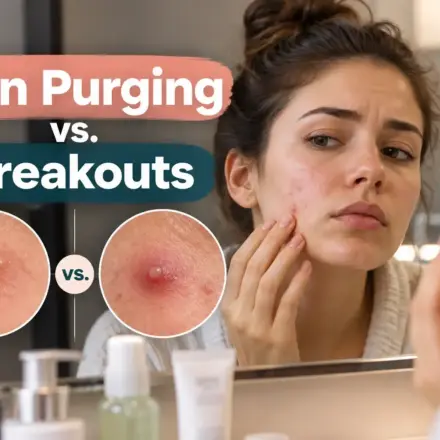
Skin Purging vs. Breakouts: How to Tell if Your Skincare Is Working or Damaging Your Barrier
Starting a new active skincare product often brings an unwelcome surprise: a sudden cluster of pimples, redness, or peeling skin. In the beauty and skincare community, this is almost universally labeled as “skin purging”—a rite of passage where skin supposedly gets worse before it gets better.
However, assuming that every post-product blemish is a good sign is a common and damaging mistake. While certain cellular turnover ingredients can accelerate existing blockages to the surface, other reactions indicate contact irritation, an impaired moisture barrier, or clogged pores from an incompatible formula. Continuing to apply a harsh product to an already inflamed skin barrier can worsen acne, trigger post-inflammatory hyperpigmentation, and lead to persistent dermatitis.
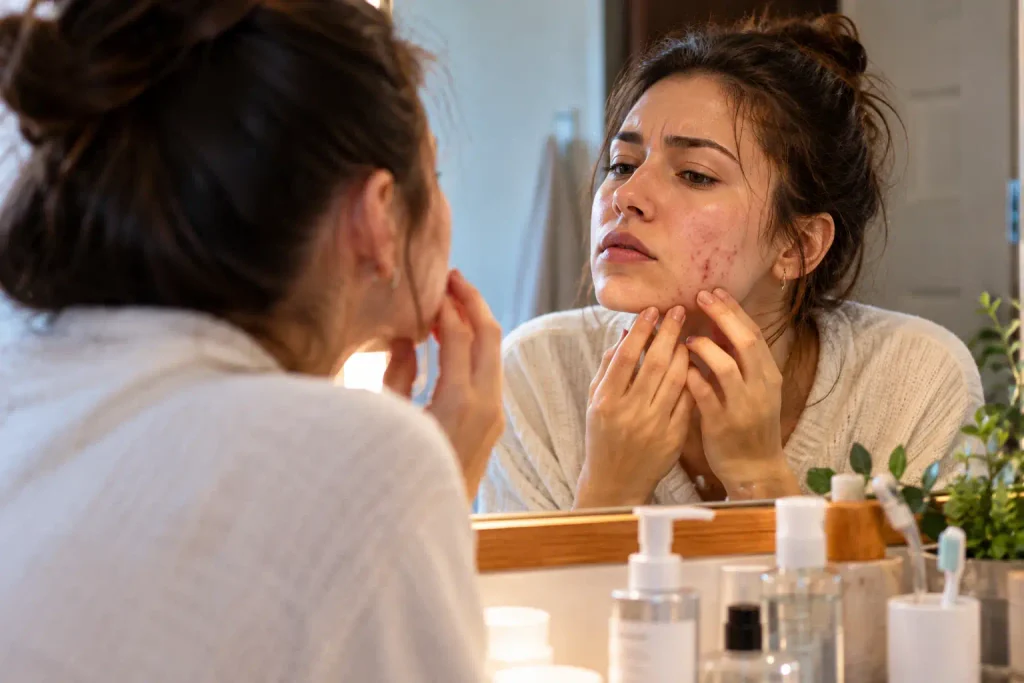
Skin purging is a temporary response to ingredients that speed up cellular turnover (like retinoids and exfoliating acids), typically surfacing as small, short-lived blemishes in areas where you already experience frequent breakouts. If you notice breakouts in brand-new areas, or if your skin feels itchy, burning, dry, or inflamed, you are likely experiencing an adverse reaction, contact irritation, or a routine-induced breakout—not a helpful purge.
What Is Skin Purging?
The term “purging” is not a formal medical diagnosis, but dermatologists recognize it as an accelerated flare of microcomedones. Beneath the surface of the skin, clogged pores take weeks to develop into visible whiteheads, blackheads, or inflammatory papules.
When you introduce an active ingredient that increases skin cell turnover, the normal shedding process speeds up. Subsurface blockages that would have taken weeks or months to emerge are brought to the surface simultaneously.
A widespread misconception is that an active treatment must cause a purge to work. This is false. Many people experience steady, significant improvements in skin texture, tone, and clarity without experiencing a noticeable initial flare. Missing out on a purge simply means your skin tolerated the adjustment period smoothly, your baseline level of microcomedones was low, or the product is operating without causing acute barrier stress.
Understanding the balance between cellular health and skincare is vital. For broader insights into maintaining resilient tissues from the inside out, explore Healthfity’s general health guides.
Skin Purging vs. Breakouts: How to Tell the Difference
Distinguishing a true purge from standard acne progression or adverse product reactions requires looking at three core factors: the ingredient used, the location of the blemishes, and the physical sensations on the skin.
| Feature | Skin Purging | Routine-Induced Breakout / Irritation |
| Trigger | Actives that speed cell turnover | Any product (moisturizers, oils, thick balms) |
| Location | Familiar, breakout-prone areas | Random, brand-new areas |
| Appearance | Small papules, whiteheads, blackheads | Cysts, deep pustules, or rash-like bumps |
| Skin Sensation | Mild sensitivity, minimal discomfort | Stinging, intense burning, or itching |
| Typical Duration | 4 to 6 weeks, resolving gradually | Persistent or worsening beyond 6 weeks |
| Long-Term Outcome | Clearer skin with continued use | Ongoing barrier damage and inflammation |
1. The Active Ingredient in Question
Skin purging only happens in the presence of ingredients that alter epidermal proliferation and shedding. If your new hydrating serum, hyaluronic acid, heavy ceramide cream, or pure oil causes bumps, it is not purging. Those products do not accelerate cell turnover; they may simply be comedogenic for your skin type or contain an emulsifier causing mild irritation.
2. Location of the Blemishes
- Purging: Tends to appear strictly where you normally break out (such as the chin, nose, or forehead). The active ingredient is simply clearing out what was already lingering underneath.
- Breakout or Adverse Reaction: Appears in areas where your skin is typically smooth and clear (such as the upper cheeks, neck, or temples).
3. Lesion Lifespan
Individual blemishes from a purge cycle often resolve faster than typical hormonal cysts because the skin’s turnover rate is running high. Conversely, inflammatory breakouts from product intolerance tend to linger, becoming redder and more tender over time.
Which Ingredients Actually Trigger Skin Purging?
Because true purging requires altered cellular kinetics, only specific categories of active ingredients are capable of causing it.
Retinoids
Topical vitamin A derivatives—including prescription tretinoin, over-the-counter adapalene, and cosmetic retinol—are the primary culprits. According to clinical guidance from the American Academy of Dermatology (AAD), retinoids normalize follicular keratinization, helping prevent dead cells from sticking together inside the pore. This transition period often provokes a temporary surge in surface comedones alongside mild flaking.
Chemical Exfoliating Acids (AHAs and BHAs)
- Salicylic Acid (BHA): A lipid-soluble acid that penetrates deep into sebum-filled pores to dissolve cellular debris. Research documented by the National Library of Medicine (NIH) highlights salicylic acid’s ability to loosen desmosomes, accelerating the expulsion of trapped material.
- Glycolic and Lactic Acids (AHAs): Water-soluble acids that dissolve the bonds holding dead skin cells to the outer stratum corneum. By lifting these top layers, emerging microcomedones reach the surface more rapidly.
Benzoyl Peroxide
An antimicrobial and mildly keratolytic agent, benzoyl peroxide reduces Cutibacterium acnes bacteria while loosening follicular clogs. Its initial use can trigger mild purging and peeling as the skin adjusts.
Ingredients That Do Not Cause Purging
If a product without cellular-turnover actives causes spots, it is an adverse reaction or pore-clogging effect. These include:
- Pure hydrators (Hyaluronic Acid, Glycerin)
- Barrier balms (Squalane, Ceramides, Petrolatum)
- Niacinamide (Vitamin B3)
- Physical sunscreen filters (Zinc Oxide, Titanium Dioxide)
While niacinamide does not cause purging, high concentrations (such as 10% or more) frequently cause contact irritation and redness that mimic breakouts.
Maintaining cellular defense goes beyond topical care. Read more about dietary antioxidants in Healthfity’s nutrition section to support skin recovery naturally.
Is It Purging, Irritation, or an Allergic Reaction?
Not every skin response involves blocked pores. Many people mistakenly label skin barrier breakdowns as purging, remaining on aggressive routines that worsen their condition.
To evaluate what your skin is experiencing:
- If you have follicular pimples in familiar zones: This points toward classic purging from accelerated turnover.
- If you have follicular pimples in brand-new zones: The formula is likely clogging your pores or causing an acneiform eruption.
- If you experience redness, flaking, and stinging when applying water or plain moisturizer: You are dealing with irritant contact dermatitis and barrier impairment.
- If you experience intense itching, hives, or visible swelling: You are likely having an allergic contact dermatitis reaction.
Irritant Contact Dermatitis (Damaged Skin Barrier)
When active ingredients are applied too frequently, at high concentrations, or without proper hydration, the skin’s protective lipid matrix breaks down.
- Symptoms: Skin looks tight, shiny, or raw; application of even a basic gentle moisturizer causes stinging; fine flaking occurs with tight, pin-prick red bumps.
- Medical Reality: This is not a purge; it is an injury to the stratum corneum that requires the immediate suspension of all active ingredients. Clinical reviews from the Cleveland Clinic advise pausing irritating products until the skin’s barrier lipids recover.
Allergic Contact Dermatitis
Unlike irritation, which is a physical breakdown of the barrier, an allergy involves a targeted immune response.
- Symptoms: Intense itching, raised hives, distinct swelling around the eyes or lips, or an eczematous, oozing rash.
- Action: Stop using the product immediately. The Food and Drug Administration (FDA) provides clear safety recommendations on reporting and treating adverse reactions caused by cosmetic formulations.
For those managing concurrent chronic health concerns or seasonal allergies that impact skin reactivity, Healthfity’s lifestyle resources provide valuable everyday context.
How Long Does Skin Purging Last?
Because skin purging depends on the skin’s natural renewal process, it cannot resolve overnight.
Under normal physiological conditions, the human epidermal cell turnover cycle takes roughly 28 to 40 days, lengthening with age. Consequently, a legitimate skin purge typically spans four to six weeks.
- Weeks 1 to 2: Initial breakout flare in typical acne zones, accompanied by mild flaking or tightness.
- Weeks 3 to 4: Blemishes begin to resolve more quickly; the frequency of new emerging lesions noticeably declines.
- Weeks 5 to 6: Active lesions clear up; overall skin texture and tone begin to stabilize.
- Week 7 and beyond: The purging phase is complete, and you should observe a net reduction in your baseline acne.
If breakouts are worsening, spreading to new regions of the face, or showing zero signs of improvement after six to eight weeks of consistent use, you are no longer in a purge phase. At this point, the product is either continuously irritating the skin or simply ineffective for your type of acne.
How to Manage Skin Purging Without Ruining Your Skin
Navigating a purge requires protecting your skin barrier from collateral damage while the active ingredient does its work.
1. Introduce Actives Slowly
Do not apply an active treatment every night right away. Begin by applying your retinoid or acid twice a week for the first two weeks, moving to every other night only if your skin feels comfortable, soft, and uninflamed.
2. Buffer Your Treatments (The Sandwich Method)
To minimize superficial irritation without blunting the long-term efficacy of a retinoid, apply a thin layer of basic moisturizer first, follow with your retinoid, and finish with a second layer of moisturizer. This slows down the rate of transdermal absorption, reducing acute surface peeling.
3. Stop Physical Scrubs and Secondary Exfoliants
While experiencing a purge from a retinoid or chemical exfoliant, do not attempt to scrub away the flaking skin with gritty face washes, cleansing brushes, or additional acid toners. Over-exfoliation during a purge often converts minor comedones into deep, painful cysts.
Supporting your body through physical adjustments and stress modulation is equally important. Learn practical approaches to whole-body balance via Healthfity’s fitness articles.
4. Prioritize Barrier Hydration and Sun Protection
- Cleanser: Switch to a non-foaming, sulfate-free, hydrating face wash.
- Moisturizer: Choose formulas featuring physiological lipids—ceramides, cholesterol, and fatty acids—which strengthen intercellular structure as noted by research from PubMed Central (PMC).
- Daily Sunscreen: Increased cell turnover leaves freshly exposed epidermal cells vulnerable to ultraviolet radiation. Daily broad-spectrum SPF 30 or higher, endorsed by the Mayo Clinic, is non-negotiable to avoid hyperpigmentation.
To discover step-by-step routines for delicate skin profiles, refer to Healthfity’s skincare and hair care section.
Post-Inflammatory Hyperpigmentation: A Serious Consideration for Deeper Skin Tones
For individuals with medium to dark complexions (Fitzpatrick skin types IV through VI), tolerating a severe, prolonged “purge” carries real risks. Melanocytes in deeper skin tones react vigorously to surface inflammation.
When a harsh active ingredient induces chronic irritation, inflammatory chemicals signal surrounding melanocytes to produce excess melanin. The result is Post-Inflammatory Hyperpigmentation (PIH)—flat, dark patches that can persist for months or years after the actual pimple has healed.
The Skin of Color Society (SOCS) stresses that when treating patients with rich skin tones, minimizing baseline irritation is far more critical than pushing through an aggressive treatment course. If an acne product is causing marked inflammation, continuing through a painful purge often leaves more dark marks than it resolves.
If you are exploring the links between overall body inflammation, weight, and dermatological balance, check out Healthfity’s weight management resources.
What to Do If Your New Product Causes Breakouts
If you suspect your skin is breaking out from product incompatibility or that your barrier has been compromised, take these corrective steps immediately:
- Stop the Suspected Product: Pause use of the new active formula. Do not attempt to neutralize it with another active ingredient.
- Strip Your Routine to the Essentials: Use only a gentle hydrating cleanser, a fragrance-free barrier moisturizer, and a mineral or sensitive-skin sunscreen for 10 to 14 days.
- Never Pick or Squeeze Purge Blemishes: Accelerated turnover leaves skin thinner and more fragile. Squeezing small purge papules forces bacteria deeper into the dermis and almost guarantees long-lasting scarring.
- Conduct a Proper Patch Test Later: When you are ready to test a new product, apply a dime-sized amount behind your ear or along the jawline for 7 to 10 consecutive days before applying it to your entire face, a safety practice advised by the National Institute of Arthritis and Musculoskeletal and Skin Diseases (NIAMS).
When to Seek Professional Dermatological Care
While mild purging resolves on its own, certain symptoms indicate that you should seek medical guidance rather than managing the issue at home:
- Breakouts develop into deep, painful, fluid-filled nodules or cysts beneath the skin.
- Your face feels hot to the touch, swollen, severely itchy, or shows yellow crusting (which can indicate a secondary bacterial infection).
- Over-the-counter acne therapies have failed to control your breakouts after 8 to 12 weeks of careful, consistent application.
- Severe hyperpigmentation or pitted scarring begins to form as lesions heal.
Board-certified dermatologists, registered with professional bodies like the American Dermatological Association (ADA), can assess your specific skin physiology, distinguish between acne subtypes and rosacea, and provide targeted therapies that bypass the cycle of barrier destruction.
Frequently Asked Questions
Does your skin always look better after purging?
Not always. While an active ingredient can clear pores over time, improvements only occur if the underlying treatment is right for your skin type. If the product was simply irritating your skin or disrupting your moisture barrier, continuing use will lead to chronic redness, dryness, and worsening inflammatory acne rather than clear skin.
How long does purging from a new skincare product last?
A standard skin purge typically lasts four to six weeks, aligning with your skin’s natural cellular renewal cycle. If new clusters of blemishes continue to emerge past the six-to-eight-week mark, it is almost certainly a routine-induced breakout or irritation, not purging.
Can skin purging cause painful, deep cysts?
Purging generally causes small papules, pustules, blackheads, or whiteheads in areas where you are already prone to microcomedones. If you suddenly develop deep, painful, throbbing cysts in areas where you never experienced them before, your skin barrier is likely inflamed or the formula is unsuitable for you.
Does retinol cause purging or just irritation?
Retinol can cause both. As a vitamin A derivative, it speeds up epidermal cell turnover, which can trigger genuine purging of trapped comedones. At the same time, it can cause the “retinoid reaction,” characterized by redness, flaking, dryness, and stinging. Buffering your retinol with a moisturizer helps control irritation while allowing normal turnover to proceed.
Can salicylic acid cause skin purging?
Yes. Salicylic acid is a beta-hydroxy acid that penetrates into the sebum inside your pores, dislodging dead cells and dried oils. As it clears out clogged follicles, you may see a temporary increase in small whiteheads and blackheads for a few weeks before the skin clears.
Can niacinamide cause purging?
No. Niacinamide does not speed up cellular turnover or follicular desquamation, meaning it cannot biologically trigger a purge. However, high-concentration niacinamide serums (such as 10% or higher) often cause contact irritation, redness, and small inflammatory bumps that people easily confuse with purging.
Can skin purging leave dark spots?
Yes. Any inflammatory skin lesion, including a small purge-induced papule, can leave behind post-inflammatory hyperpigmentation (PIH). This is especially common in medium to dark skin tones. To minimize dark marks, avoid picking at blemishes, keep your skin hydrated, and apply broad-spectrum sunscreen every day.
When should you stop using a new skincare product immediately?
Stop using a product right away if you experience persistent burning, severe itching, swelling around the face or eyes, widespread hives, or if your skin feels uncomfortably raw whenever you apply water or a gentle moisturizer. These are clear signs of contact dermatitis or an allergic response, not a healthy purge.