Mutated Flu Strain 2026: CDC Data, Symptoms & Vaccine Fit
Seasonal influenza activity is climbing earlier than usual across the United States in November 2026, prompting headlines about a “mutated flu strain” pushing local cases past last season’s peak. Many readers assume these reports point to a brand-new pandemic virus that renders this season’s flu shot ineffective. In reality, Centers for Disease Control and Prevention (CDC) surveillance shows that the surge is driven by familiar seasonal influenza A(H1N1)pdm09 viruses reclassified into newly designated genetic subclades—and laboratory testing so far indicates that circulating strains remain antigenically similar to the 2026–2027 U.S. flu vaccine.
According to the CDC’s Week 45 FluView report (ending November 14, 2026), 11.8% of clinical lab specimens tested positive for flu, with A(H1N1)pdm09 accounting for 96.4% of subtyped influenza A detections. The “mutated” label refers to H1N1 viruses grouped into subclade E (including E.1 and E.3). Early CDC antigen testing shows strong alignment with the updated 2026–2027 trivalent vaccine, and standard prescription antivirals remain effective.
What the “Mutated Flu Strain” Actually Is in CDC Surveillance
Influenza viruses acquire small genetic changes every year—a routine process called antigenic drift. In its Weekly U.S. Influenza Surveillance Report for Week 45 (published November 20, 2026), the CDC explained that circulating influenza A(H1N1)pdm09 viruses—the lineage that has circulated seasonally since 2009—were recently reclassified from subclade D.3.1.1 into subclade E (with HA subclades E.1 through E.4) to track combinations of genetic changes in their hemagglutinin surface proteins.
Among 617 A(H1N1)pdm09 viruses genetically characterized by CDC laboratories through mid-November 2026:
- Subclade E.1: 287 viruses (46.5%)
- Subclade E.3: 171 viruses (27.7%)
- Subclade E (alias of D.3.1.1): 137 viruses (22.2%)
- Subclade E.4 and E.2: 19 viruses (3.1%) and 2 viruses (0.3%)
While local reports in cities such as San Francisco have noted early case spikes surpassing last season’s peak, the CDC notes that an earlier start to flu season does not automatically mean the national peak will be higher or more severe overall.
U.S. Flu Activity Snapshot (November 2026)
Nationally, clinical laboratories tested 61,838 respiratory specimens during Week 45 (ending November 14, 2026), with 7,269 specimens (11.8%) testing positive for influenza—up from cumulative early-season positivity of 8.8% since October 4, 2026.
| CDC Surveillance Metric | Week 45 (Ending Nov. 14, 2026) | Cumulative Since Oct. 4, 2026 |
| Clinical lab specimens tested | 61,838 | 395,732 |
| Positive influenza tests (%) | 7,269 (11.8%) | 35,011 (8.8%) |
| Influenza A share of positives | 7,209 (99.2%) | 34,533 (98.6%) |
| Influenza B share of positives | 60 (0.8%) | 478 (1.4%) |
| A(H1N1)pdm09 share of subtyped Influenza A | 352 of 365 (96.4%) | 5,594 of 5,688 (98.3%) |
| A(H3N2) share of subtyped Influenza A | 12 of 365 (3.3%) | 89 of 5,688 (1.6%) |
Because flu activity is rising alongside other seasonal viruses, readers tracking broader respiratory trends can compare regional patterns in our coverage of respiratory illnesses on the rise across the U.S..
Does the 2026–2027 Flu Shot Match This Strain?
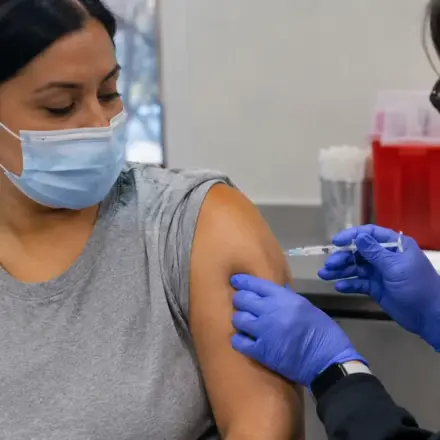
A common misconception when headlines mention a mutated virus is that getting vaccinated is pointless. For the 2026–2027 season, the U.S. switched to updated trivalent vaccines—meaning every shot protects against three influenza viruses, with all three components updated from the 2025–2026 formula.
Per the CDC 2026–2027 Flu Season overview, U.S. vaccines this season include:
- An A/Missouri/11/2025 (H1N1)pdm09-like virus
- An A/Darwin/1454/2025 (H3N2)-like (egg-based) or A/Darwin/1415/2025 (H3N2)-like (cell/recombinant) virus
- A B/Pennsylvania/14/2025-like (B/Victoria lineage) virus
In its Week 45 surveillance update, the CDC reported that nearly all influenza viruses collected and antigenically characterized in the United States since May 2026 remain antigenically similar to the 2026–2027 vaccine reference viruses in laboratory testing. Real-world vaccine effectiveness estimates will take more time to calculate as the season progresses, yet current lab data indicates that the updated shot is well-positioned against circulating H1N1 subclade E viruses.
Under CDC interim clinical vaccination guidance, everyone aged 6 months and older without a medical contraindication should receive an annual flu vaccine. For adults aged 65 and older, the CDC preferentially recommends a higher-dose (Fluzone High-Dose), recombinant (Flublok), or adjuvanted (FLUAD) flu vaccine when available.
Symptoms of the 2026 Flu Strain and Overlapping Illnesses
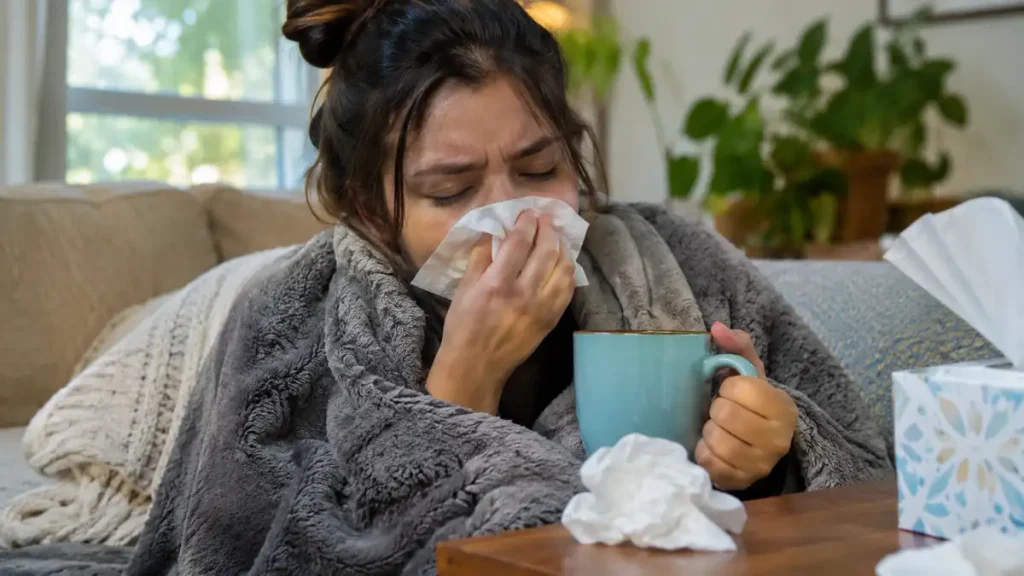
Genetic subclade shifts in H1N1 have not created a unique set of “new” symptoms. Instead, illness follows the classic influenza pattern outlined on the CDC Signs and Symptoms of Flu page, typically starting abruptly 1 to 4 days after exposure:
- Fever or feeling feverish with chills (though not everyone develops a fever)
- Dry, hacking cough and chest discomfort
- Severe muscle or body aches and headache
- Intense fatigue or weakness lasting several days
- Sore throat and runny or stuffy nose
- Vomiting or diarrhea, which occurs more frequently in children than adults
Because COVID-19, RSV, and early bacterial infections cause overlapping respiratory symptoms, a symptom checklist alone cannot confirm which virus you have. Over-the-counter combination rapid antigen tests or a clinic swab can confirm influenza quickly. For context on how viral surges compare with rarer severe infections, see our breakdown of a recent Maine respiratory virus outbreak and our overview of rhinovirus common cold symptoms.
Antiviral Medications and Emergency Warning Signs
CDC laboratory testing of 781 seasonal flu viruses in Week 45 confirmed that circulating strains remain broadly susceptible to FDA-approved prescription antivirals—with 99% sensitive to oseltamivir (Tamiflu) and 100% sensitive to baloxavir marboxil (Xofluza), zanamivir (Relenza), and peramivir (Rapivab).
According to the CDC Influenza Antiviral Medications guide, prompt prescription antiviral treatment is recommended—ideally within 48 hours of symptom onset—for anyone hospitalized with flu, anyone with severe or worsening illness, and people at higher risk for serious complications. Higher-risk groups include adults 65 and older, children under 5 (especially under 2), pregnant individuals, and people with asthma, chronic lung disease, heart disease, or diabetes. Note that inhaled zanamivir is not recommended for people with underlying airway diseases such as asthma or COPD, and oral baloxavir is not recommended during pregnancy or breastfeeding due to limited safety data.
Seek emergency medical care right away if someone with flu symptoms develops any of these CDC warning signs:
- In adults: Difficulty breathing or shortness of breath, persistent chest or abdominal pain or pressure, sudden dizziness or confusion, inability to stay awake, seizures, not urinating, severe muscle pain or unsteadiness, or fever and cough that improve and then return worse than before.
- In children: Fast breathing or ribs pulling in with each breath, bluish lips or face, chest pain, severe muscle pain (refusing to walk), dehydration (no wet diapers or urine for 8 hours, dry mouth, or crying without tears), lack of alertness when awake, seizures, any fever in an infant under 12 weeks, or a fever above 104°F not controlled by fever-reducing medicine.
Frequently Asked Questions
Is the mutated flu strain in 2026 more dangerous than previous flu strains?
Current CDC Week 45 FluView surveillance shows that flu activity is rising earlier in the autumn than usual, but an early surge does not necessarily mean higher overall severity or a higher seasonal peak. Circulating viruses belong to seasonal influenza A(H1N1)pdm09 subclade E, which behaves clinically like familiar seasonal H1N1 flu.
If I already got my 2026–2027 flu shot, am I protected against the mutated H1N1 subclade?
Yes, early CDC laboratory testing indicates that nearly all circulating influenza viruses characterized since May 2026 remain antigenically similar to the updated 2026–2027 U.S. flu vaccine components. While no flu shot prevents every infection, vaccination substantially lowers the risk of severe illness, hospitalization, and flu-related complications.
Is it too late to get a flu shot in November or December 2026?
No. Because influenza typically circulates well into spring, getting vaccinated in November or December still provides valuable protection—especially ahead of holiday travel and indoor gatherings. Keep in mind that it takes about two weeks after vaccination for antibodies to develop.
Do antibiotics help treat the 2026 flu strain?
No. Influenza is caused by a virus, so antibiotics have no effect on flu recovery and can cause side effects such as diarrhea or antibiotic resistance. Only prescription influenza antivirals—such as oseltamivir or baloxavir —target the flu virus, while antibiotics are reserved for confirmed secondary bacterial infections like bacterial pneumonia.
How long am I contagious with the flu?
People with influenza are most contagious during the first 3 days of illness, though they can spread the virus starting about 1 day before symptoms appear and up to 5 to 7 days after becoming sick. To protect others, stay home until your symptoms are improving overall and you have been fever-free for at least 24 hours without using fever-reducing medication.