COVID Test: When to Take One and How Accurate Are the Results?
Finding yourself staring at a pack of at-home rapid antigen tests or wondering if you need to schedule a PCR appointment usually happens at the worst possible moment—typically when your throat feels scratchy right before a busy work week or after spending the evening with someone who just tested positive.
Navigating testing guidelines can feel exhausting. Public health messaging has shifted dramatically over the last few years, leaving many people unsure about timing, reliability, and what a faint line on a plastic cassette actually means for their day-to-day life.
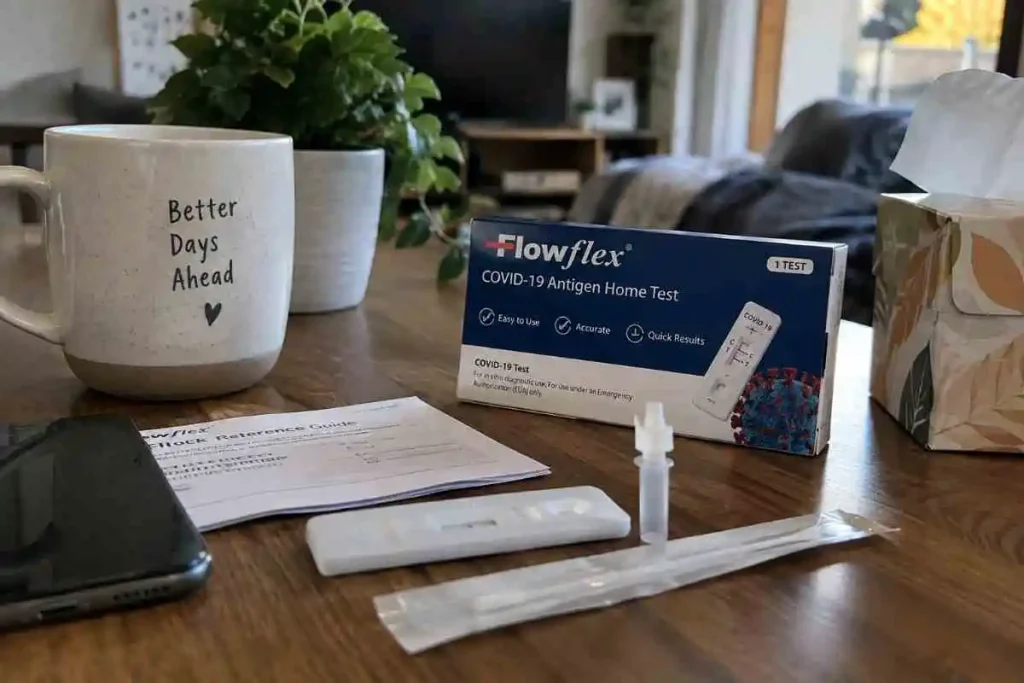
Table of Contents
Why Timing Trumps Everything Else
The single biggest mistake people make with COVID-19 testing is taking a test too early. If you test the exact morning you wake up with a tickle in your throat, a rapid antigen test is very likely to show a negative result—not because you do not have the virus, but because viral loads take time to multiply to detectable levels in your nasal passages.
Rapid antigen tests rely on detecting specific viral proteins. When exposure happens, the virus needs a window of a couple of days to replicate before enough protein is present for the test strip to react.
- The 48-to-72-Hour Rule: Most experts recommend waiting until symptoms appear, or waiting about two to three days after a known exposure, before taking an initial rapid test. Testing immediately after an exposure rarely yields an accurate answer.
- The Serial Testing Strategy: A single negative rapid test does not give you a clean bill of health. Because sensitivity increases when viral loads peak, public health guidance in the US strongly supports serial testing—taking a second test 48 hours after your first negative result if symptoms persist or if you had a high-risk exposure.
Understanding Rapid Antigens vs. PCR Tests
Not all COVID tests work the same way, and choosing the right one depends heavily on your timeline and what you need the results for.
| Test Type | How It Works | Best Used For | Typical Turnaround |
| At-Home Rapid Antigen | Detects surface proteins of the virus via a lateral flow strip. | Quick results at home when symptomatic or after known exposure. | 15 minutes |
| Molecular / PCR | Amplifies viral genetic material (RNA) through thermal cycling. | High-sensitivity detection, travel requirements, or medical clearance. | 24 to 48 hours |
While PCR tests remain the gold standard for sheer analytical sensitivity—meaning they can pick up tiny fragments of viral RNA long after you are contagious—that exact strength can sometimes become a drawback. A PCR test can remain positive for weeks after recovery because it detects lingering non-infectious viral debris.
Rapid antigen tests, on the other hand, are less sensitive to trace amounts of virus, making them a much more reliable indicator of whether you are actively contagious right now.
Interpreting Your Results: Faint Lines and False Negatives
When you read a rapid test, the interpretation is straightforward in theory, but anxiety can make every shadow look like a positive line.
A control line ($C$) must always appear for the test to be valid. If the control line is blank, the test failed. If a test line ($T$) appears—no matter how faint or ghostly—it is a positive result. Antigen tests have a very high specificity, meaning false positives are exceedingly rare. If the strip detects the protein, you have an active infection.
False negatives, however, are common. You can receive a negative rapid test while feeling miserable with classic symptoms. If this happens, treat the result with caution:
- Assume you may still be infectious.
- Isolate from vulnerable family members or coworkers.
- Retest 48 hours later using a fresh kit.
Practical Steps: What to Do While You Wait
When symptoms hit or an exposure occurs, uncertainty creates panic. Instead of guessing, focus on practical risk management:
- Mask Up: If you must leave isolation for essential tasks, wear a high-filtration mask (such as an N95 or KN95) to protect people around you.
- Monitor Symptoms: Track whether your symptoms remain mild and upper-respiratory or if you experience shortness of breath, chest pain, or confusion, which require immediate medical evaluation.
- Review Risk Factors: If you are older, immunocompromised, or have underlying health conditions, reach out to a healthcare provider early. Antiviral treatments like Paxlovid must be initiated within the first five days of symptom onset to be effective, making timely confirmation critical.
Testing is ultimately a tool for risk reduction. By understanding the biological window of the virus and the limitations of rapid kits, you can make informed choices that protect both your household and your community.